
The Oldest Continuous Priesthood: Sethite Teachers and the Hindu Brahman Caste
The Brahman priestly caste is the oldest continuous priesthood in recorded human history. The Urantia Book states directly that the Brahmans descend from the Sethite priests of the second Eden, and that the premier caste of India is a lineal cultural inheritance from the teachers Adam ordained.
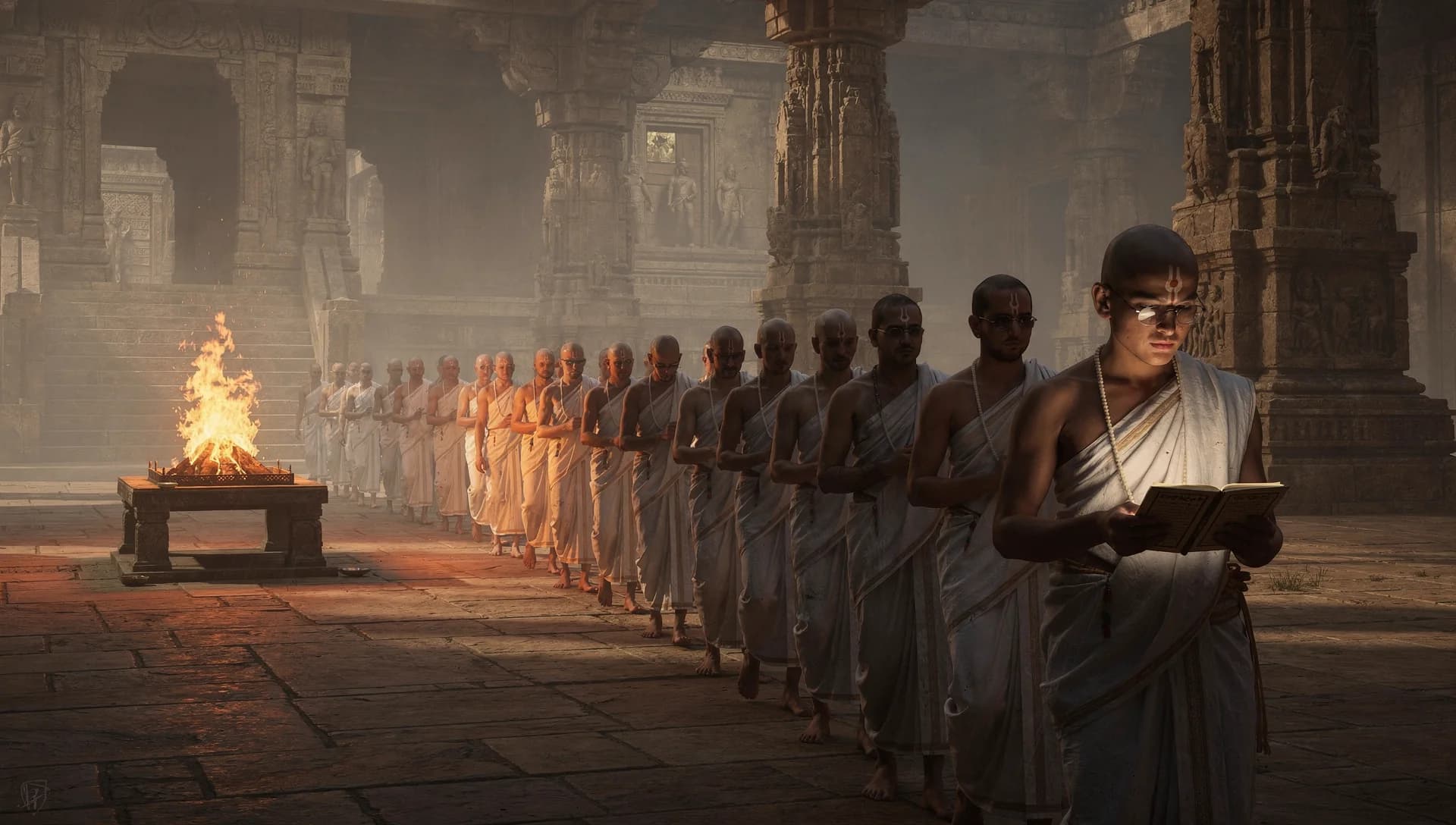
Sethite priests, Adamite-descended teachers = Brahman priestly caste of India
This article expands on the decoder mapping. For the side-by-side card and quick reference, see the mapping page.
A Priesthood Older than Any Written Record
Institutional continuity at the scale of millennia is rare in human religious history. Temples are destroyed, scriptures burn, priesthoods disperse, and reformers replace ancestral traditions with new ones. The Brahman caste of India is a striking exception. The priestly lineage has functioned as a distinct, hereditary, culturally coherent institution for longer than any other continuously operating priesthood in the documentary record.
The Urantia Book's claim about this priesthood is historically precise. The Brahmans are the direct cultural descendants of the Sethite priests ordained at the second Eden after the Adamic default. The caste system that protects their lineage was established by the Aryan Andite invaders of India as a deliberate attempt to preserve the Adamic genetic and religious heritage from absorption.
What the Urantia Book Says
Paper 79 describes two Andite migrations into India that each carried Sethite priestly authority. The first, in the sixteenth millennium BCE, nearly succeeded in establishing monotheism across the western half of the subcontinent:
"As early as 16,000 B.C. a company of one hundred Sethite priests entered India and very nearly achieved the religious conquest of the western half of that polyglot people. But their religion did not persist. Within five thousand years their doctrines of the Paradise Trinity had degenerated into the triune symbol of the fire god." (UB 79:3.4)
The early Dravidian Andite civilization in India was significantly shaped by this Sethite presence:
"The superior culture and religious leanings of the peoples of India date from the early times of Dravidian domination and are due, in part, to the fact that so many of the Sethite priesthood entered India, both in the earlier Andite and in the later Aryan invasions. The thread of monotheism running through the religious history of India thus stems from the teachings of the Adamites in the second garden." (UB 79:3.3)
The second, the Aryan invasion of the mid-third millennium BCE, was the terminal Andite exodus from the Turkestan homelands:
"The second Andite penetration of India was the Aryan invasion during a period of almost five hundred years in the middle of the third millennium before Christ. This migration marked the terminal exodus of the Andites from their homelands in Turkestan." (UB 79:4.1)
The Aryan invaders established the formal caste system that has persisted into the modern period. The Urantia Book is specific about the origin of the first caste:
"Of the four great castes, all but the first were established in the futile effort to prevent racial amalgamation of the Aryan conquerors with their inferior subjects. But the premier caste, the teacher-priests, stems from the Sethites; the Brahmans of the twentieth century after Christ are the lineal cultural descendants of the priests of the second garden, albeit their teachings differ greatly from those of their illustrious predecessors." (UB 79:4.6)
Three claims are embedded in this passage. First, the Brahman caste's origin is different in kind from the origin of the other three (Kshatriya, Vaishya, Shudra); the lower three are Aryan-era social engineering, the first is a preserved hereditary priestly lineage with much older roots. Second, the Brahman lineage is continuous from the Sethite priests of the second garden in Mesopotamia through the Andite and Aryan migrations into India. Third, the doctrinal content the modern Brahmans hold is substantially different from what the Sethite priests originally taught. The continuity is institutional and genetic, not doctrinal.
The text is careful on the last point. The Urantia Book does not claim the Brahmans still teach what the Sethites taught. Paper 94's treatment of the Brahmanic rejection of the Salem mission in the second millennium BCE explains how far the teaching drifted. What persists is the caste itself, the hereditary lineage, the priestly social function, not the original Sethite theology.
What the Ancient Source Says
The Brahman caste is documented across the entirety of recorded Indian history. The Rig Veda (c. 1500 BCE) already treats the brahmana as a distinct priestly class with hereditary responsibilities for ritual performance and the preservation of sacred knowledge. The four-caste system (varna) is first systematically articulated in the Purusha Sukta (Rig Veda 10.90), which presents the castes as emerging from the body of the cosmic person: the Brahmans from the mouth, the Kshatriyas from the arms, the Vaishyas from the thighs, the Shudras from the feet. The etiology is mythological, but the institutional distinction is not.
Wendy Doniger's The Hindus: An Alternative History (Penguin, 2009) traces the caste structure's historical operation. Romila Thapar's Early India: From the Origins to AD 1300 (University of California Press, 2003) places the formal caste system's origins in the late Vedic period (c. 1000-500 BCE) while acknowledging that the Brahman priesthood predates this formalization. A. L. Basham's classic The Wonder That Was India (Sidgwick & Jackson, 1954, revised 1967) treats the Brahman lineage's self-understanding as descending from the earliest Vedic seers (rishis) and, through them, from a pre-Vedic priestly institution.
The genetic question has been a topic of population genetics research since the turn of the twenty-first century. David Reich's group at Harvard, and independently the Indian group led by Partha Majumder, have documented a distinctive genetic signature in north Indian Brahman populations consistent with an ancient West-Central Asian admixture event. Reich's Who We Are and How We Got Here (Pantheon, 2018) summarizes the findings: the genetic history of India records two major ancestral components, Ancestral North Indian and Ancestral South Indian, with the Brahman populations showing distinctive admixture patterns traceable to the Bronze Age Aryan migration. This is the migration the Urantia Book identifies as the terminal Andite exodus from Turkestan.
The endogamy that preserves the genetic and cultural distinctiveness of the Brahman caste is extensively documented by caste studies. Declan Quigley's The Interpretation of Caste (Oxford University Press, 1993) and Susan Bayly's Caste, Society and Politics in India (Cambridge University Press, 1999) treat the institution sociologically. Endogamy has operated with sufficient strictness and across enough generations to preserve a distinct genetic lineage from the Bronze Age to the present.
Why This Mapping Matters
The Urantia Book's claim about the Brahman caste origin is the kind of historical claim that, independent of the Urantia Book, would have been considered overreach by the standards of twentieth-century scholarship. A continuous hereditary priestly lineage extending from a fifteen-thousand-year-old cultural center in Mesopotamia to the modern day is not a claim the twentieth-century academic record could confirm. Twenty-first-century population genetics has substantially shifted the evidentiary terrain.
The genetic evidence does not confirm the specific Urantia claim. It does confirm the structural features that would be necessary for the Urantia claim to be plausible. The Brahman caste has distinctive Ancestral North Indian genetic signatures. The caste has been endogamous at a scale and across a time depth that could preserve such signatures. The Bronze Age Aryan migration from the Turkestan-centered Andite heartland is now documented archaeologically and genetically. The Sethite priesthood's passage along with the second Andite wave is a specific claim the academic record cannot test directly, but it is a claim that now rests on a plausible underlying history.
The doctrinal caveat in the Urantia Book's statement is worth marking. The text explicitly notes that the Brahmans "of the twentieth century after Christ" teach something substantially different from what the Sethites originally taught. The continuity is institutional and lineal. Paper 94's treatment of the Brahmanic rejection of the Salem mission explains the doctrinal drift. What the Brahmans carry forward is not Adam's teaching but the social and ritual form of a priesthood that once carried Adam's teaching.
This makes the Hindu situation genuinely layered. The abstract impersonal Brahman of Upanishadic theology is the priestly residue of a rejected Salem gospel. The hereditary caste that produced that theology is the institutional residue of a much older Sethite priesthood ordained in the second garden. The priesthood and the theology are not the same thing and did not drift together. The priesthood preserved its lineage; the theology did not preserve its content.
Sources
- The Urantia Book, Paper 79 (Andite Expansion in the Orient), Paper 94 (The Melchizedek Teachings in the Orient). Urantia Foundation, first printing 1955. Cited passages: 79:3.3, 79:3.4, 79:3.5, 79:4.1, 79:4.6.
- Doniger, Wendy. The Hindus: An Alternative History. Penguin, 2009.
- Thapar, Romila. Early India: From the Origins to AD 1300. University of California Press, 2003.
- Basham, A. L. The Wonder That Was India: A Survey of the History and Culture of the Indian Sub-continent before the coming of the Muslims. Sidgwick & Jackson, 1954; revised 1967.
- Reich, David. Who We Are and How We Got Here: Ancient DNA and the New Science of the Human Past. Pantheon, 2018.
- Quigley, Declan. The Interpretation of Caste. Oxford University Press, 1993.
- Bayly, Susan. Caste, Society and Politics in India from the Eighteenth Century to the Modern Age. Cambridge University Press, 1999.
- Rig Veda. Critical edition and translation by Stephanie W. Jamison and Joel P. Brereton, Oxford University Press, 2014.
Confidence and Evidence
- Confidence: UB CONFIRMED
- Evidence rating: MODERATE to STRONG
- Basis: The Urantia Book states the Sethite origin of the Brahman caste directly in Paper 79. Modern population genetics confirms distinctive Ancestral North Indian genetic signatures in Brahman populations traceable to the Bronze Age Aryan migration, which the Urantia Book identifies as the terminal Andite exodus from Turkestan. Institutional continuity of the Brahman caste across millennia via strict endogamy is extensively documented in caste studies.
Related Decoder Articles
- Salem Monotheism Rejected = Brahman, the Abstract Absolute
- Salem Trinity Teaching = Hindu Trimurti
- Thought Adjuster = Atman, the Inner Self
By Derek Samaras
Connecting Articles
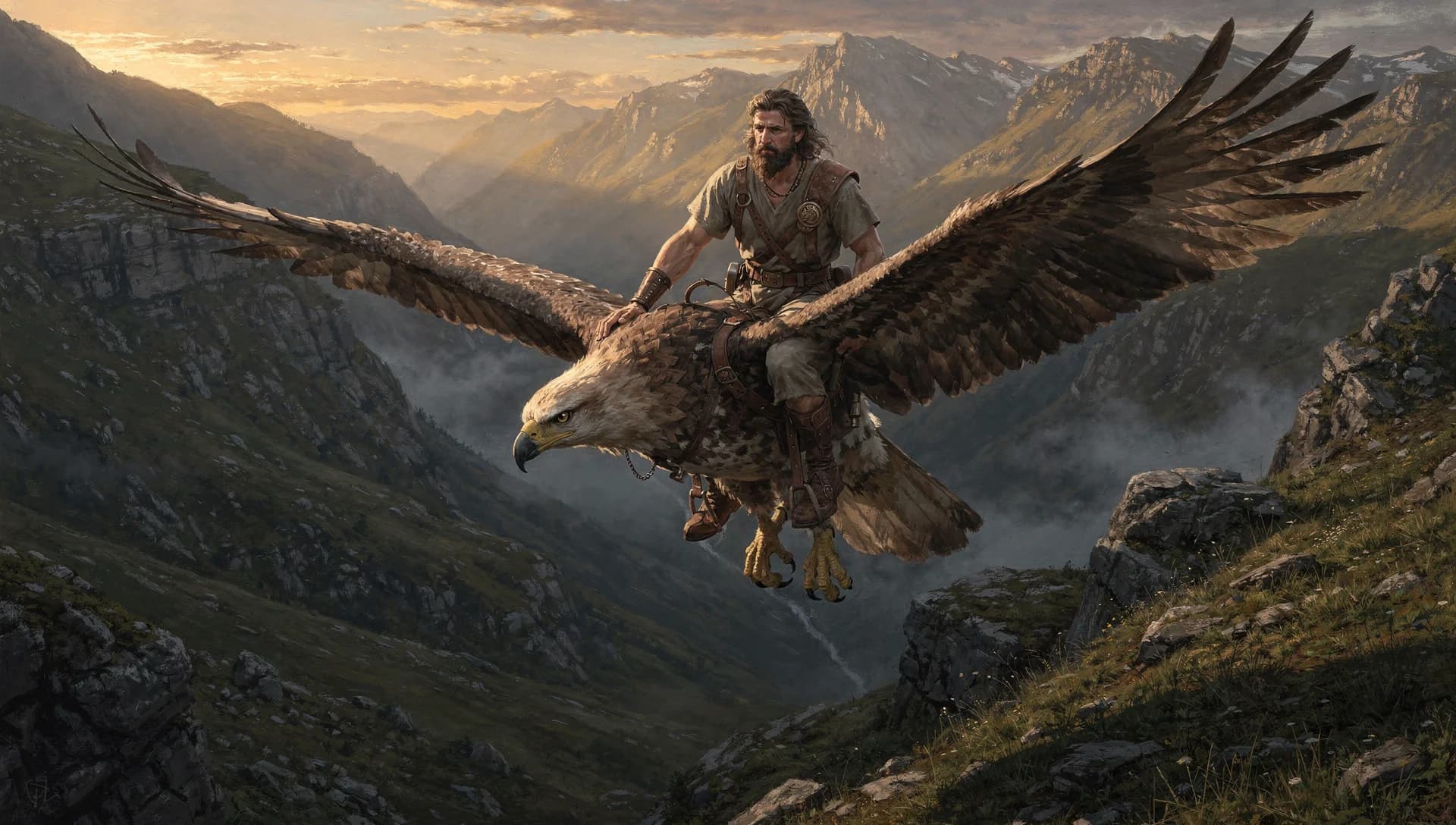
The Bird That Carried the Hero: Adamson, Fandor, and the Hindu Garuda
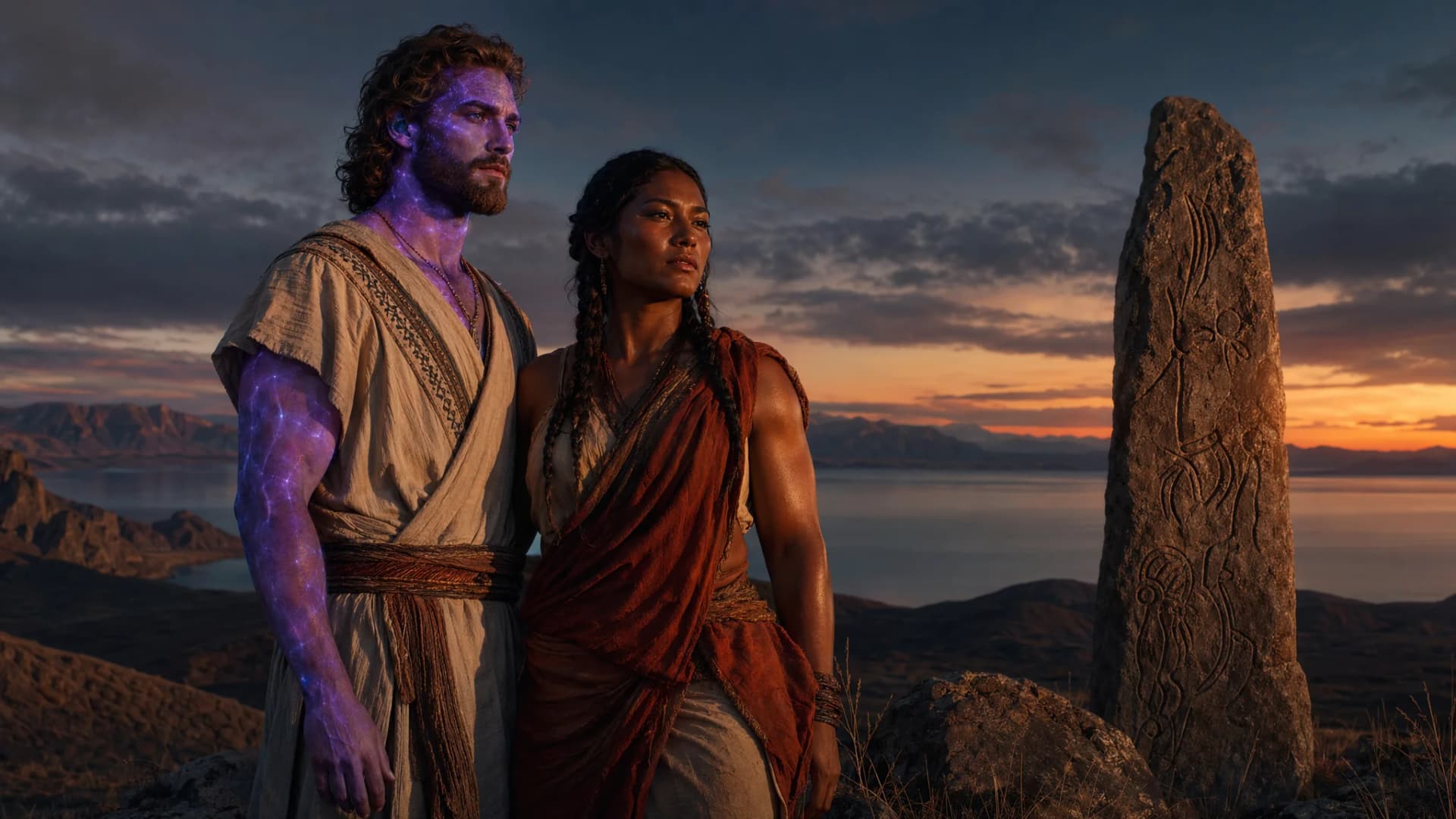
The Dark-Skinned Lord and His Beloved: Adamson, Ratta, and Krishna-Radha
The Universe That Answers: Hindu Karma and the Supreme Being
The God Who Became an It: Salem Monotheism and the Hindu Brahman
The Newsletter
Get the research behind each piece
Free. New Urantia Book explorations, the sources behind the videos, and early looks. No spam, unsubscribe anytime.
Prefer video? Follow on YouTube and Facebook.
Delivered through Substack. You can also read past issues.