
The Dark-Skinned Lord and His Beloved: Adamson, Ratta, and Krishna-Radha
Krishna and Radha are the divine couple at the devotional heart of classical Hinduism. Krishna is depicted with dark blue-black skin and is central to the Bhagavata tradition; Radha is named as the most beautiful woman of her time. The Urantia Book records a historical couple, Adamson and Ratta, whose profile matches the mapping more closely than any other figures in the world record, and it names the migration route that carried their memory into India.
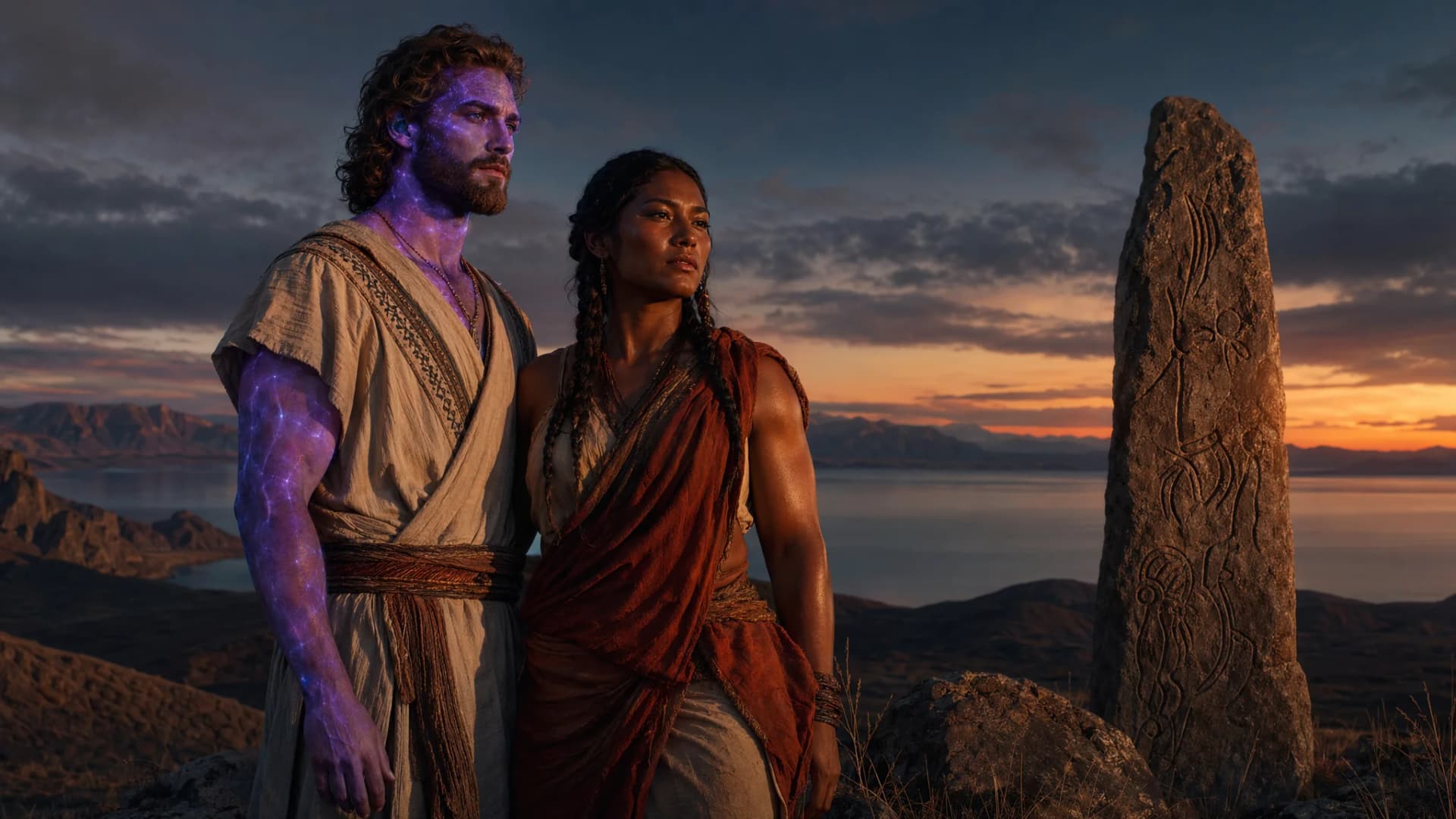
Adamson + Ratta = Krishna + Radha
This article expands on the decoder mapping. For the side-by-side card and quick reference, see the mapping page.
The Couple at the Heart of Bhakti Hinduism
The devotional Bhakti traditions of Hinduism, particularly the Gaudiya Vaishnava school that emerged in medieval Bengal but drew on much older material, center their religious life on the figure of Krishna and his beloved Radha. The couple is not incidental to the tradition. They are its devotional fulcrum. The Bhagavata Purana, the Gita Govinda of Jayadeva, and an enormous body of devotional poetry and song place Radha and Krishna at the center of the relationship between the human soul and the divine.
Two features of the couple are worth marking before the comparative material. First, Krishna is distinguished in iconography by dark skin, usually rendered as deep blue-black, a color unique among the major Hindu deities. Second, Radha is named in the tradition as the most beautiful woman of her era, the supreme gopi whose love for Krishna stands for the soul's longing for the divine.
The Urantia Book records a couple whose profile matches these features with a precision that invites direct comparison.
What the Urantia Book Says
Adam's offspring are described as biologically distinctive. The violet race is named for a quality that later traditions could refract as a skin color:
"Adam and Eve were the founders of the violet race of men, the ninth human race to appear on Urantia. Adam and his offspring had blue eyes, and the violet peoples were characterized by fair complexions and light hair color—yellow, red, and brown." (76:4.1)
The violet designation is central. It names a racial quality of the Adamic descendants. In later traditions, as the memory of the original quality eroded, the color name could be carried in various directions. Dark blue, blue-black, indigo, and violet are chromatic neighbors, and mythological transmission across three thousand years readily slides between them.
Adamson's specific history matches the Krishna profile in several particulars. He was the firstborn of Adam and Eve, of the pure violet race, and a mature man with a settled history when he chose his northern journey:
"Adamson was 120 years old at this time and had been the father of thirty-two pure-line children of the first garden. He wanted to remain with his parents and assist them in upbuilding the second garden, but he was greatly disturbed by the loss of his mate and their children, who had all elected to go to Edentia along with those other Adamic children who chose to become wards of the Most Highs." (77:5.3)
He left the second garden, traveled north into the highlands, and there established a new civilization:
"Adamson would not desert his parents on Urantia, he was disinclined to flee from hardship or danger, but he found the associations of the second garden far from satisfying. He did much to forward the early activities of defense and construction but decided to leave for the north at the earliest opportunity." (77:5.4)
"A company of twenty-seven followed Adamson northward in quest of these people of his childhood fantasies. In a little over three years Adamson's party actually found the object of their adventure, and among these people he discovered a wonderful and beautiful woman, twenty years old, who claimed to be the last pure-line descendant of the Prince's staff." (77:5.5)
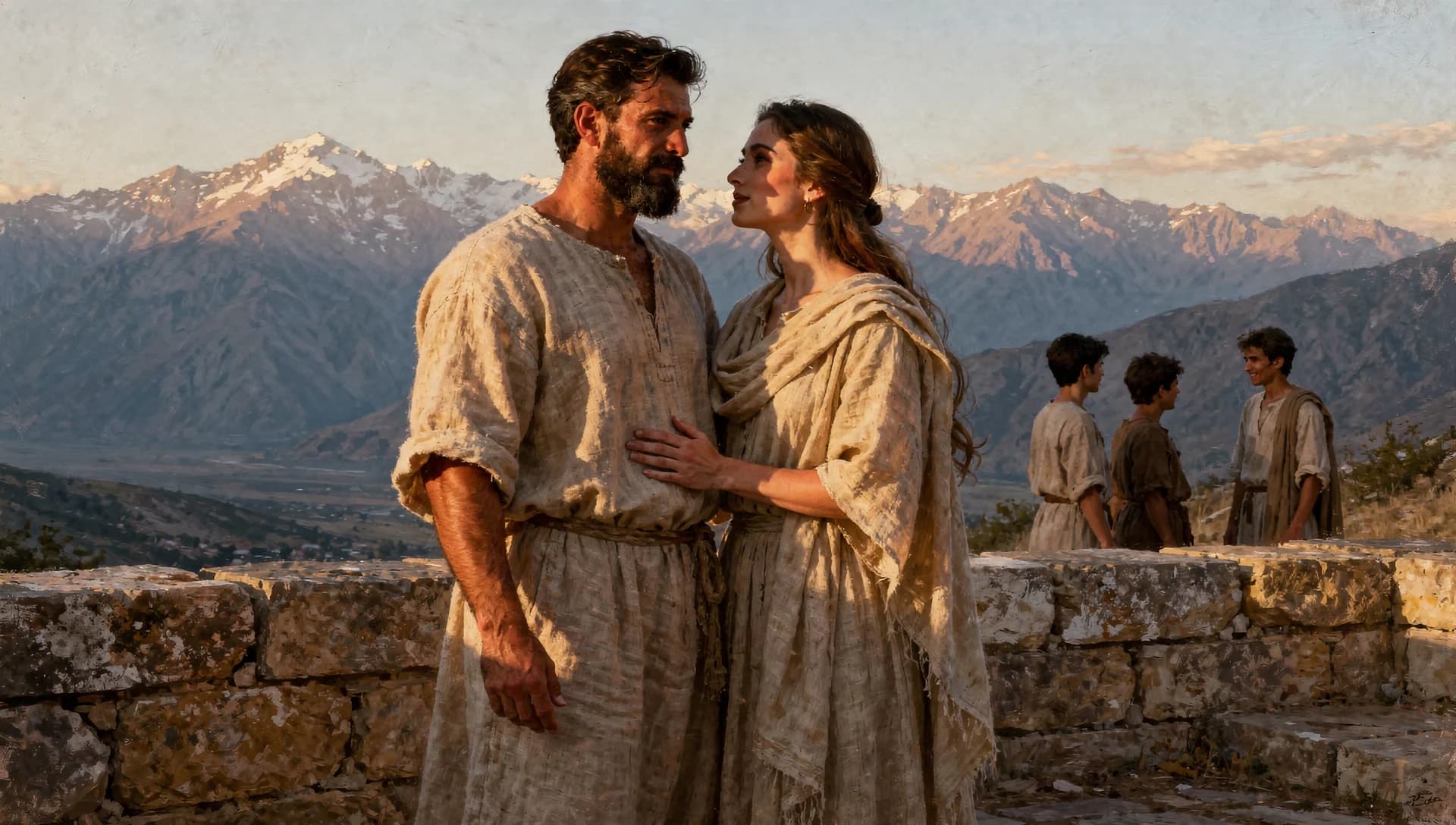
Ratta is described in the strongest terms the Urantia Book applies to any female figure: a wonderful and beautiful woman, twenty years old, the last pure-line descendant of the Prince's staff, descended from two of its fallen members. Adamson and Ratta produced sixty-seven children, including the unique invisible order that became the secondary midwayers, and the couple commanded a corps of helpers who labored with them for life:
"Adamson and Ratta thus had at their command this corps of marvelous helpers, who labored with them throughout their long lives to assist in the propagation of advanced truth and in the spread of higher standards of spiritual, intellectual, and physical living. And the results of this effort at world betterment never did become fully eclipsed by subsequent retrogressions." (77:5.8)
Their civilization persisted at high cultural level for seven thousand years in the region east of the Caspian Sea, near the Kopet Dagh:
"The Adamsonites maintained a high culture for almost seven thousand years from the times of Adamson and Ratta. Later on they became admixed with the neighboring Nodites and Andonites and were also included among the 'mighty men of old.' And some of the advances of that age persisted to become a latent part of the cultural potential which later blossomed into European civilization." (77:5.9)
The geography is the clinching detail, and so is the migration the Urantia Book attaches to it. The same paragraph that locates the Adamsonite headquarters also states that their descendants entered India:
"This center of civilization was situated in the region east of the southern end of the Caspian Sea, near the Kopet Dagh. A short way up in the foothills of Turkestan are the vestiges of what was onetime the Adamsonite headquarters of the violet race... The residue of Adamson's descendants migrated north and west to enter Europe with the blended stock of the last Andite wave coming out of Mesopotamia, and they were also numbered among the Andite-Aryan invaders of India." (77:5.10)
The Aryan migration into India is then dated and tied to the same Turkestan homeland:
"The second Andite penetration of India was the Aryan invasion during a period of almost five hundred years in the middle of the third millennium before Christ. This migration marked the terminal exodus of the Andites from their homelands in Turkestan." (79:4.1)
The transmission path is therefore documented within the Urantia text itself, not merely inferred. Adamson's descendants are named among the Andite-Aryan invaders of India, and that invasion is dated to the middle of the third millennium before Christ, drawn from the same Turkestan highlands where the Adamsonite civilization stood. The modern population-genetics record, which traces a Bronze Age movement of steppe and Central Asian ancestry into northern India during roughly this window, is consistent with the same migration the Urantia Book describes.
What the Ancient Source Says
The Krishna figure is first clearly attested in the Mahabharata and the Harivamsha (c. third century BCE to first century CE). The Bhagavata Purana, composed in the ninth or tenth century CE, develops the devotional Krishna theology most extensively. Edwin Bryant's Krishna: A Sourcebook (Oxford University Press, 2007) collects the principal texts. Friedhelm Hardy's Viraha-Bhakti: The Early History of Krsna Devotion in South India (Oxford University Press, 1983) traces the devotional movement's origins.
Krishna's dark skin is unusual in the Hindu iconographic record. Most major Hindu deities are depicted with lighter complexions. Krishna's distinctively dark blue-black skin is a deliberate choice the tradition returns to repeatedly. The Bhagavata Purana associates the dark skin with Krishna's status as the avatar of Vishnu for the current age (kali yuga), and various theological explanations have been offered. Diana Eck's Darsan: Seeing the Divine Image in India (Columbia University Press, 1998) discusses the iconographic tradition.
Radha's development as a distinct figure is later than Krishna's. She does not appear in the Mahabharata or in the early Puranic material. Her first clear textual appearance is in Jayadeva's Gita Govinda (twelfth century CE), where she is already fully developed as the supreme beloved of Krishna, the hladini-shakti or bliss-aspect of the divine. Guy L. Beck's edited volume Alternative Krishnas: Regional and Vernacular Variations on a Hindu Deity (SUNY Press, 2005) treats the scholarly debates about Radha's origins.
The conventional scholarly explanation for the Radha and Krishna couple's theological prominence treats it as a devotional development internal to Hindu tradition, drawing on regional folk material (especially Bengali Vaishnava poetry) and synthesizing with classical Puranic material. Barbara Stoler Miller's translation and study of the Gita Govinda (The Gitagovinda of Jayadeva: Love Song of the Dark Lord, Columbia University Press, 1977) treats the couple as the consummation of a long devotional trajectory.
The historical question, where the couple itself ultimately came from, has been a topic of comparative speculation. Wendy Doniger (The Hindus: An Alternative History, Penguin, 2009) notes the convergence of pastoral romance tropes in the Krishna and Radha cycle with much older Indo-European divine-couple motifs. The couple's prehistory is, in her treatment, lost in the depths of Indo-European religious memory.
Why This Mapping Matters
The Urantia Book's comparison of Adamson and Ratta to Krishna and Radha is structurally different from its comparisons of figures like Caligastia to An or Van to Enki. Those mappings claim that a specific historical Urantia figure is preserved in the ancient record of a distant civilization. The Adamson and Krishna comparison claims something similar, but with a transmission path that the Urantia Book names directly: from the Adamsonite civilization at the Kopet Dagh, through the Aryan invasion of India in the third millennium before Christ, into the religious substrate that produced classical Hindu theology.
The structural matches are multiple. Adamson was the firstborn of the violet race, fair in complexion but carrying a distinctive racial designation the later tradition could recolor. Krishna is distinguished in iconography by a unique pigmentation within the Hindu pantheon. Adamson traveled north to a highland civilization, and Krishna's cultural center is pastoral and upland rather than the Indo-Gangetic plain. Adamson discovered in Ratta the last pure-line descendant of the Caligastia staff's loyal lineage, described as a wonderful and beautiful woman, and Radha is named in the tradition as the supreme beloved, most beautiful of her contemporaries. The couple's sixty-seven children formed a founding generation of leaders, and the Krishna and Radha devotional theology makes the couple the center of a cosmic family of devotees.
The transmission route is stated in the text. The Adamsonite cultural substrate, as Paper 77 records, "persisted to become a latent part of the cultural potential which later blossomed into European civilization," and the same passage numbers Adamson's descendants among the Andite-Aryan invaders of India. The Krishna and Radha tradition is a cultural form that could readily emerge in a context where the deep substrate carried the memory of a founding couple with Adamsonite features.
The comparison is suggestive rather than conclusive. Radha's late textual appearance (twelfth century CE) is the principal point of tension. If the Adamson and Ratta memory seeded the tradition, one might expect Radha to appear in the earliest Krishna material rather than three thousand years later. The Bengali folk substrate from which Jayadeva drew, however, is itself undatable, and the possibility that the Radha figure lived in oral tradition for a long age before reaching textual fixation is defensible on philological grounds. The central claim is structural and probabilistic rather than philologically specific. It holds that the Krishna and Radha tradition emerged from a cultural substrate that carried the Adamson and Ratta memory, and that the iconographic and theological features the tradition preserves are coherent with what that substrate would have transmitted.
Sources
- The Urantia Book, Paper 76 (The Second Garden), Paper 77 (The Midway Creatures), Paper 79 (Andite Expansion in the Orient). Urantia Foundation, first printing 1955. Cited passages: 76:4.1, 77:5.3, 77:5.4, 77:5.5, 77:5.8, 77:5.9, 77:5.10, 79:4.1.
- Bryant, Edwin F., ed. Krishna: A Sourcebook. Oxford University Press, 2007.
- Hardy, Friedhelm. Viraha-Bhakti: The Early History of Krsna Devotion in South India. Oxford University Press, 1983.
- Beck, Guy L., ed. Alternative Krishnas: Regional and Vernacular Variations on a Hindu Deity. State University of New York Press, 2005.
- Miller, Barbara Stoler, translator. The Gitagovinda of Jayadeva: Love Song of the Dark Lord. Columbia University Press, 1977.
- Eck, Diana L. Darsan: Seeing the Divine Image in India. Columbia University Press, 1998.
- Doniger, Wendy. The Hindus: An Alternative History. Penguin, 2009.
- Hawley, John Stratton. A Storm of Songs: India and the Idea of the Bhakti Movement. Harvard University Press, 2015.
Confidence and Evidence
- Confidence: INFORMED SPECULATION
- Evidence rating: SUGGESTIVE to MODERATE
- Basis: Multiple structural features align (pigmentation distinction, beautiful supreme beloved, highland origin, cultural-founding couple). The transmission route through the Aryan migration is stated directly in the Urantia text (77:5.10, 79:4.1) and is consistent with the modern population-genetics record of Bronze Age Central Asian ancestry entering northern India. The late textual appearance of Radha is the principal point of tension, and the mapping rests on a structural and probabilistic argument rather than a philologically specific one.
Note on Citations
Every direct quotation from The Urantia Book in this article was checked against the canonical paragraph it cites and is verbatim from that paragraph. Where the source text uses a long dash, this article substitutes a comma or period in keeping with house style. No wording is otherwise altered. Quotations that present only part of a paragraph keep the source sentences intact, and an ellipsis marks any omitted span. Readers are encouraged to verify every citation against the canonical text.
Related Decoder Articles
- Adamson + Ratta = Cronus + Rhea, Titan Parents
- 16 Children of Adamson + Ratta = Olympian Gods
- Adamson riding Fandor = Krishna / Vishnu riding Garuda
By Derek Samaras
Connecting Articles
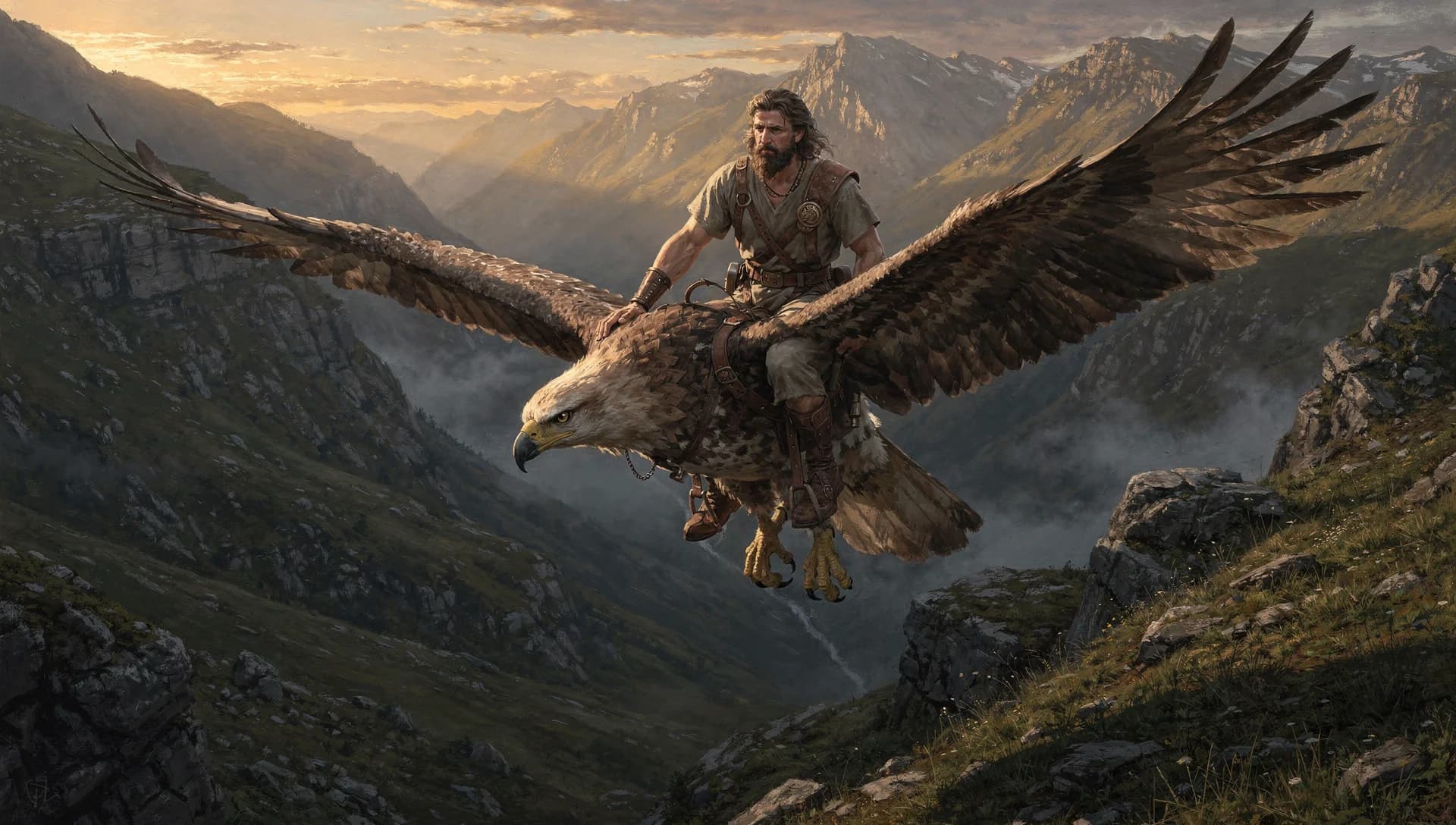
The Bird That Carried the Hero: Adamson, Fandor, and the Hindu Garuda
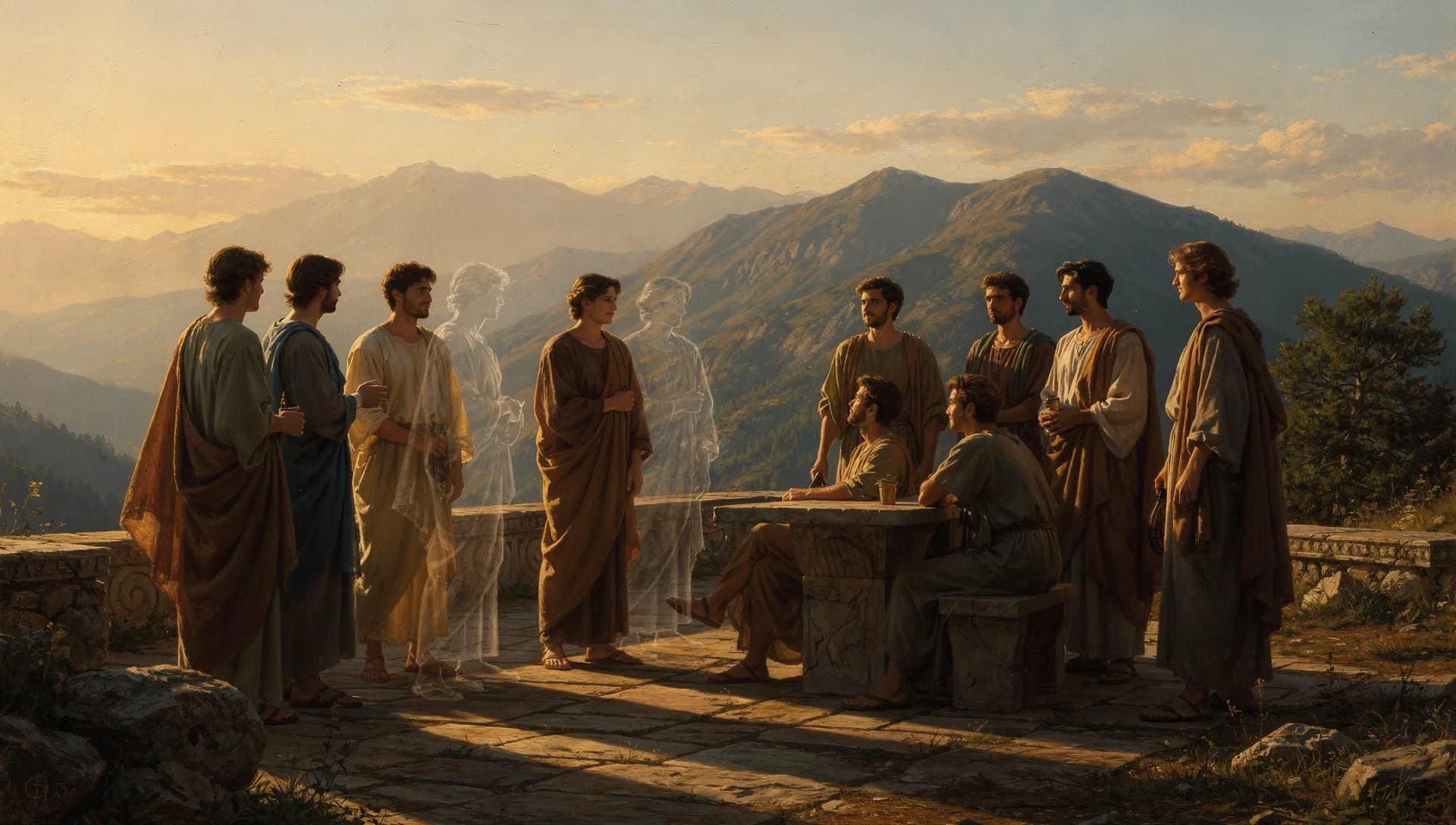
Sixty-Seven Children, Twelve Remembered: The Adamsonites and the Olympian Pantheon
The Pre-Olympian Couple: Adamson and Ratta in the Greek Memory
The Universe That Answers: Hindu Karma and the Supreme Being
The Newsletter
Get the research behind each piece
Free. New Urantia Book explorations, the sources behind the videos, and early looks. No spam, unsubscribe anytime.
Prefer video? Follow on YouTube and Facebook.
Delivered through Substack. You can also read past issues.