
 Mythic
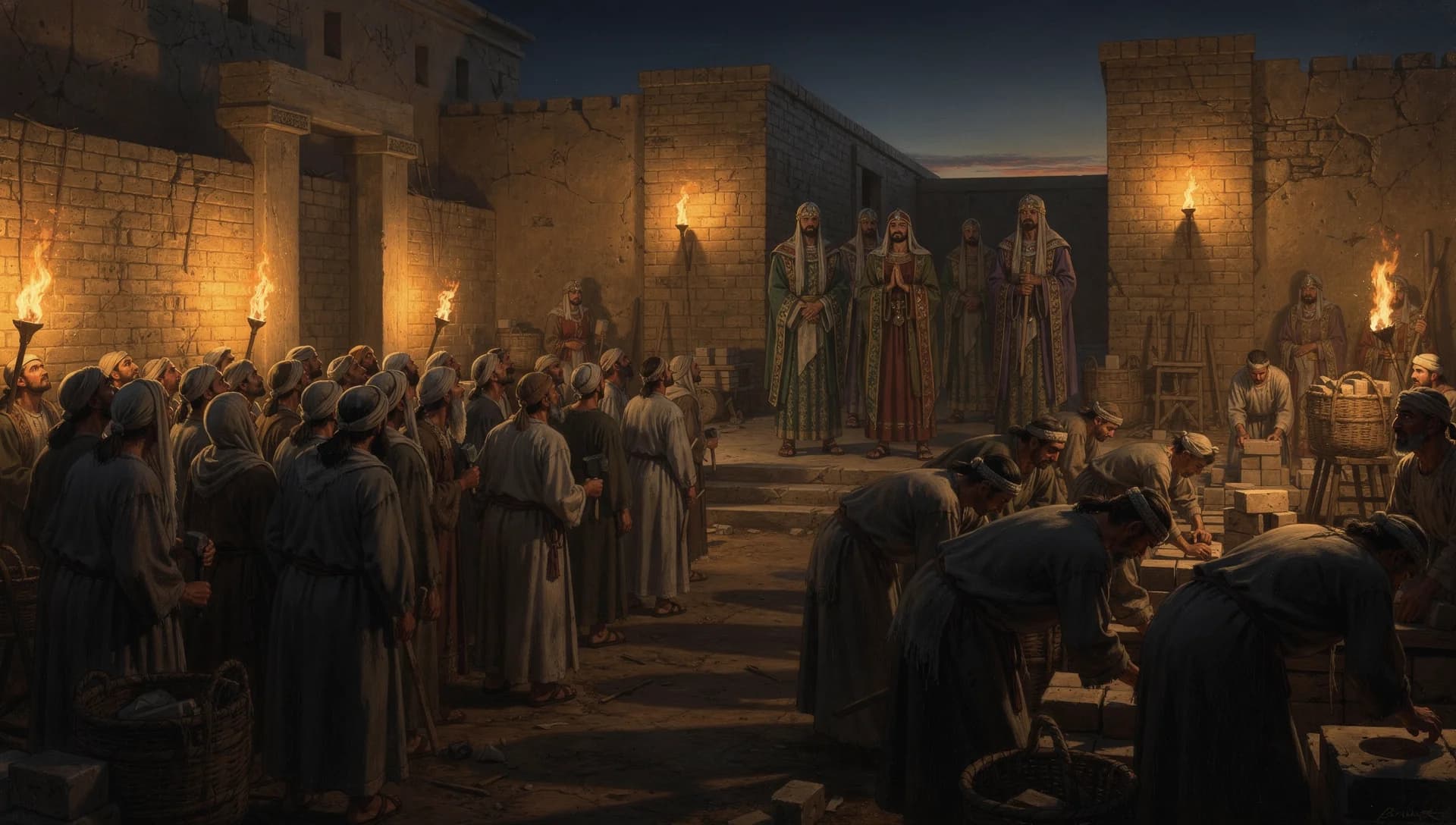
Igigi, lesser divine workers who served the Anunnaki
 UB
UBModified Andonites (Amadon's people)
Full Article
Read the deep-dive article on this connection
Modified Andonites (Amadon's people) = Igigi, lesser divine workers who served the Anunnaki
The Connection
The Igigi are subordinate to the Anunnaki; they do the labor while the Anunnaki give orders. Eventually the Igigi rebel. The modified Andonites occupied this exact position: enhanced mortals working under the superhuman staff. Some remained loyal (Amadon), some defected.
UB Citation
Academic Source
Lambert & Millard, Atra-Hasis (1969)
Historical Evidence(Strong evidence)
Atrahasis Epic (c. 1800 BCE, from Sippar and Nineveh): The Igigi were subordinate beings performing grueling labor (excavating the Tigris and Euphrates) for the Anunnaki for 3,600 years before rebelling. Academic consensus identifies the Igigi as "a collective of subordinate deities performing menial labor for the higher-ranking Anunnaki." The hierarchy Anunnaki above Igigi mirrors corporeal staff above modified Andonites exactly.
Deep Dive
The Atrahasis Epic, the great Akkadian creation-and-flood narrative recovered from tablets at Sippar and Nineveh and edited definitively by W. G. Lambert and A. R. Millard in 1969, opens with a labor crisis in the divine bureaucracy. The Anunnaki, the senior gods, have placed all the work of creation, the digging of irrigation canals, the maintenance of the Tigris and Euphrates, on the shoulders of a junior class of beings called the Igigi. For three thousand six hundred years the Igigi have toiled. They are exhausted. They are subordinate. They rebel. They throw down their tools and march on the dwelling of Enlil at Ekur. The Anunnaki, panicked, agree that humanity must be created to take over the labor. Enki and the mother goddess fashion humanity from clay mixed with the blood of a slaughtered god, and the Igigi are released from their drudgery.
The Urantia Book gives us, alongside the corporeal staff of one hundred, a class of one hundred specially selected Andonite mortals, the modified Andonites, who served as the human associates of the staff. Paper 67 tells us that "there were fifty-six of these modified Andonite associates of the staff, sixteen of the Andonite attendants of the disloyal staff refusing to go into rebellion with their masters." Paper 73 gives the full count: one hundred modified Andonites who had contributed life plasm to the staff and were, in return, made possessors of life-extension capacities that allowed them to use the tree of life. They were enhanced humans, not full corporeal staff but more than ordinary mortals. They served under the staff. Some, like Amadon, became heroes of loyalty. Others fell with their masters into the rebellion.
The structural match with the Igigi is striking. Subordinate class: Igigi work for Anunnaki, modified Andonites work for the corporeal staff. Mixed loyalty: some Igigi rebel, some do not (the tradition is varied), and explicitly some Andonites rebelled and some refused. Mediating role between gods and mortals: the Igigi are described as junior gods who do labor mortals would otherwise do, and the modified Andonites are explicitly mortals enhanced for service to the staff and their work. Enhanced beyond ordinary humanity: the Igigi are gods, lesser gods, but gods; the modified Andonites are humans but humans who have access to life-extension and serve in semidivine functions. The intermediate ontological status is the structural giveaway.
Amadon as outstanding example: Paper 67 tells us he was "the outstanding human hero of the Lucifer rebellion. This male descendant of Andon and Fonta was one of the one hundred who contributed life plasm to the Prince's staff." His seven-year stand of unbroken loyalty against Daligastia's sophistries is the moral center of the rebellion narrative on the human side. The Igigi tradition does not preserve a single hero figure of Amadon's stature, but the broader tradition does preserve the memory of a junior class that fought alongside or against the senior gods, and Akkadian poetry occasionally names Igigi who distinguished themselves.
The strongest counterargument is the labor framing. The Igigi are bound to backbreaking physical labor; the modified Andonites are not described as enslaved laborers. The reply is that the Mesopotamian tradition rationalized the subordination through a labor narrative that fits Iron Age agrarian sensibilities, but the underlying datum is the relationship of subordination, not the specific kind of subordination. A class of enhanced humans serving a class of corporeal supermen, with the option to remain loyal or rebel, fits the Igigi-Anunnaki structure even if the Mesopotamian retelling supplies its own folk rationale for the subordination.
What the parallel implies is that another large piece of the Mesopotamian theological inventory has a real referent in the planetary mission staff. The Anunnaki are the corporeal staff. The Igigi are the modified Andonites. The flood narratives reflect the rebellion-era purges. The wisdom god Enki is Van. The remote sky father is Caligastia. The whole top half of the Sumerian pantheon is, on the UB reading, a memory of real planetary administrators, with their human auxiliaries preserved as the lesser gods. That is a coherent theological reduction, and it is exactly the kind of result the decoder is designed to surface.
Key Quotes
“There were fifty-six of these modified Andonite associates of the staff, sixteen of the Andonite attendants of the disloyal staff refusing to go into rebellion with their masters.”
“Amadon is the outstanding human hero of the Lucifer rebellion. This male descendant of Andon and Fonta was one of the one hundred who contributed life plasm to the Prince's staff, and ever since that event he had been attached to Van as his associate and human assistant.”
“The Igigi labor for the Anunnaki for three thousand six hundred years before throwing down their tools and marching on Ekur. (Paraphrased from the Lambert & Millard standard edition.)”
Cultural Impact
The two-tier divine bureaucracy preserved in the Anunnaki/Igigi distinction is the structural ancestor of much later angelological hierarchy. Second Temple Jewish texts develop multi-tier angel ranks: archangels above ordinary angels, with intermediate orders. By the time of Pseudo-Dionysius in the late fifth century, the Christian celestial hierarchy has nine ranks in three triads, each subordinate to the one above and ministering to creation through them. The structural insight, that the divine economy operates through ranks of mediators with subordinate classes doing the on-the-ground work, traces in part to the Igigi-Anunnaki precedent. The Watchers tradition in 1 Enoch preserves the labor framing in inverted form: the Watchers descend to teach humans the very arts the Igigi originally performed for the gods. Hindu cosmology has its own version with the Devas and Asuras and the lesser deva-classes (Vasus, Maruts) who serve under the senior gods. In every tradition that descends from the ancient Near Eastern theological matrix, you find the structural memory of a labor-and-loyalty crisis among the lesser divine ranks. That is the cultural impact of the Igigi tradition: it taught religious imagination to think in tiers and to take seriously the moral agency of the middle ranks.
Modern Resonance
Modern readers encounter the Igigi most often through the lens of the Anunnaki revival. Sitchin and successors fold the Igigi into their extraterrestrial schema: the Igigi are the orbiting workers stuck in spaceships above Earth, the rank-and-file alien astronauts who eventually mutiny. This is bad linguistics and worse theology, but the underlying datum is sound: there was a junior class, they did rebel or partly rebel, and they were the human-facing labor of the divine project. The UB account restores the right scale. The Igigi were not orbiting astronauts; they were enhanced human associates of the corporeal staff, the modified Andonites, descendants of Andon and Fonta who had been chosen for their genetic stock and gifted with life-extension through the tree of life. Some, like Amadon, became the moral heroes of the rebellion. Others fell. Their descendants intermarried into the Nodite line and the loyal post-rebellion remnant. The modern Watchers/Anunnaki rabbit hole misses the most interesting fact: the most morally significant character in the rebellion, on any side, is a human, Amadon, not a god.
Related Mappings
Related Articles
Where to next
The free newsletter. The research behind each piece, no spam.