
We Came From the North: Pan-African Origin Traditions and the Indigo Migration Path
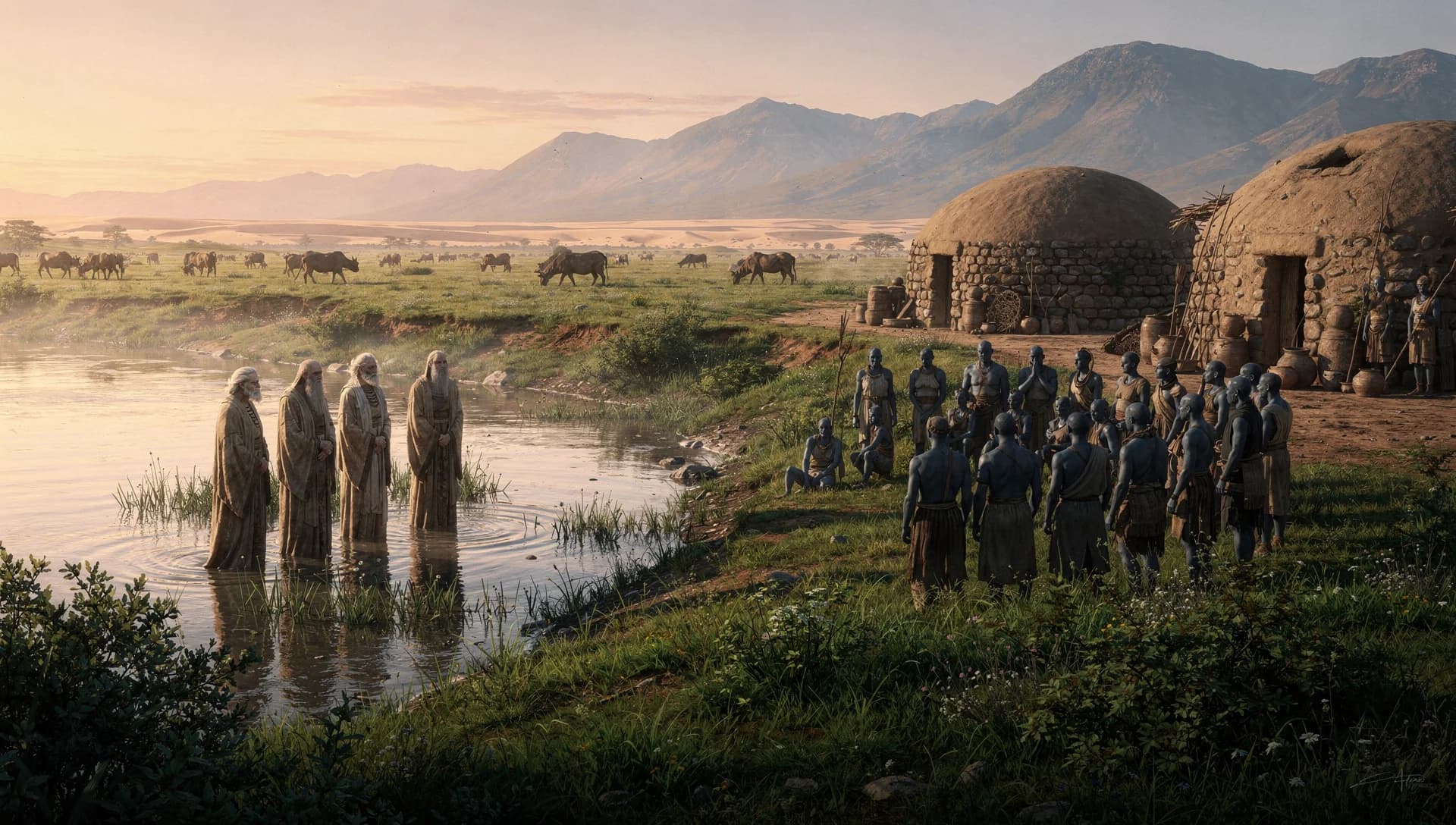
Across sub-Saharan Africa, origin traditions consistently point to a homeland in the north or northeast. The Dogon trace their migration from the Mande region and ultimately from Egypt. Bantu traditions remember Lake Chad or the Great Lakes. Igbo memory points east. The Urantia Book records the indigo race as the last Sangik lineage to leave the Himalayan Badonan homeland and settle Africa.
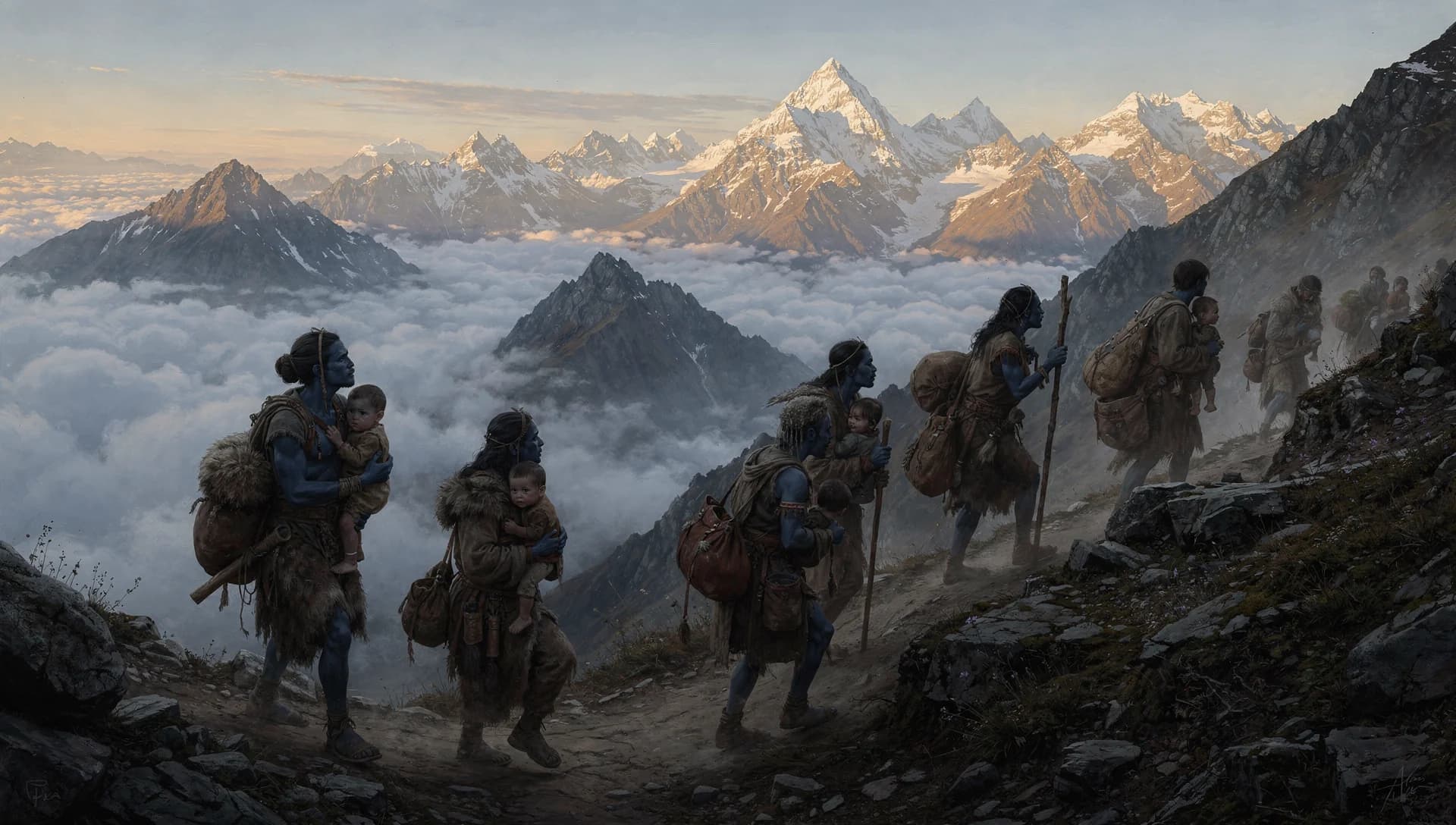
Indigo race migration from the Himalayan homeland into Africa = Pan-African origin traditions of ancestors coming from the north and east
This article expands on the decoder mapping. For the side-by-side card and quick reference, see the mapping page.
The Northern Homeland Pattern
A consistent pattern runs through the traditional cultures of sub-Saharan Africa. The founding ancestors came from somewhere to the north or northeast.
The Dogon of Mali preserve a detailed migration story. They came from the Mande region further west, and before that from the Egyptian Nile valley further north. Bantu oral traditions across the wide Bantu-speaking range, from Cameroon through Central Africa to South Africa, place the ancestral origin near Lake Chad or the Great Lakes. Igbo tradition in southeastern Nigeria preserves an eastern homeland memory tied to Egyptian cultural elements. Yoruba tradition locates the original ancestral home at Ile-Ife in southwestern Nigeria, with a deeper origin further to the northeast.
The same homeland direction recurs across cultures separated by thousands of miles. That kind of agreement, across linguistic and cultural lines, points to shared memory of an actual migration from somewhere outside sub-Saharan Africa.
What the Urantia Book Says
The Urantia Book records the indigo race as the last of the six Sangik colored races to leave the original homeland in the Himalayan foothills.
"The superior races sought the northern or temperate climes, while the orange, green, and indigo races successively gravitated to Africa over the newly elevated land bridge which separated the westward retreating Mediterranean from the Indian Ocean." (64:7.13)
"The last of the Sangik peoples to migrate from their center of race origin was the indigo man. About the time the green man was killing off the orange race in Egypt and greatly weakening himself in so doing, the great black exodus started south through Palestine along the coast; and later, when these physically strong indigo peoples overran Egypt, they wiped the green man out of existence by sheer force of numbers." (64:7.14)
The Sangik family origin in the Himalayan highlands is documented:
"And now, among these highland Badonites there was a new and strange occurrence. A man and woman living in the northeastern part of the then inhabited highland region began suddenly to produce a family of unusually intelligent children. This was the Sangik family, the ancestors of all of the six colored races of Urantia." (64:5.2)
The indigo migration ran south and west from the Himalayan highlands, through the Middle East, into Africa. UB 64:7 traces the broader Sangik dispersion. The indigo settlers carried with them a memory of the northern homeland. African oral tradition preserved that memory across millennia.
Later cultural waves reinforced the same northern direction. The Andite migrations into Egypt and onward into Africa, documented at UB 78:5.5 and 80:1.3, added fresh layers of genuine northern-origin content on top of the older indigo substrate.
What the Ancient Sources Say
The Dogon migration tradition is preserved in Marcel Griaule and Germaine Dieterlen's Le Renard pâle (Institut d'Ethnologie, 1965) and in Griaule's Dieu d'eau (Éditions du Chêne, 1948). The Dogon remember a long migration from the Mande cultural zone, in what is now Mali and Burkina Faso, and a deeper origin for their cosmology in the Egyptian Nile valley.
The Bantu expansion is documented archaeologically and linguistically. Christopher Ehret's The Civilizations of Africa: A History to 1800 (University Press of Virginia, 2002) traces the Bantu expansion from a cradle on the Nigerian and Cameroonian border, eastward across Central Africa and southward into southern Africa, between roughly 3000 BCE and 500 CE. The oral tradition of a northern homeland matches the linguistic and archaeological record almost exactly.
Joseph Greenberg's Languages of Africa (Indiana University Press, 1963) provided the foundational classification of African language families. Derek Nurse and Gérard Philippson's The Bantu Languages (Routledge, 2003) refined the picture. The combined linguistic and genetic evidence for the Bantu expansion confirms the migration route that the oral tradition remembers.
Roland Oliver and Brian Fagan's Africa in the Iron Age (Cambridge University Press, 1975) documents the Iron Age expansions across sub-Saharan Africa. The Bantu expansion was the principal demographic and cultural event of the first millennium BCE and the first millennium CE across Central and Southern Africa.
The Egyptian connection that the Dogon and other West African traditions preserve has been treated across a substantial scholarly literature. Cheikh Anta Diop's The African Origin of Civilization (Lawrence Hill, 1974) argued for direct Egyptian and sub-Saharan cultural continuity on linguistic, cultural, and physical anthropological grounds. Martin Bernal's Black Athena (Rutgers University Press, 1987 to 2006, three volumes) argued for substantial Egyptian contribution to later Mediterranean and West African cultural development. These claims remain contested in detail, but the dispute does not affect the preserved oral content of the African origin pattern itself.
Why This Mapping Matters
The recurring northern homeland across widely separated African cultures looks like genuine memory of an actual migration. The Dogon preservation of a Mande and Egyptian origin, the documented Bantu expansion from the Nigerian and Cameroonian cradle, and the Igbo and Yoruba memories of an origin to the north and east all point in the same direction. This is not coincidence.
The Urantia Book supplies the deeper migration that ties these strands together. The indigo race moved south from the Sangik homeland in the Himalayan foothills, through the Middle East, and into Africa. Later Andite and Egyptian contact reinforced the northern memory in the African substrate. The oral traditions preserve a real historical movement.
The genetic evidence for sub-Saharan African origin of anatomically modern Homo sapiens, the mitochondrial Eve and Y-chromosome Adam findings discussed in the companion article on African first-family traditions, does not contradict this. The earliest emergence of Homo sapiens in sub-Saharan Africa is compatible with a later Sangik mutation event and a return migration that brought new cultural and biological content back into the continent.
The point of the mapping is straightforward. Pan-African origin traditions should be read as genuine preservations of the indigo migration path that the Urantia Book documents, with later Andite and Egyptian reinforcement carried in along the trade and cultural routes.
Sources
- The Urantia Book, Paper 64 (The Evolutionary Races of Color), Paper 78 (The Violet Race After the Days of Adam), Paper 80 (Andite Expansion in the Occident). Urantia Foundation, first printing 1955. Cited passages: 64:5.2, 64:7.13-14, 78:5.5, 80:1.3.
- Ehret, Christopher. The Civilizations of Africa: A History to 1800. University Press of Virginia, 2002.
- Greenberg, Joseph H. Languages of Africa. Indiana University Press, 1963.
- Nurse, Derek and Gérard Philippson, editors. The Bantu Languages. Routledge, 2003.
- Oliver, Roland and Brian Fagan. Africa in the Iron Age. Cambridge University Press, 1975.
- Griaule, Marcel and Germaine Dieterlen. Le Renard pâle. Institut d'Ethnologie, 1965.
- Diop, Cheikh Anta. The African Origin of Civilization. Lawrence Hill, 1974.
Confidence and Evidence
- Confidence: INFORMED SPECULATION
- Evidence rating: SUGGESTIVE
- Basis: The Urantia Book documents the indigo race migration from the Himalayan homeland into Africa at UB 64:7.13-14. The pan-African origin-tradition pattern of northern-homeland memory is documented across multiple sub-Saharan cultural traditions. The Bantu linguistic-archaeological record supports the northern-origin tradition. The continuous oral preservation of the northern-homeland memory across widely distributed cultures indicates genuine historical-geographic memory.
Related Decoder Articles
- African First Family = Sangik Origin
- Dogon Nommo = Saharan Indigo Civilization
- Himalayan Origin = Andonic Homeland
Byline: Derek Samaras | Urantia Book Network | April 2026
Connecting Articles
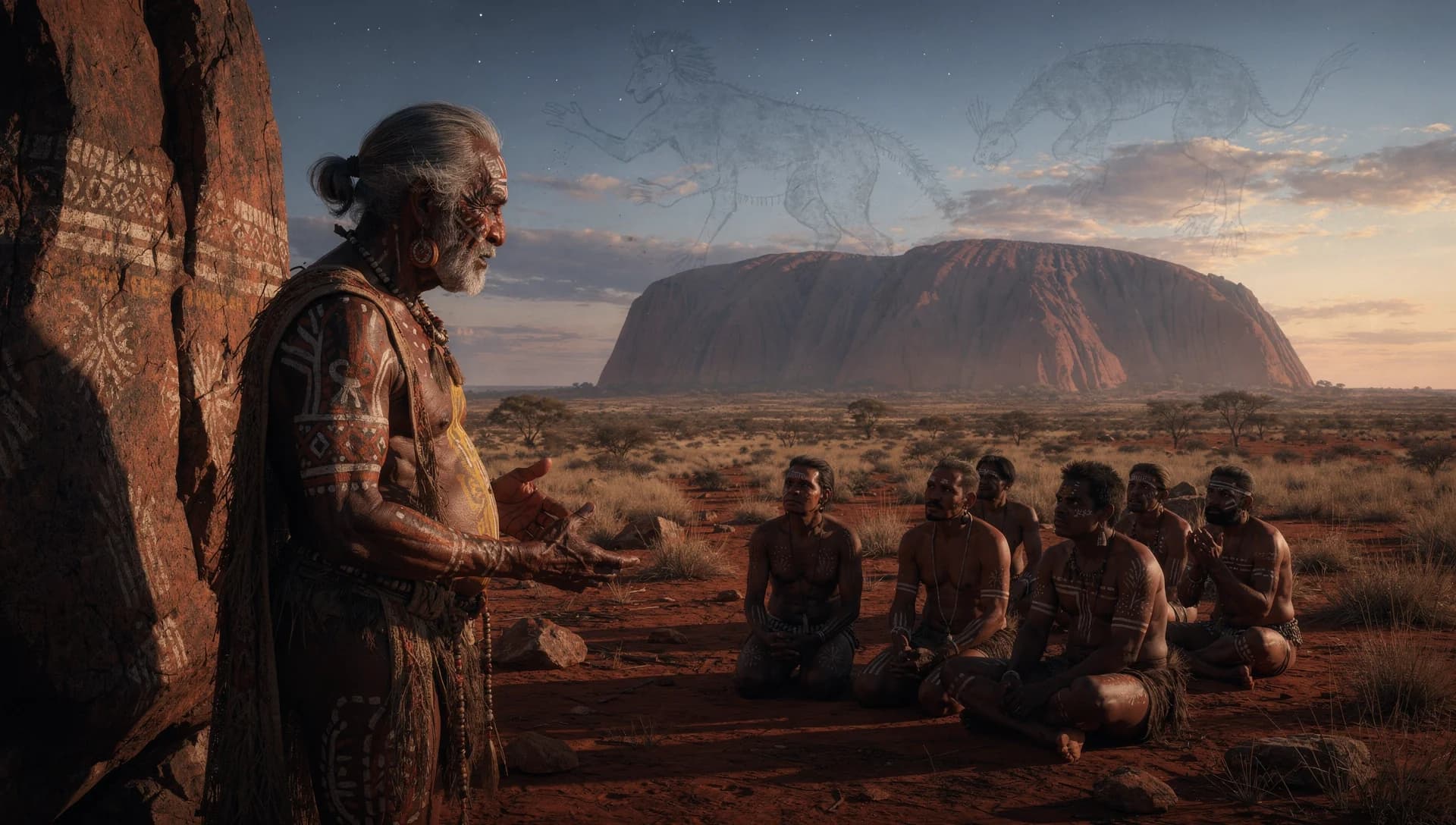
The Longest Memory: Australian Aboriginal Dreamtime and the Primordial Teaching-Ancestors
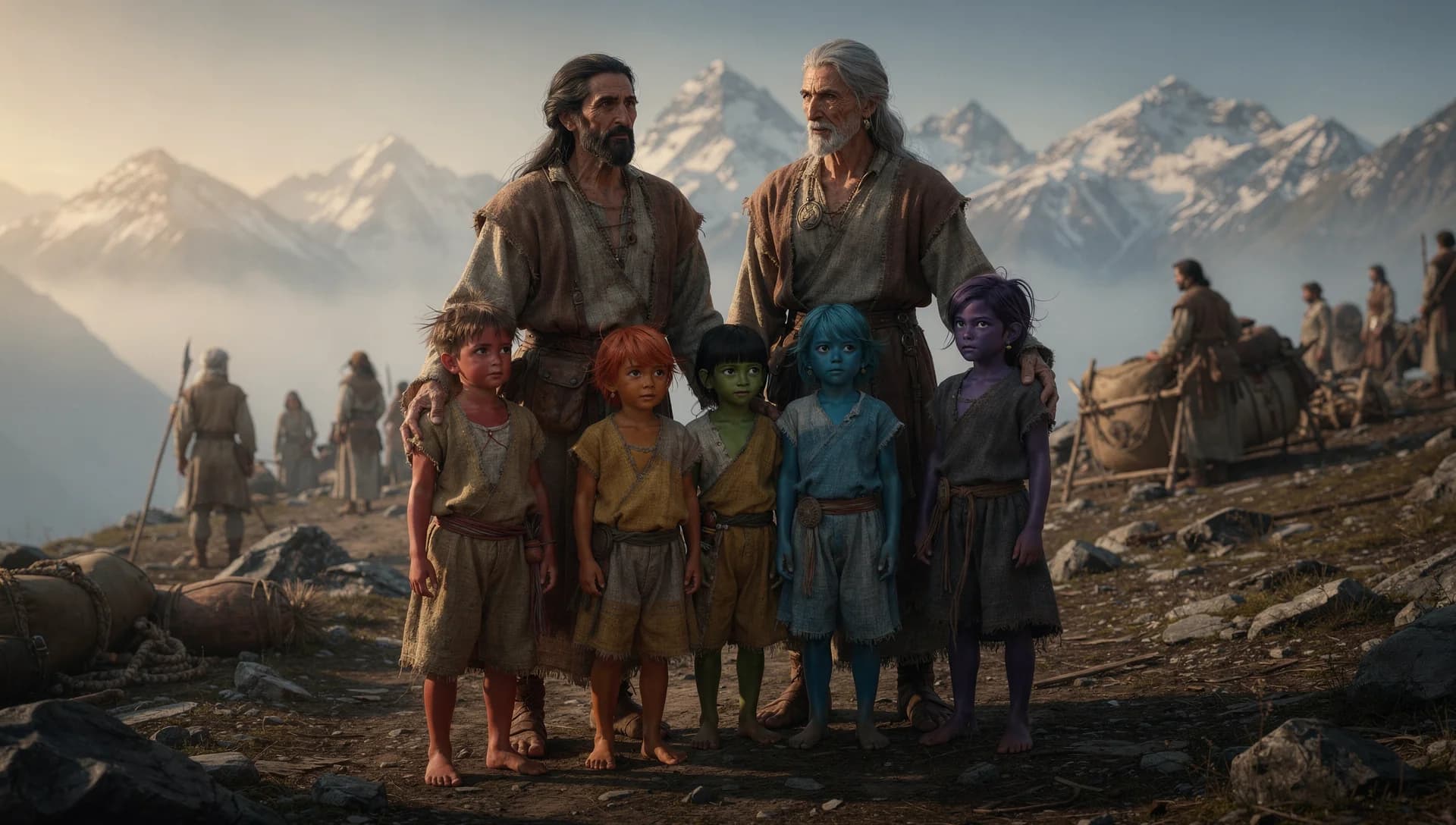
We Come From One: African First-Family Traditions and the Sangik Origin
The Amphibious Teachers and the Green Sahara: The Dogon Nommo and the Pre-Desertification Indigo Civilization

Humanity Came From the Mountains: Himalayan Origin Traditions and the Andonic Homeland
The Newsletter
Get the research behind each piece
Free. New Urantia Book explorations, the sources behind the videos, and early looks. No spam, unsubscribe anytime.
Prefer video? Follow on YouTube and Facebook.
Delivered through Substack. You can also read past issues.