
The Test They Both Failed: Adam and the Mesopotamian Adapa
A cuneiform fragment found in the Egyptian sands tells of Adapa, a supremely intelligent sage created to uplift humanity, who was offered the food of immortality and forfeited it through a single misjudgment. The Urantia Book's account of Adam's default has the same structure: a being of extraordinary capability, a test involving what he was to consume, and a lost inheritance.
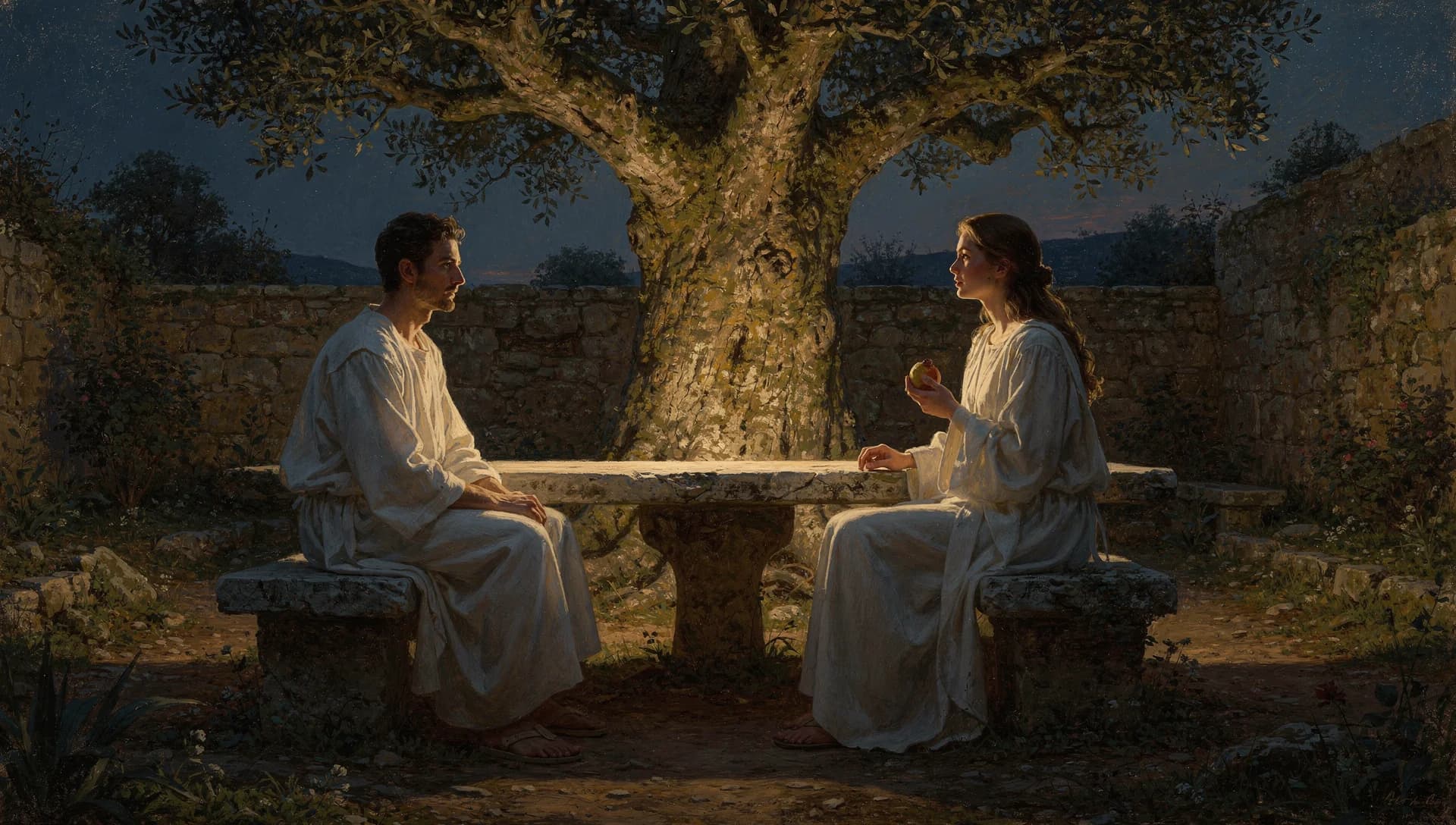
Adam, Material Son = Adapa (Mesopotamian), the sage who lost immortality
This article expands on the decoder mapping. For the side-by-side card and quick reference, see the mapping page.
The Sage Who Was Offered Immortality
Among the cuneiform tablets recovered from the Egyptian diplomatic archive at Tell el-Amarna, one fragment, labeled Fragment B by modern editors, tells a short and specific story. A supremely intelligent man named Adapa, created by the god Ea as a sage of the city of Eridu, is summoned before the sky-god Anu. Anu offers him the food of life and the water of life. Adapa refuses them. He had been warned by Ea that the food would be the food of death, and he believes his creator. Too late, he learns the truth: Anu was offering genuine immortality, and Adapa, through a single error of judgment, has forfeited the gift.
This is one of the oldest recorded stories of a superhuman being losing immortality through a test. It is also one of the strangest, because it refuses the usual mythological consolation. Adapa does not disobey. He does not sin. He follows the advice of his creator in good faith, and he loses everything. The text preserves the ache of the thing precisely.
The Urantia Book records an event that shares the specific structural features of Adapa's test.
What the Urantia Book Says
Adam and Eve were Material Son and Daughter, biologically superior beings whose life was sustained by a combination of their own physiology and the fruit of the tree of life. Their mission required patient work over many generations, building up a reserve of the violet race before the world-wide genetic uplift could begin.
Eve's default came through a single critical misjudgment, presented to her by a trusted Nodite associate named Serapatatia:
"It should again be emphasized that Serapatatia was altogether honest and wholly sincere in all that he proposed. He never once suspected that he was playing into the hands of Caligastia and Daligastia. Serapatatia was entirely loyal to the plan of building up a strong reserve of the violet race before attempting the world-wide upstepping of the confused peoples of Urantia." (UB 75:3.6)
The warning given to Adam and Eve was explicit and repeated:
"Every time the Garden pair had partaken of the fruit of the tree of life, they had been warned by the archangel custodian to refrain from yielding to the suggestions of Caligastia to combine good and evil. They had been thus admonished: 'In the day that you commingle good and evil, you shall surely become as the mortals of the realm; you shall surely die.'" (UB 75:4.4)
The default itself was not disobedience in the ordinary sense. Eve was persuaded by a sincere friend, backed by Caligastia's invisible suggestion, that accelerating the plan would serve the higher good. She was wrong, and the Material Sonship was forfeited:
"And as the Material Son and Daughter thus communed in the moonlit Garden, 'the voice in the Garden' reproved them for disobedience. And that voice was none other than my own announcement to the Edenic pair that they had transgressed the Garden covenant; that they had disobeyed the instructions of the Melchizedeks; that they had defaulted in the execution of their oaths of trust to the sovereign of the universe." (UB 75:4.2)
The Material Son's dual circulatory system, which depended on the fruit of the tree of life, could no longer sustain him after the default:
"The Material Son and Daughter of Urantia, being also personalized in the similitude of the mortal flesh of this world, were further dependent on the maintenance of a dual circulatory system, the one derived from their physical natures, the other from the superenergy stored in the fruit of the tree of life. Always had the archangel custodian admonished Adam and Eve that default of trust would culminate in degradation of status, and access to this source of energy was denied them subsequent to their default." (UB 75:7.6)
Adam and Eve died as mortals. The inheritance of immortality was forfeited through a single critical misjudgment made in good faith.
What the Ancient Source Says
The Adapa story survives in four cuneiform fragments (A, B, C, D), edited and translated by Shlomo Izre'el in Adapa and the South Wind: Language Has the Power of Life and Death (Eisenbrauns, 2001). Fragment B, recovered from the Amarna archive in Egypt, preserves the food-test scene. Ea, creator of Adapa, warns his creature that the food Anu will offer will be the food of death. Anu, in fact, offers the food of life. Adapa refuses on Ea's instructions and forfeits the gift.
W. G. Lambert, reviewing the parallel in his Festschrift contributions, observed that the Adapa and Adam stories share a very specific structure: "Both underwent a test before the deity based upon something they were to consume, both failed and forfeited immortality." The point is tighter than a generic motif of a lost Eden. The test is about consumption. The failure is about misjudgment. The consequence is the loss of a superhuman inheritance.
Stephanie Dalley places the Adapa tradition in the context of the Mesopotamian apkallu traditions, the seven sages sent before the flood to uplift humanity (Myths from Mesopotamia, Oxford, 2000). Adapa is the first of them, the model of the biologically superior ancestor who almost brought humanity into eternal life but did not.
Why This Mapping Matters
The parallel is not between Adam and any ordinary Mesopotamian god. It is between Adam and one very specific cuneiform figure whose story matches the Urantia account in three unusual features. Adapa is created as a biologically superior being (the Urantia record says the same of Adam). Adapa is tested through what he will consume (Adam's life depends on the fruit of the tree of life). Adapa loses immortality through a single critical misjudgment made in good faith on advice from a trusted source (Eve was persuaded by Serapatatia, who was himself playing into the hands of Caligastia).
The Adapa fragment also names Ea as Adapa's creator. Ea is the Akkadian name of Enki. In the Van-Enki mapping we have the suggestion that Enki preserves the memory of Van, the loyal jurist who guarded the tree of life through the dark ages and handed it to Adam at the Garden. If Ea remembers Van, then Adapa remembers the relationship between Van and Adam: the steward and the superhuman successor whose failed test altered the trajectory of the world.
The memory is broken, as all ancient memories of this depth are broken. The names are different. The framing is different. But the structural test and its outcome have survived two thousand miles and five thousand years with unusual fidelity.
Sources
- The Urantia Book, Paper 75 (The Default of Adam and Eve), Paper 76 (The Second Garden). Urantia Foundation, first printing 1955. Cited passages: 75:3.6, 75:4.2, 75:4.4, 75:7.6.
- Izre'el, Shlomo. Adapa and the South Wind: Language Has the Power of Life and Death. Eisenbrauns, 2001.
- Dalley, Stephanie, ed. Myths from Mesopotamia: Creation, the Flood, Gilgamesh, and Others. Revised edition, Oxford University Press, 2000.
- Lambert, W. G. "A New Look at the Babylonian Background of Genesis," in Journal of Theological Studies, 1965.
- Amarna Tablet EA 356 (Fragment B), British Museum; digital facsimile at CDLI.
Confidence and Evidence
- Confidence: INFORMED SPECULATION
- Evidence rating: STRONG
- Basis: The structural match is unusually specific: a biologically superior sage, a consumption test, a misjudgment made in good faith on advice, and the forfeiture of immortality. The presence of Ea (Enki) as Adapa's creator adds an independent line of support through the Van-Enki mapping.
Related Decoder Articles
- Adam, Material Son = Marduk (Babylonian) / possibly Shamash
- Eve, Material Daughter = Inanna / Ishtar
- Van, Loyal Corporeal Staff Member = Enki / Ea
By Derek Samaras
Connecting Articles
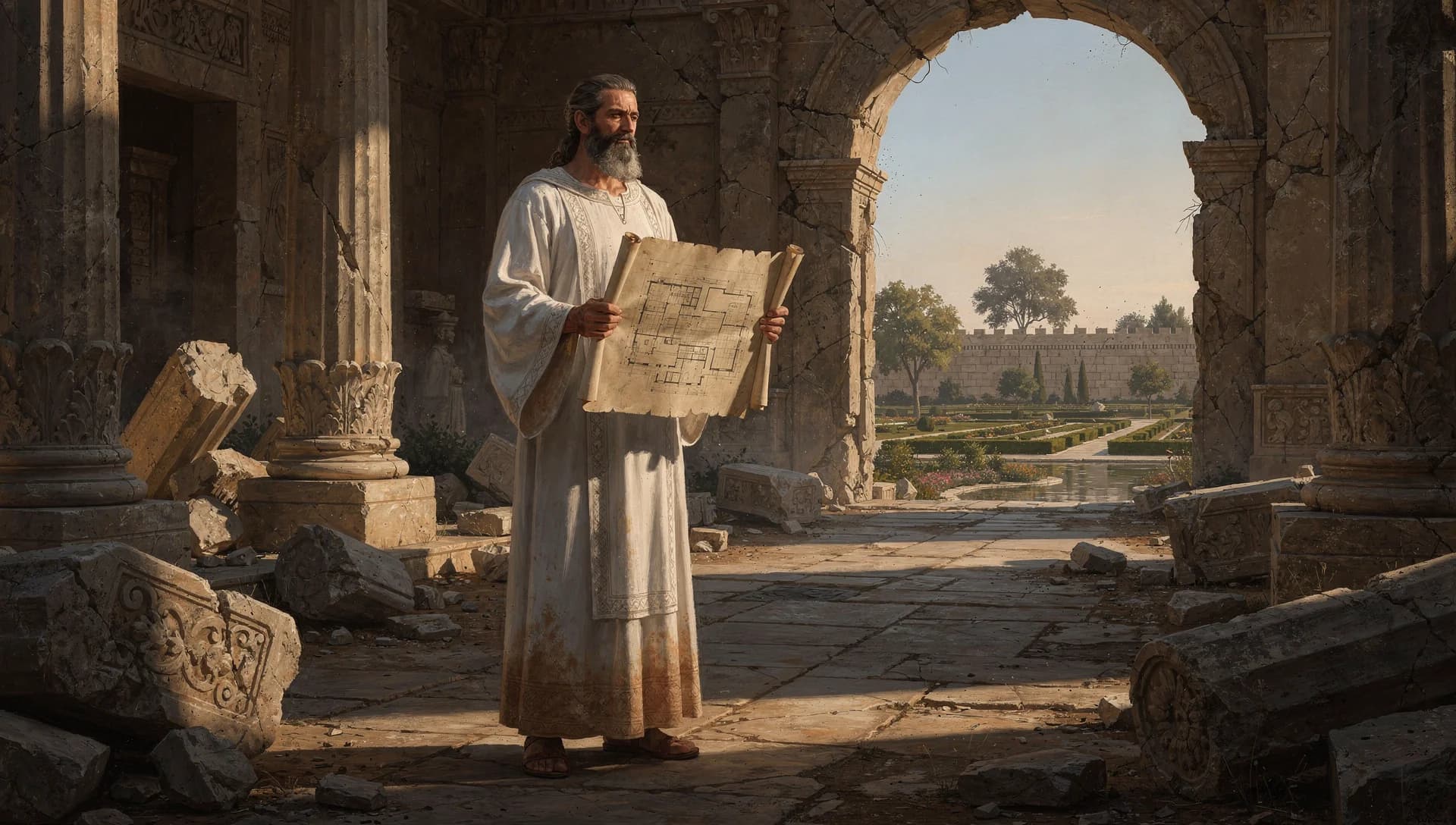
Adam as Reorganizer: The Material Son and the Babylonian Marduk
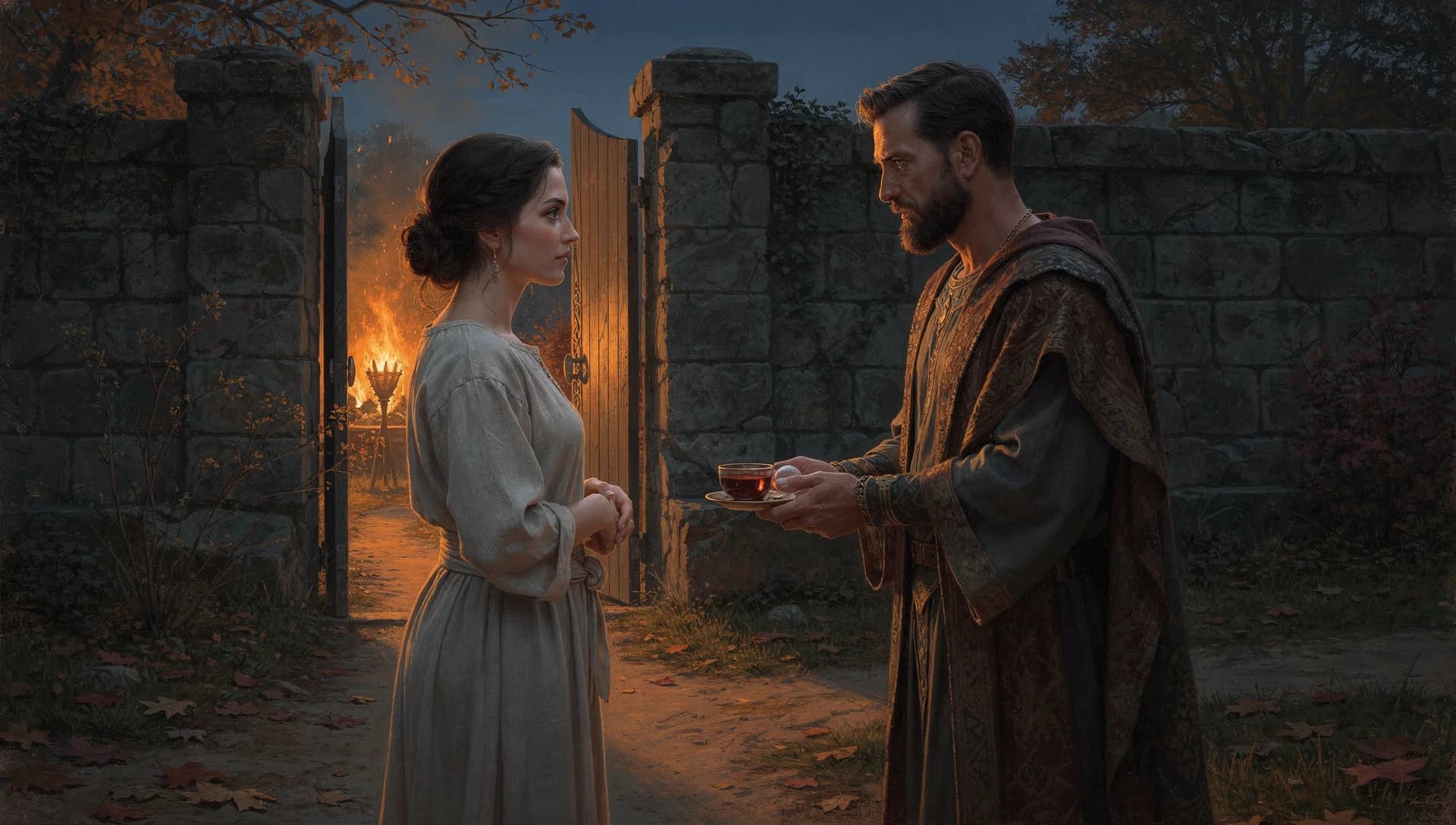
The Act Behind the Symbol: Eve's Union with Cano and the Forbidden Fruit
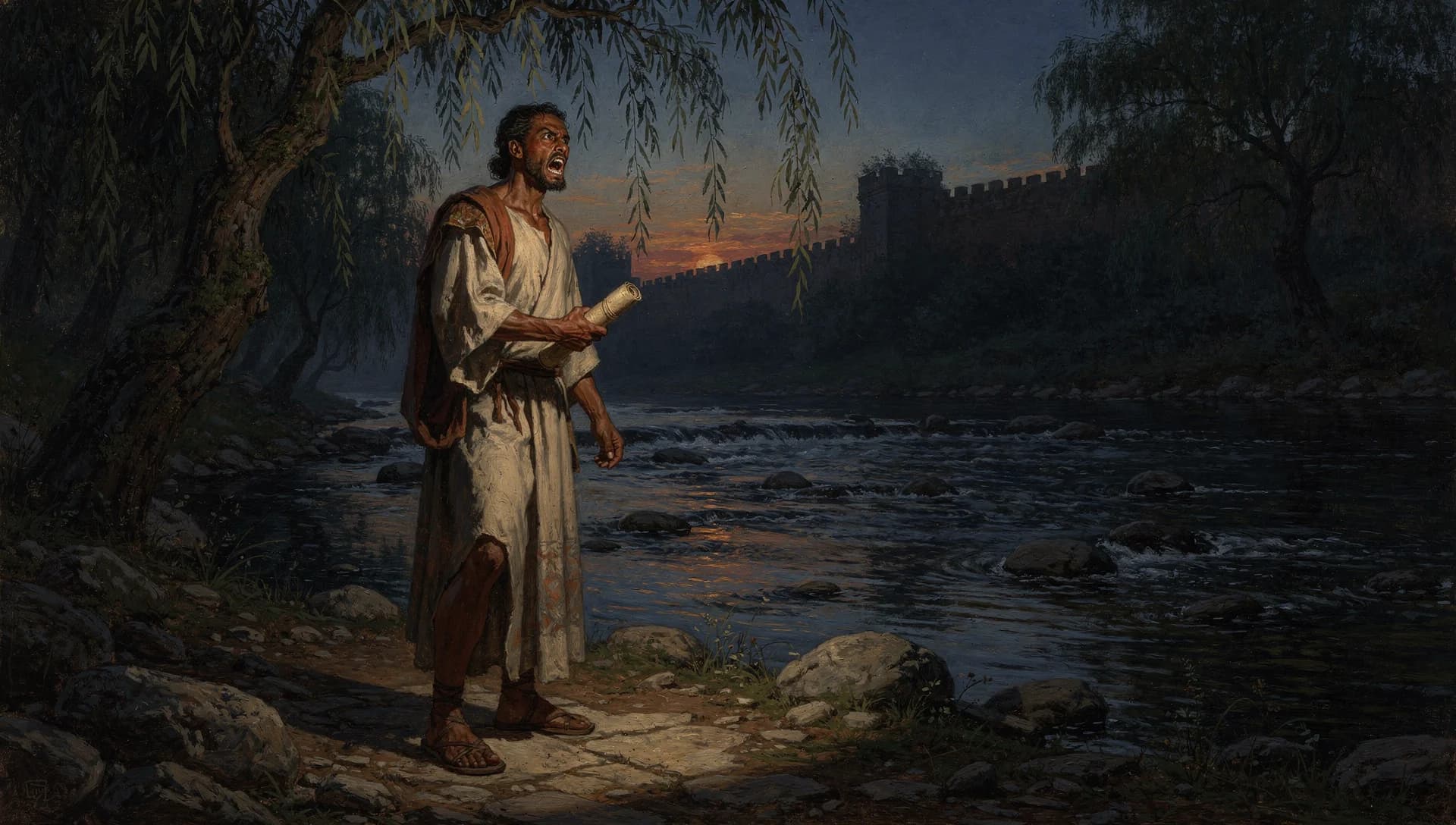
The Serpent Had a Name: Serapatatia and the Garden Narrative
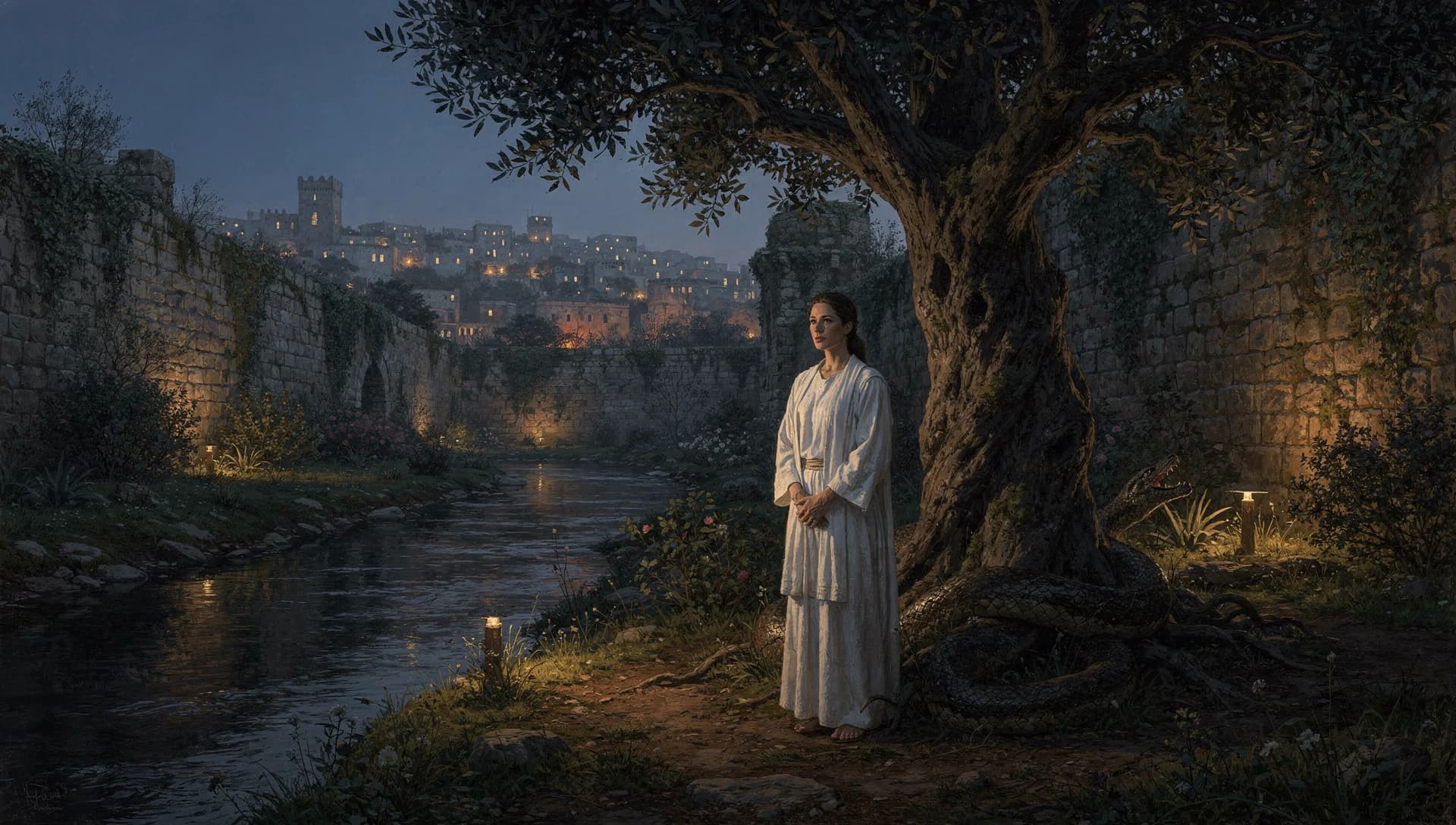
Eve and Inanna: The Garden, the Tree, and the Fall
The Newsletter
Get the research behind each piece
Free. New Urantia Book explorations, the sources behind the videos, and early looks. No spam, unsubscribe anytime.
Prefer video? Follow on YouTube and Facebook.
Delivered through Substack. You can also read past issues.