
Adam as Reorganizer: The Material Son and the Babylonian Marduk
Marduk is the late-arriving supreme god who defeats chaos, reorganizes the cosmos, and assigns every role in the divine order. The Urantia Book describes Adam as the biologic uplifter sent to reorganize humanity. The Babylonians may have preserved a memory of what he was supposed to be.
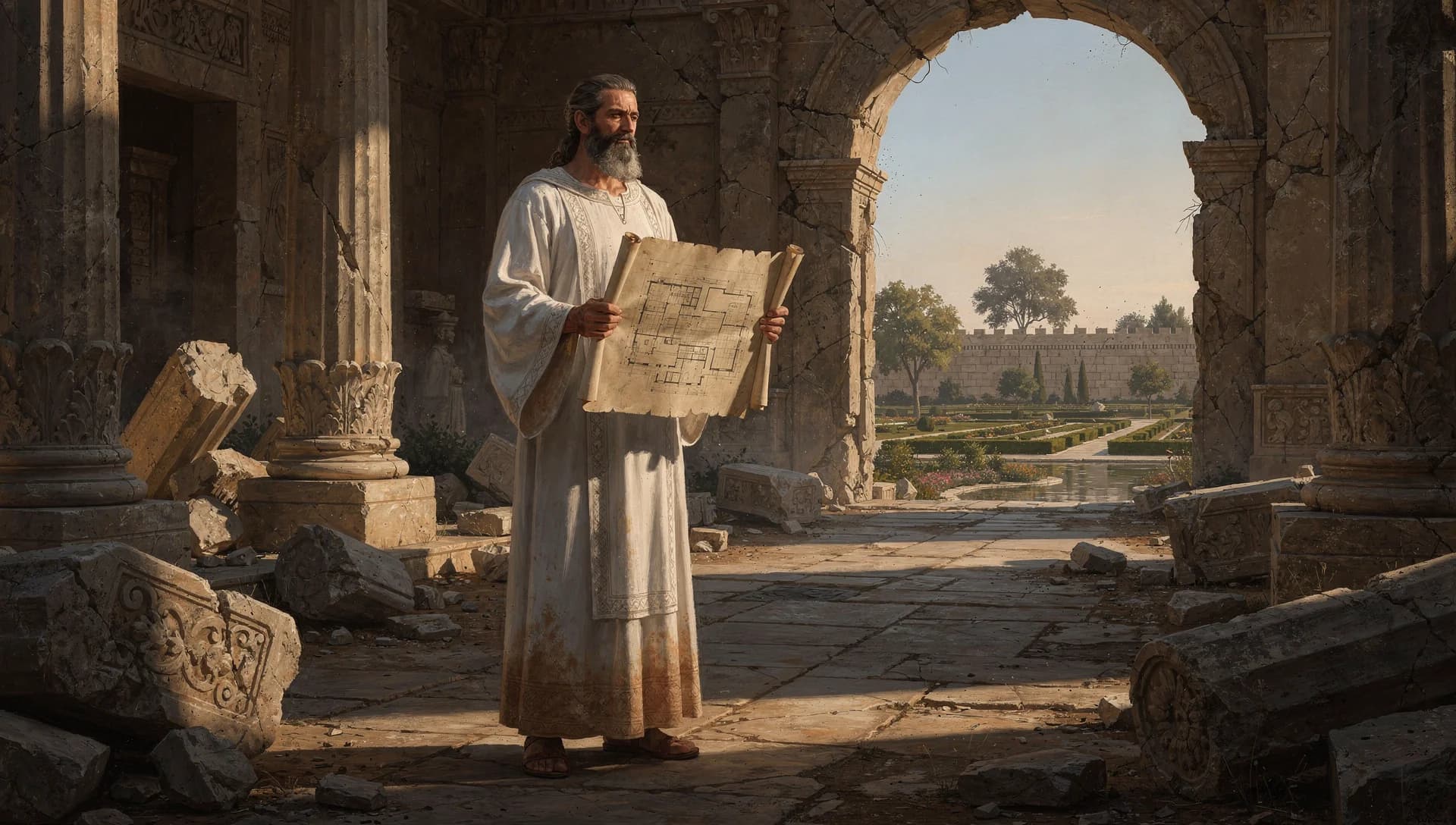
Adam, Material Son = Marduk (Babylonian) / possibly Shamash
This article expands on the decoder mapping. For the side-by-side card and quick reference, see the mapping page.
The Late-Arriving Reorganizer
The Babylonian creation poem Enuma Elish opens on a cosmos in chaos. Tiamat, the primordial sea, and her consort Apsu are in conflict with the younger gods. A new god arrives, does what the older gods could not do, defeats chaos, and reorganizes everything. He assigns six hundred deities to their stations. He creates humanity. He names the stars. He is Marduk, and the poem makes clear he is not one of the original gods. He is the one who came later and sorted the world out.
That is a very specific structural role: a superhuman being who arrives late, after a prior order has broken down, whose job is not to create but to reorganize. Most creation gods make things from nothing. Marduk does not. He inherits a mess, and he brings it into order.
The Urantia Book describes an arrival that matches this structural role almost exactly.
What the Urantia Book Says
Adam did not come to an empty planet. He came to a world where the planetary prince had rebelled, where the corporeal staff had scattered, where civilization had deteriorated for tens of thousands of years under Van and Amadon and their Melchizedek receivers. His mission was not creation. It was biologic upliftment of an existing evolutionary population.
The record is specific about who chose him:
"When the proclamation was issued calling for volunteers for the mission of Adamic adventure on Urantia, the entire senior corps of Material Sons and Daughters volunteered. The Melchizedek examiners, with the approval of Lanaforge and the Most Highs of Edentia, finally selected the Adam and Eve who subsequently came to function as the biologic uplifters of Urantia." (UB 74:1.3)
Adam was a Material Son, a being of the order intended to function as the biologic administrator of an evolutionary planet. His arrival was the result of a selection process conducted by senior officers of the local universe. He came with a plan. The plan was to build up a reserve of the violet race and, over many generations, upstep the genetic and cultural stock of mankind.
The default changed the plan but not its shape. After the failure, the Melchizedek receivers returned and Adam's role as the on-world reorganizer continued, in reduced form, for the rest of his earthly life:
"The supermaterial government of Urantia, under the direction of the Melchizedeks, continued, but direct physical contact with the evolutionary races had been severed. From the distant days of the arrival of the corporeal staff of the Planetary Prince, down through the times of Van and Amadon to the arrival of Adam and Eve, physical representatives of the universe government had been stationed on the planet." (UB 76:5.6)
What the record preserves is the shape of an arrival: a being from outside the evolutionary order, authorized by higher councils, tasked with reorganizing what the planetary prince had broken.
What the Ancient Source Says
Enuma Elish was recited each New Year in Babylon during the first millennium BCE. The composition, edited and translated by Stephanie Dalley in Myths from Mesopotamia (Oxford, 2000) and studied exhaustively by W. G. Lambert in Babylonian Creation Myths (Eisenbrauns, 2013), dates in its final form to the late second millennium BCE and promotes Marduk from a minor city god of Babylon to the supreme sovereign of the pantheon.
Four structural features of the Marduk narrative are relevant here. First, Marduk is explicitly a latecomer. The earlier gods, including his grandfather Anshar and his father Ea, existed before him and were unable to resolve the Tiamat crisis. Second, Marduk's role is reorganizational. He does not create the raw material of the cosmos. He rearranges it, creates the calendar, assigns station to the gods, and designs humanity's place within the system. Third, he is granted his commission by a council of senior deities who hand him the tablets of destiny. Fourth, his purpose is humanity: the poem states that humanity is created so that the gods may have rest.
Thorkild Jacobsen observed in The Treasures of Darkness (Yale, 1976) that Marduk's elevation represents "a thoroughgoing reconception of the role of kingship itself," in which the divine king is understood not as a primordial force but as an administrator answering to prior authority. That is a precise match for the Material Son's role.
Why This Mapping Matters
Most creation myths describe a cosmos made from nothing by a primordial god. The Babylonian tradition is unusual in preserving the memory of a secondary event: a being who arrived after the original creation, inherited a broken order, and put it right. This structural feature is not decorative. It is the spine of the poem.
The Urantia Book describes such a being arriving on Urantia. Not a creator. A biologic administrator, sent after the planetary prince's rebellion had broken the original order, chosen by a council of senior officers, authorized to rearrange what he found. The fit is close enough to ask whether the Babylonian scribes were preserving, in mythological form, a memory of the Adamic arrival as their Andite-descended ancestors had received it.
The fit is not perfect. Marduk is a warrior. Adam is not. Marduk creates humanity. Adam does not. But the structural core, the late-arriving authorized reorganizer who puts the world in order, is the same, and it is specific enough to mark.
Sources
- The Urantia Book, Paper 74 (The Garden of Eden), Paper 75 (The Default of Adam and Eve), Paper 76 (The Second Garden). Urantia Foundation, first printing 1955. Cited passages: 74:1.3, 76:5.6.
- Dalley, Stephanie, ed. Myths from Mesopotamia: Creation, the Flood, Gilgamesh, and Others. Revised edition, Oxford University Press, 2000.
- Lambert, W. G. Babylonian Creation Myths. Eisenbrauns, 2013.
- Jacobsen, Thorkild. The Treasures of Darkness: A History of Mesopotamian Religion. Yale University Press, 1976.
- Kramer, Samuel Noah. The Sumerians: Their History, Culture, and Character. University of Chicago Press, 1963.
Confidence and Evidence
- Confidence: INFORMED SPECULATION
- Evidence rating: MODERATE
- Basis: The structural match is good: late arrival, commission from senior council, reorganization of a damaged order, humanity as the purpose of the mission. The specific content differs (warrior vs. administrator, creator vs. uplifter) so the mapping is structural rather than detail-for-detail.
Related Decoder Articles
- Adam, Material Son = Adapa, the Sage Who Lost Immortality
- Eve, Material Daughter = Inanna / Ishtar
- The Corporeal Staff of One Hundred = Anunnaki
By Derek Samaras
Connecting Articles
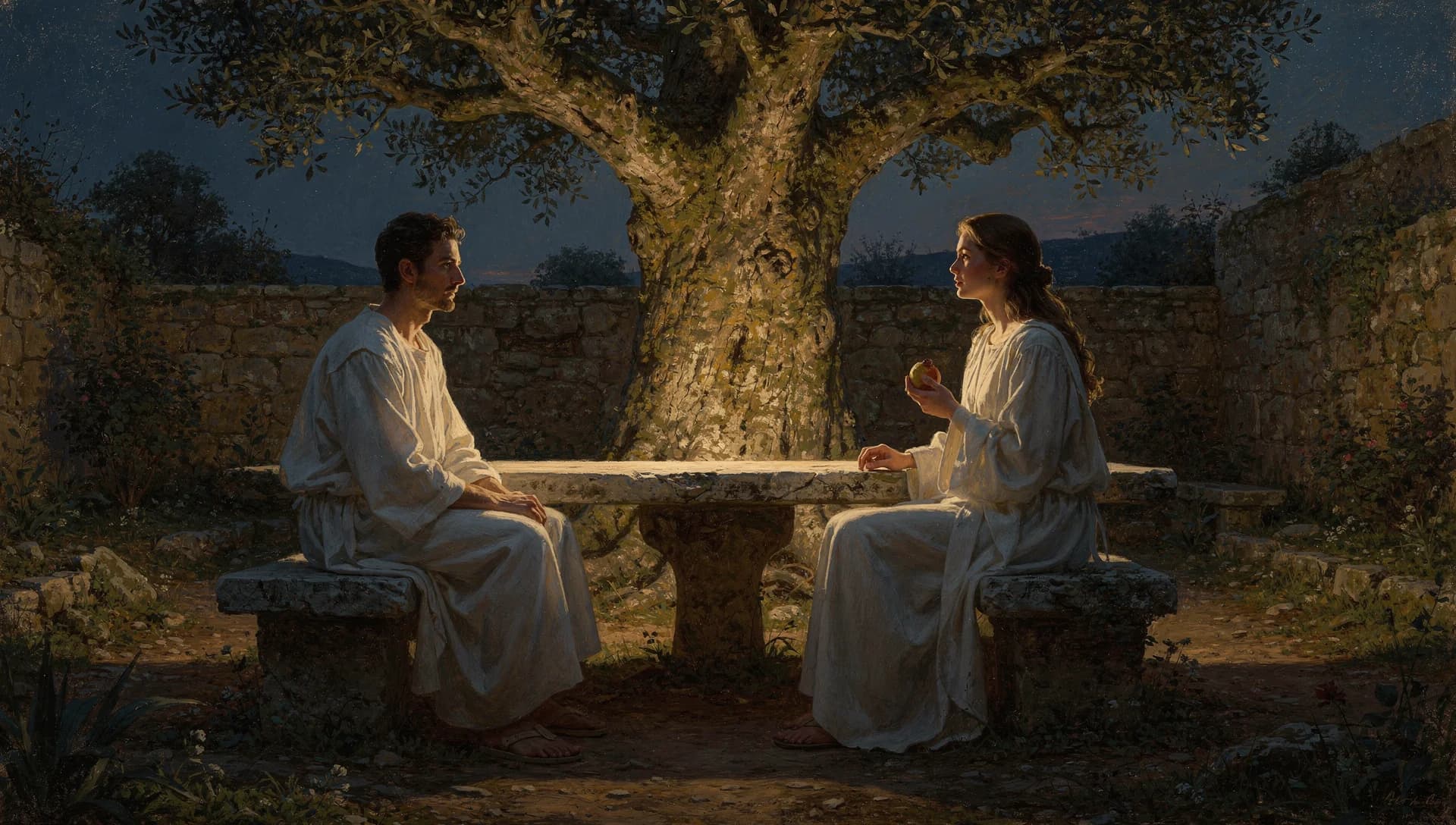
The Test They Both Failed: Adam and the Mesopotamian Adapa
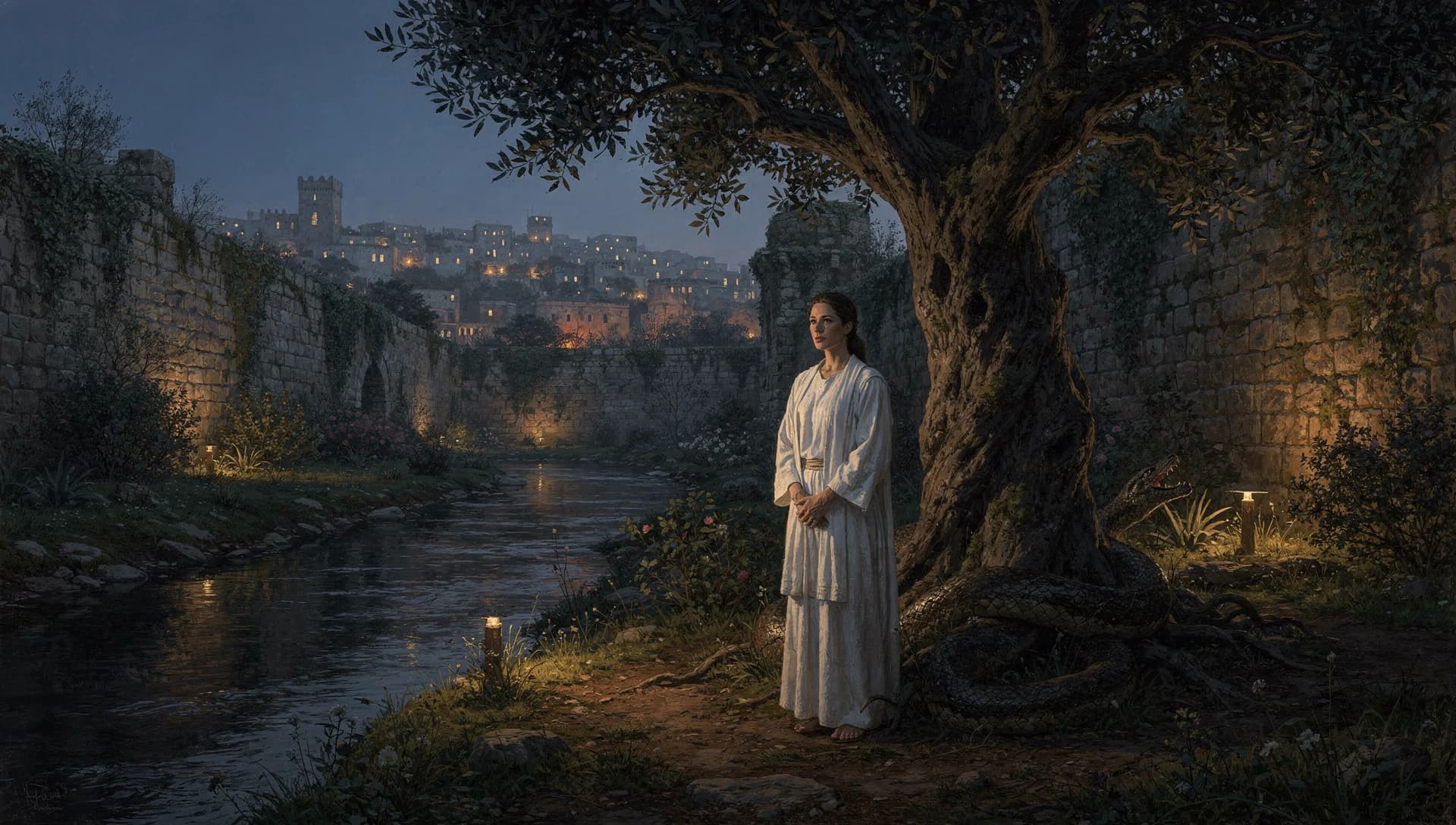
Eve and Inanna: The Garden, the Tree, and the Fall
The Longest Memory: Australian Aboriginal Dreamtime and the Primordial Teaching-Ancestors
The Final Adjudication: Ragnarok and the Pending Verdict
The Newsletter
Get the research behind each piece
Free. New Urantia Book explorations, the sources behind the videos, and early looks. No spam, unsubscribe anytime.
Prefer video? Follow on YouTube and Facebook.
Delivered through Substack. You can also read past issues.