
Eve and Inanna: The Garden, the Tree, and the Fall
Sumerian religion remembers a powerful female figure placed in a garden with a sacred tree, a serpent at its roots, and a catastrophic loss of status. The Urantia Book names Eve as the Material Daughter, placed in the first Garden of Eden with the actual Tree of Life, whose default through a Nodite union forfeited the Adamic mission. The overlap is too specific to ignore.
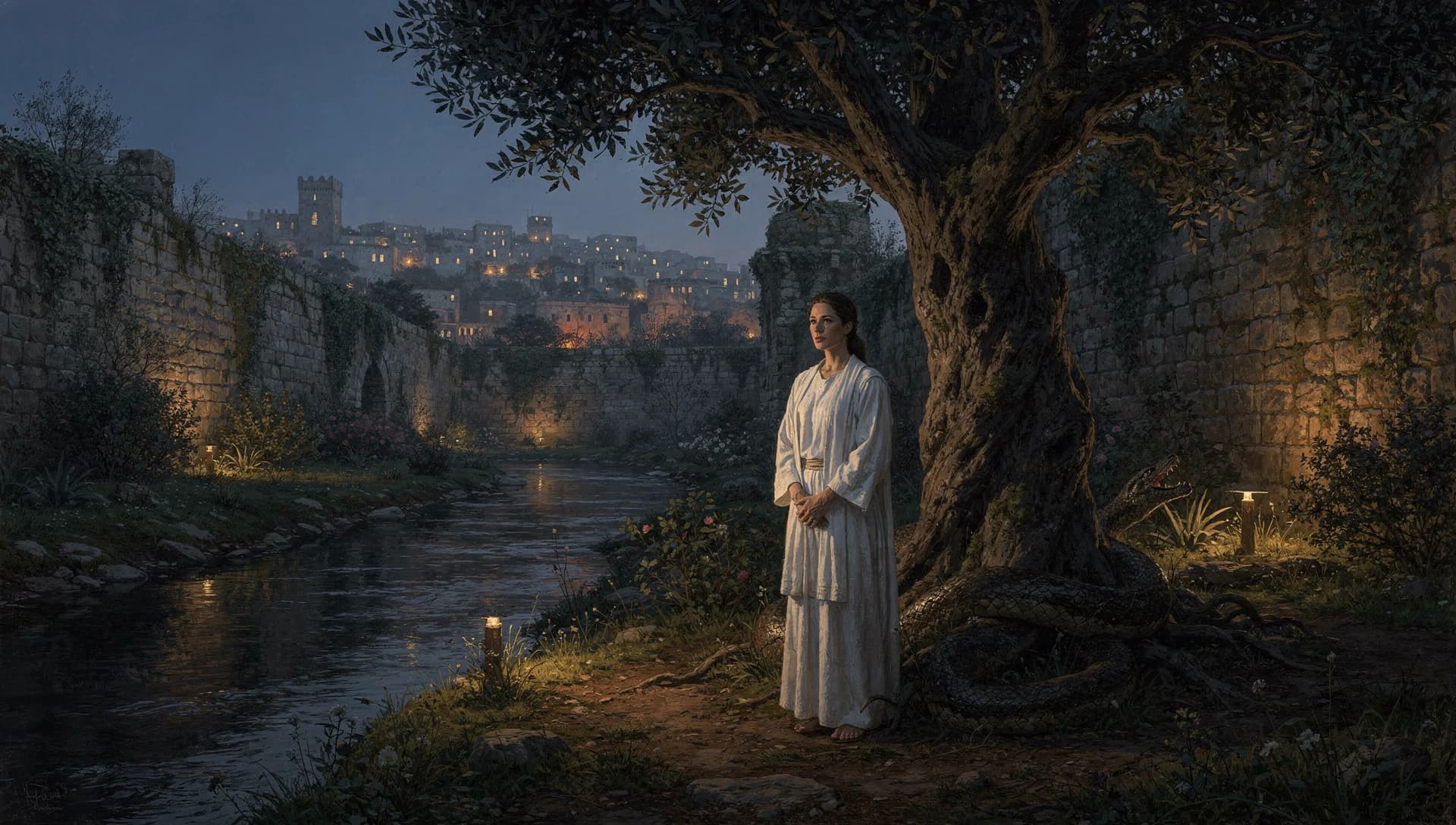
Eve, Material Daughter = Inanna (Sumerian) / Ishtar (Akkadian)
This article expands on the decoder mapping. For the side-by-side card and quick reference, see the mapping page.
The Woman in the Garden
The Sumerian tradition preserves a figure who cannot be assimilated into any simple category. She is Inanna in the Sumerian sources, Ishtar in the Akkadian. She is the most important female figure in all of Mesopotamian religion, the most frequently invoked, the most thoroughly developed. She is associated with love, with war, with kingship, with fertility, with descent into the underworld, and, in one of her oldest narratives, with a specific sacred tree in a specific garden at Uruk.
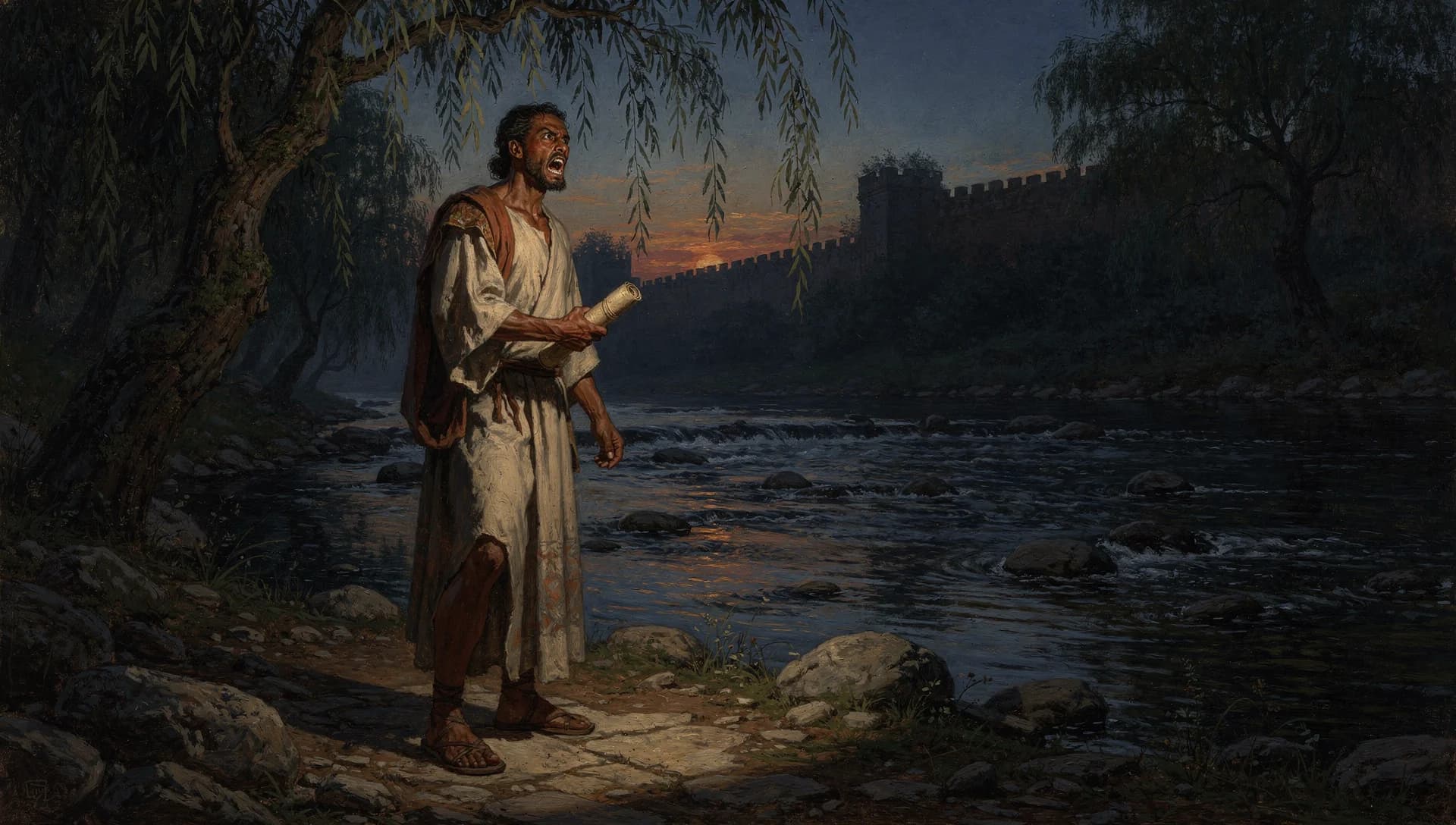
The narrative in question is preserved in the Sumerian composition Gilgamesh, Enkidu, and the Netherworld, catalogued as ETCSL 1.8.1.4. In the opening section of the poem, the huluppu tree is uprooted by a storm from its riverbank, carried downstream, and rescued by Inanna, who transplants it into her sacred garden at Uruk. She intends to cultivate it until it is large enough to use its wood for her throne and her bed. But the tree attracts intruders: a serpent takes up residence in its roots, the Anzu bird builds a nest in its crown, and a demon named Lilitu occupies its trunk. Inanna weeps over the corruption of her tree. Gilgamesh eventually drives out the intruders, cuts down the tree, and shapes the furniture Inanna had desired.
The story is old. The Sumerian recension dates to the early second millennium BCE; the oral tradition behind it is older still. It preserves a specific constellation of elements that appear again and again wherever it travels: a powerful female figure, a sacred garden, a sacred tree, a serpent associated with the tree, and a loss of what the garden had promised. Genesis 3 preserves the same constellation in simplified form. The Urantia Book preserves it in its fullest and most specific version.
Eve, the Material Daughter
The record begins with Eve's arrival. She was not a mortal woman. She was a Material Daughter, a member of a permanent order of local universe personality, sent to Urantia with her consort Adam on an assignment of biological uplift. The two of them came from Jerusem to a planet that had been compromised by the Lucifer rebellion and the subsequent default of the Prince's staff. Their mission was to stabilize and multiply the violet race, their direct biological offspring, who would over many generations bring the genetic heritage of the Adamic order into the bloodstream of the planet's races.
The UB describes their situation on arrival with precision:
"The Adamic mission on experimental, rebellion-seared, and isolated Urantia was a formidable undertaking. And the Material Son and Daughter early became aware of the difficulty and complexity of their planetary assignment. Nevertheless, they courageously set about the task of solving their manifold problems. But when they addressed themselves to the all-important work of eliminating the defectives and degenerates from among the human strains, they were quite dismayed." (UB 75:1.1)
They were alone. The Melchizedek receivers who had overseen Urantia for more than a hundred and fifty thousand years departed shortly after Adam and Eve's arrival, leaving them to the work. Van and Amadon were present, but already very old. The isolated position of the two Material Sons on an unprepared world produced an intense loneliness that the UB returns to repeatedly:
"Probably no Material Sons of Nebadon were ever faced with such a difficult and seemingly hopeless task as confronted Adam and Eve in the sorry plight of Urantia. But they would have sometime met with success had they been more farseeing and patient. Both of them, especially Eve, were altogether too impatient; they were not willing to settle down to the long, long endurance test." (UB 75:1.6)
Caligastia's Approach
The rebellion was old when Adam and Eve arrived. Caligastia, though deposed from his active role, remained the titular Planetary Prince, free to operate on Urantia though stripped of his universe circuits. He began visiting the Garden soon after the Adamic arrival, looking for a way to compromise the mission:
"Caligastia paid frequent visits to the Garden and held many conferences with Adam and Eve, but they were adamant to all his suggestions of compromise and short-cut adventures. They had before them enough of the results of rebellion to produce effective immunity against all such insinuating proposals." (UB 75:2.1)
Direct appeal did not work. Caligastia changed tactics:
"But the fallen Prince was persistent and determined. He soon gave up working on Adam and decided to try a wily flank attack on Eve. The evil one concluded that the only hope for success lay in the adroit employment of suitable persons belonging to the upper strata of the Nodite group, the descendants of his onetime corporeal-staff associates. And the plans were accordingly laid for entrapping the mother of the violet race." (UB 75:2.3)
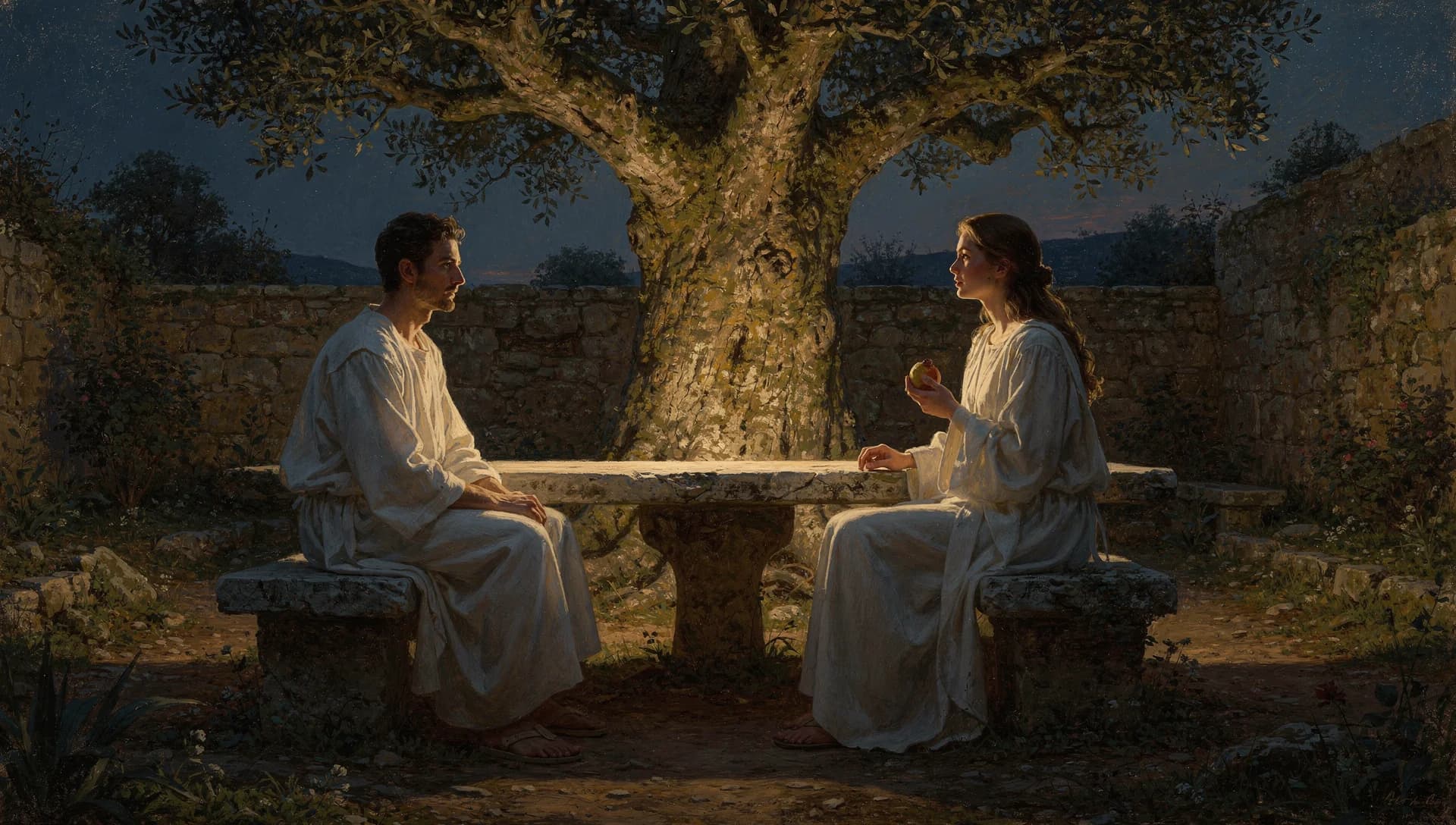
The specific vector was Serapatatia, the highly intelligent and apparently sincere leader of the Syrian Nodites, whose good-faith commitment to Adam's program gradually won Eve's trust. Over a period of years, through a series of increasingly persuasive conferences, Serapatatia came to believe that the Adamic mission was moving too slowly and that an accelerated biological infusion, through a union between Eve and Cano the Nodite, could shortcut the long work of racial uplift. Eve was persuaded. The default was a biological act, not a metaphorical bite of fruit. The violet line was compromised at its inception, and the mission the Adamic pair had been sent to accomplish could not proceed as designed.
What Sumerian Religion Preserves
Read against this background, the Inanna / Ishtar material looks different. The Sumerian scribes, working within the mythological conventions of their era, preserved a figure who stands at the center of a narrative constellation otherwise hard to explain:
- She is placed in a garden at Uruk. (UB: Eve is placed in the first Garden of Eden, in what is now the eastern Mediterranean region.)
- The garden contains a sacred tree. (UB: the first Garden contains the transplanted Tree of Life.)
- A serpent takes residence in the tree, and the tree's purpose is compromised. (UB: the "serpent" figure is Serapatatia, whose approach to Eve compromised the mission the Tree was meant to support.)
- She experiences what Oxford's Assyriological scholarship calls "a drastic demotion in status." (UB: Eve, with Adam, forfeits the special status of the Adamic mission through the default.)
- The Anzu bird appears in the crown of the tree. (UB: fandors, giant passenger birds, were associated with Adamson and the post-Eden lineage.)
These are not generic mythological motifs arranged in a common pattern. They are a highly specific constellation of elements that appears together in both traditions, with the same central figure playing the same structural role. The Sumerian scribes preserved what they could of a memory that had been transmitted to them through the surviving Nodite and Amadonite cultural streams, in the mythological idiom of their period.
The figure of Inanna is a composite in the Sumerian tradition. She absorbs functions and narratives from multiple older sources, a pattern common in major deities. Not every story about Inanna is a story about Eve. But the Huluppu tree episode specifically preserves a narrative that does not fit the rest of the Inanna mythology, a narrative whose elements map onto the UB's Eve with an unusual degree of precision.
Why This Matters
The mapping between Eve and Inanna carries the confidence rating INFORMED SPECULATION, with the evidence rating MODERATE on the decoder card. What makes the case interesting is not a single element but the combination: a female figure, a sacred garden, a sacred tree, a serpent, a fall, and the same central role in both traditions.
The Urantia Book's version is specific in ways the Sumerian material is not. The UB names the persons involved, dates the events, describes the mechanism, and places the Garden geographically. The Sumerian version has lost these specifics but preserves the underlying pattern in an unusually recognizable form.
What this suggests is not that Sumerian scribes were writing about Adam and Eve under different names. It is that the narrative core of the Adamic default, transmitted through two hundred generations of oral tradition before the first cuneiform tablets were pressed, retained enough of its structural shape to be recognizable when the two records are placed side by side. The UB offers a specific historical seed. The Sumerian tradition preserves the downstream memory, in the mythological form available to its time and place.
Sources
- The Urantia Book, Papers 73, 74, 75, 76.
- Wolkstein, Diane, and Samuel Noah Kramer. Inanna: Queen of Heaven and Earth. Harper, 1983.
- ETCSL (Electronic Text Corpus of Sumerian Literature), Oxford University: Gilgamesh, Enkidu, and the Netherworld (1.8.1.4); Inanna's Descent to the Netherworld (1.4.1).
- Kramer, Samuel Noah. Sumerian Mythology. Revised edition, University of Pennsylvania Press, 1961.
- Jacobsen, Thorkild. The Harps That Once...: Sumerian Poetry in Translation. Yale University Press, 1987.
- Leick, Gwendolyn. Sex and Eroticism in Mesopotamian Literature. Routledge, 1994.
Confidence rating: INFORMED SPECULATION. Evidence rating: MODERATE. The decoder methodology, evidence ratings, and full mapping table live at /decoder.
For the serpent figure of Genesis as Serapatatia, see The Serpent Had a Name: Serapatatia and the Garden Narrative. For the first Garden as a specific submerged peninsula, see The Garden of Eden: Real Geography.
Byline: Derek Samaras | Urantia Book Network | April 2026
Connecting Articles
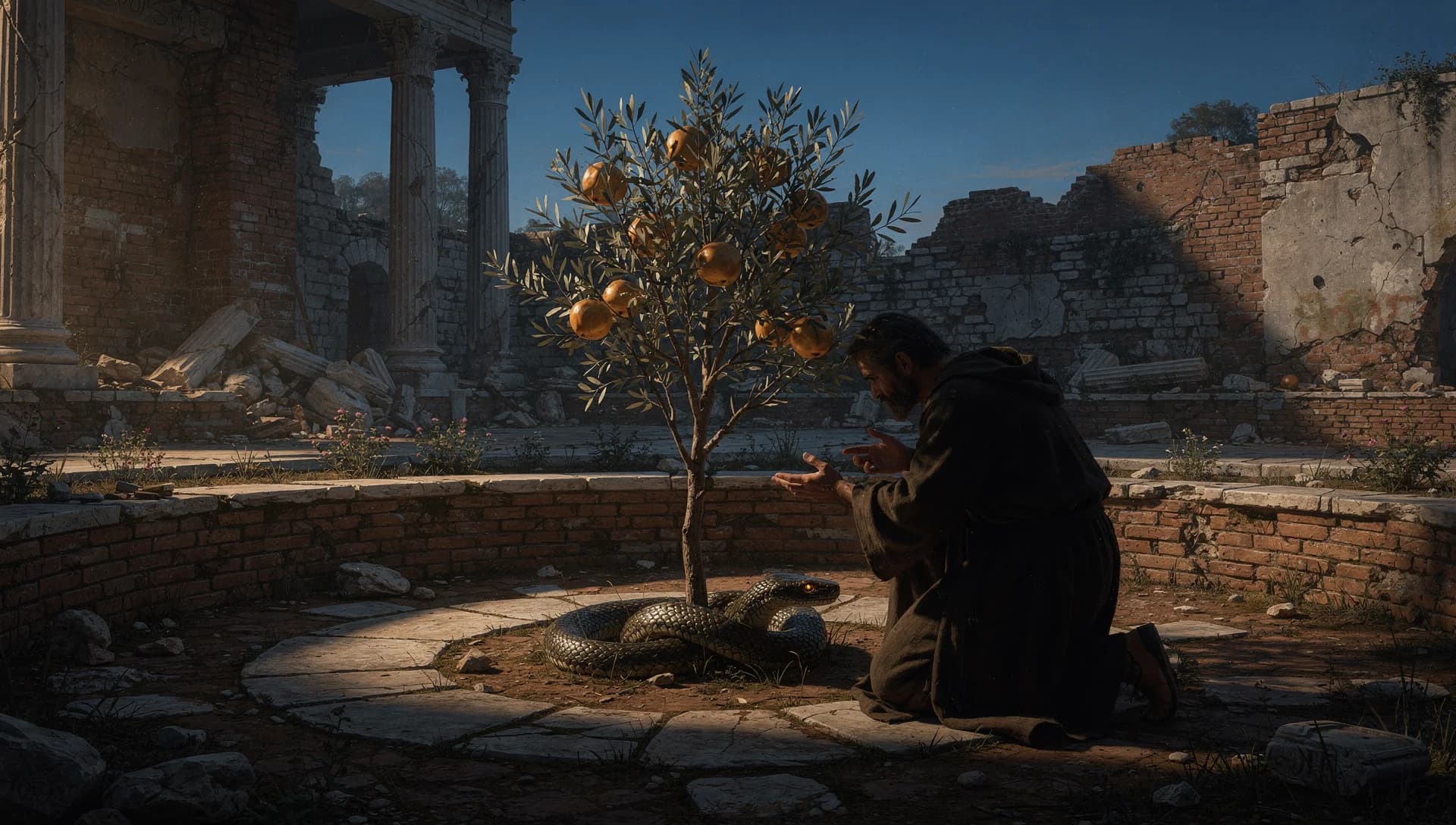
A Tree Delivered to a Garden: The Tree of Life and the Sumerian Huluppu
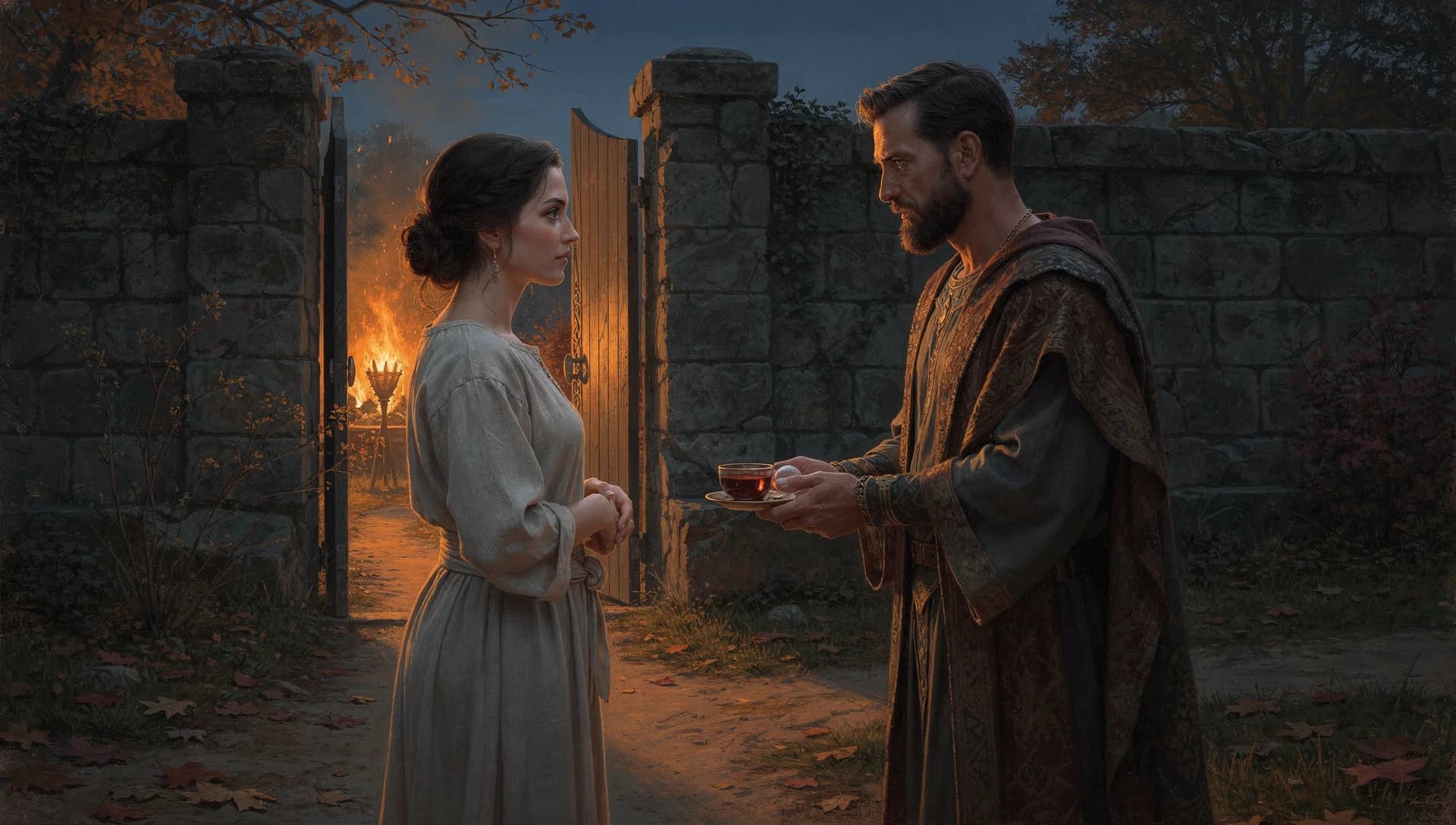
The Act Behind the Symbol: Eve's Union with Cano and the Forbidden Fruit
The Serpent Had a Name: Serapatatia and the Garden Narrative
The Test They Both Failed: Adam and the Mesopotamian Adapa
The Newsletter
Get the research behind each piece
Free. New Urantia Book explorations, the sources behind the videos, and early looks. No spam, unsubscribe anytime.
Prefer video? Follow on YouTube and Facebook.
Delivered through Substack. You can also read past issues.