
 Mythic
Nephilim / "Sons of God" (Genesis 6:1-4)
 UB
UBNodites / Corporeal Staff, superhuman beings who mated with mortals
Full Article
Read the deep-dive article on this connection
Nodites / Corporeal Staff, superhuman beings who mated with mortals = Nephilim / "Sons of God" (Genesis 6:1-4)
The Connection
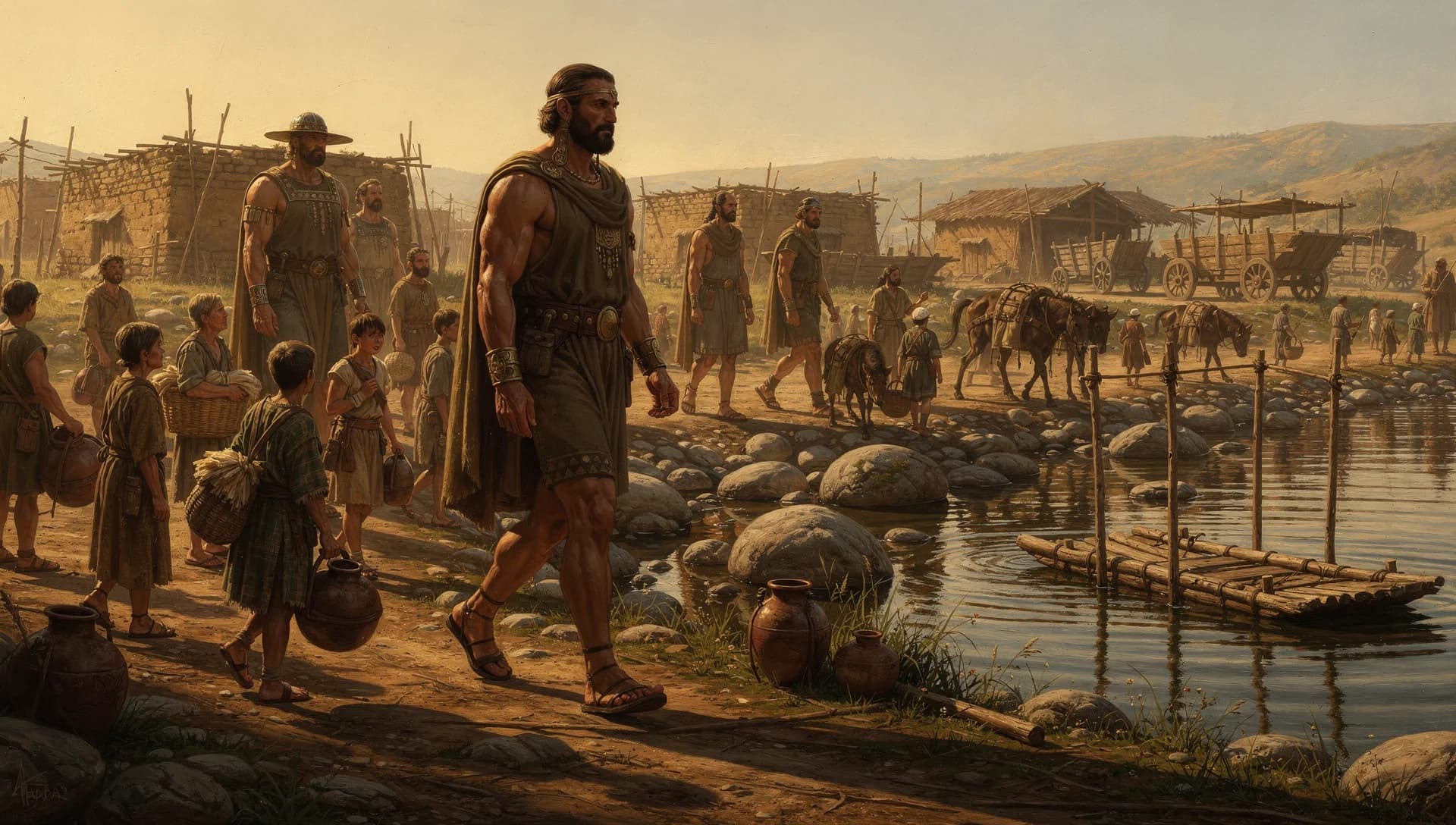
The UB directly quotes and decodes Genesis 6: "The Nephilim (Nodites) were on earth in those days, and when these sons of the gods went in to the daughters of men and they bore to them, their children were the mighty men of old, the men of renown." The corporeal staff were literally regarded as gods by primitive mortals. Their offspring were literally superhuman.
UB Citation
UB 77:2.3, 67:4.3
Academic Source
Genesis 6:1-4; Hendel, "Of Demigods and the Deluge" (1987); 1 Enoch 6-16
Historical Evidence(Strong evidence)
The UB provides the single most direct mythology decode in the entire book: it quotes Genesis 6 verbatim, inserts "(Nodites)" as the referent for Nephilim, and explains the mechanism. The staff "were so regarded by the evolutionary mortals of those distant days; even their stature came to be magnified by tradition. This, then, is the origin of the well-nigh universal folk tale of the gods who came down to earth and there with the daughters of men begot an ancient race of heroes." 1 Enoch 6-16 (Book of the Watchers, 3rd century BCE) expands the tradition: 200 angels descend, teach humanity forbidden arts, and produce giant offspring, a direct elaboration of the same memory.
Deep Dive
Genesis 6:1-4 sits awkwardly in the Hebrew Bible. It is four verses long, it precedes the flood narrative, and it tells a story that the priestly editors clearly did not know what to do with. "When humans began to multiply on the face of the ground, and daughters were born to them, the sons of God saw that the daughters of humans were fair; and they took wives for themselves of all that they chose. The Nephilim were on the earth in those days, and also afterward, when the sons of God went in to the daughters of humans, who bore children to them. These were the heroes that were of old, warriors of renown." That is essentially the entire passage. It introduces a category of beings, the Nephilim, called also "sons of God" or "sons of the gods," who mated with mortal women and produced a race of "mighty men of renown." Then the text moves on to the flood. The Nephilim are mentioned only one more time in the Hebrew Bible, in Numbers 13, where the spies report giants in Canaan.
What the Hebrew text declines to elaborate, the Second Temple Jewish tradition expanded into a major theological corpus. 1 Enoch, particularly chapters 6 through 16 (the Book of the Watchers, dated to the third century BCE), tells the full story: two hundred angels under the leadership of Shemihazah and Asael descended to Mount Hermon, swore an oath together, took wives from human women, and taught humanity forbidden arts (metallurgy, cosmetics, astrology, sorcery). Their giant offspring were the Nephilim, who consumed all the produce of the earth and then turned to devouring humans themselves. The flood was sent specifically to destroy them. The angels themselves were bound in the depths of the earth until the final judgment. The book of Jubilees, the Damascus Document at Qumran, and several Pseudepigrapha texts elaborate the tradition further. The Watchers narrative was central to apocalyptic Judaism in the centuries before Christ.
The Urantia Book provides what is arguably the single most direct mythology decode in the entire text. UB 77:2.3 quotes Genesis 6 almost verbatim, with the bracketed insertion that resolves the puzzle: "The Nephilim (Nodites) were on earth in those days, and when these sons of the gods went in to the daughters of men and they bore to them, their children were the 'mighty men of old,' the 'men of renown.'" Then it explains the mechanism: "While hardly 'sons of the gods,' the staff and their early descendants were so regarded by the evolutionary mortals of those distant days; even their stature came to be magnified by tradition. This, then, is the origin of the well-nigh universal folk tale of the gods who came down to earth and there with the daughters of men begot an ancient race of heroes."
The decode resolves the longstanding scholarly puzzle of who the "sons of God" in Genesis 6 are supposed to be. Patristic and rabbinic tradition was divided: some readers (especially earlier ones) took them as fallen angels, following the 1 Enoch tradition; others (especially later rabbinic and patristic interpreters) took them as descendants of Seth corrupted by intermarriage with descendants of Cain. Both readings preserve a fragment of the truth on the UB account. The "sons of God" are the staff of the Prince and their early Nodite descendants, who were not angels strictly speaking but were superhuman in the sense that they were materialized members of the planetary administration. They mated with the daughters of evolutionary mortals, producing offspring of marked superiority. Their descendants by the time of the Sethite-Cainite intermarriages were already several generations into the dilution, but the priestly memory preserved the basic structure: superhuman beings mated with mortal women and produced exceptional offspring.
The "fallen angel" reading in 1 Enoch picks up another piece of the structure: the Lucifer rebellion. Two hundred angels swearing an oath and descending to corrupt humanity is a stylized memory of the rebellion itself. The Prince's staff did not descend from heaven, but they did rebel under Caligastia and Daligastia's leadership, and the loyal staff under Van remained as the counterforce. The corruption of humanity through forbidden arts in 1 Enoch maps onto the post-rebellion deterioration of the Dalamatian civilization that Caligastia and his rebel faction took over. The Nephilim as ravenous giants who consumed the earth is the cultural memory of the social and biological consequences of the rebellion's collapse: the post-rebellion period was characterized by violence, cultural devolution, and the gradual loss of the civilizational achievements of the Prince's administration.
The strongest counterargument to the UB decode is that Genesis 6 may simply be Hebrew adaptation of widespread Near Eastern myths about gods mating with mortals (the Greek demigods, the Sumerian heroes Gilgamesh and Etana). The reply is that the UB account explains why those parallel traditions exist: they are independent regional memories of the same historical phenomenon. The Greek demigods of Hesiod, the Sumerian Gilgamesh tradition (where Gilgamesh is two-thirds god and one-third human), and the Hebrew Nephilim all preserve the structural memory of superhuman mating with mortals producing exceptional offspring. The cross-cultural prevalence is not evidence against historical referent; it is evidence for it.
Key Quotes
“The postrebellion era on Urantia witnessed many unusual happenings. A great civilization, the culture of Dalamatia, was going to pieces. "The Nephilim (Nodites) were on earth in those days, and when these sons of the gods went in to the daughters of men and they bore to them, their children were the 'mighty men of old,' the 'men of renown.'" While hardly "sons of the gods," the staff and their early descendants were so regarded by the evolutionary mortals of those distant days; even their stature came to be magnified by tradition.”
“The Nephilim were on the earth in those days, and also afterward, when the sons of God went in to the daughters of humans, who bore children to them. These were the heroes that were of old, warriors of renown.”
“When the sons of men had multiplied, in those days, beautiful and comely daughters were born to them. And the watchers, the sons of heaven, saw them and desired them.”
Cultural Impact
The Watchers tradition is one of the most consequential single mythological complexes in the history of Western religion. It shaped Second Temple Jewish apocalyptic, the New Testament references in 2 Peter 2:4 and Jude 6, the Christian doctrine of the fallen angels, the medieval demonology that culminated in the Malleus Maleficarum, the Miltonian portrait of Lucifer's rebellion, and the entire popular conception of demons and angelic warfare. The 1 Enoch corpus, though excluded from the Hebrew and most Christian canons, was preserved in Ethiopian Christianity and rediscovered in the West in the eighteenth century, where it transformed scholarly understanding of New Testament backgrounds. The Dead Sea Scrolls confirmed that the Watchers tradition was central to at least one major Second Temple Jewish community. The cultural inheritance has continued into popular contemporary literature: Madeleine L'Engle's Many Waters, the SyFy series Dominion, the films Noah and Legion, and the entire ancient-astronaut subculture all draw directly from the Nephilim/Watchers material. Few mythological complexes have had such durable cultural reach.
Modern Resonance
The Nephilim corner of the internet is one of the most active mythological-historical subcultures online. Christian fringe ministries link the Nephilim to UFO phenomena and cryptid sightings; ancient-astronaut theorists invoke the Watchers as evidence of extraterrestrial intervention; conspiracy traditions trace bloodlines from the Nephilim to modern elites. The UB account offers the parsimonious alternative: there were superhuman beings who mated with mortals and produced exceptional offspring, but they were not extraterrestrials in the modern science-fiction sense, nor were they dark spiritual entities. They were the materialized staff of the Planetary Prince, a category of being the UB describes in detail and locates in a coherent cosmological framework. The reasonable historical kernel that drives the persistent interest in the Nephilim, the sense that the ancient texts are pointing at something real, is correct on the UB reading. The lurid elaborations are not necessary. The mighty men of renown were the early Nodites, descendants of the loyal and rebel staff, whose unusual longevity, stature, and capabilities were remembered in mythology long after the genetic dilution had brought their descendants down to ordinary human range.
Related Mappings
Related Articles
Where to next
The free newsletter. The research behind each piece, no spam.