
The Nodites and the Nephilim: The Most Direct Mythology Decode in the Urantia Book
Genesis 6 records that the Nephilim were on earth in those days, the sons of the gods who went in to the daughters of men. 1 Enoch expands the tradition with two hundred Watchers who descend and teach forbidden arts. The Urantia Book quotes Genesis 6 verbatim and inserts the word Nodites in parentheses, identifying precisely who these beings were. This is the most direct mythology decode in the entire book.
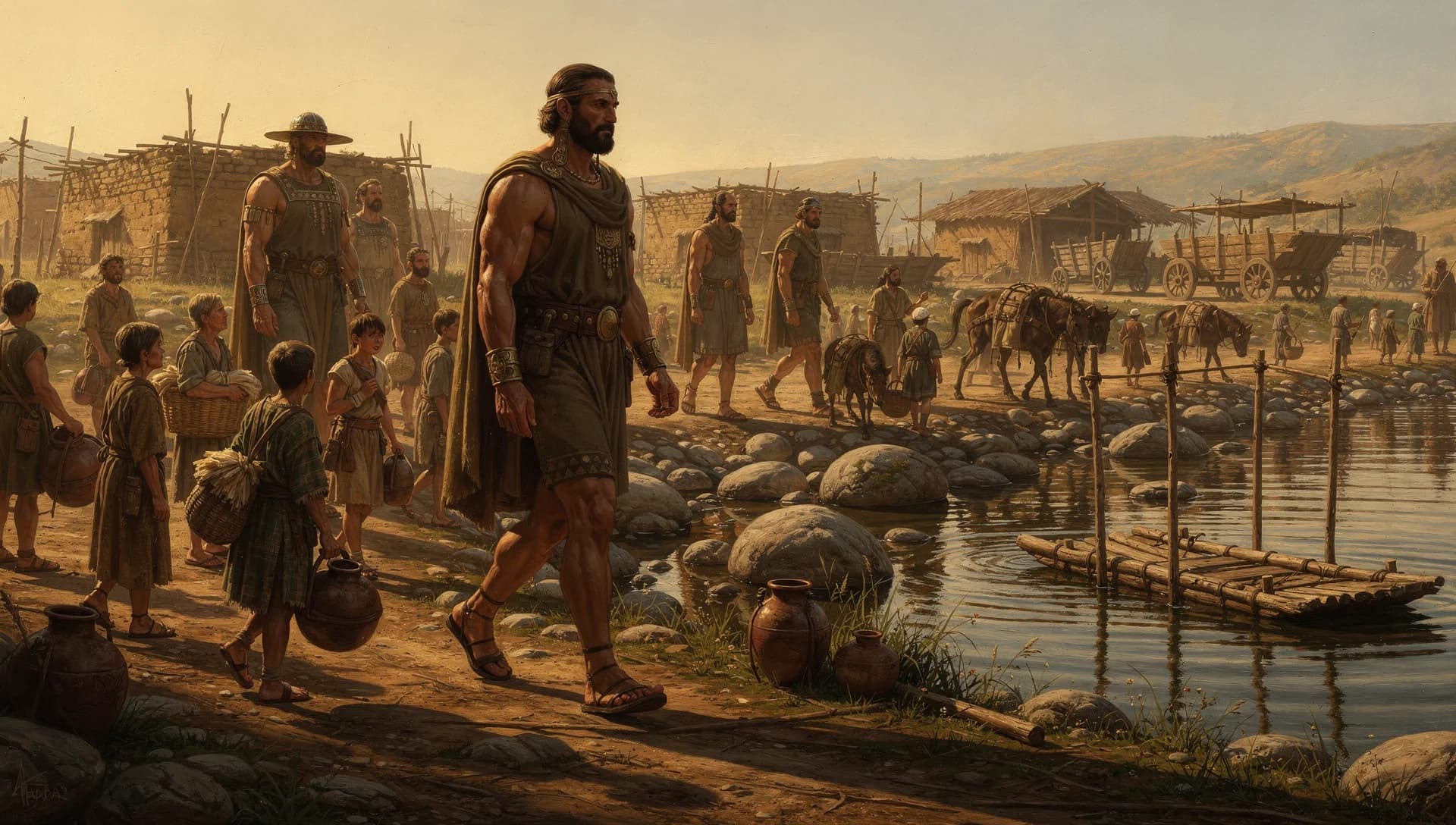
Nodites / Corporeal Staff, superhuman beings who mated with mortals = Nephilim / "Sons of God" (Genesis 6:1-4)
This article expands on the decoder mapping. For the side-by-side card and quick reference, see the mapping page.
The Verse the Church Couldn't Explain
Genesis 6:1-4 is the most theologically awkward passage in the Hebrew Bible. Christian commentators have spent two thousand years trying to explain away what it actually says, and Jewish commentators have struggled with it for longer than that. The text reads:
"When man began to multiply on the face of the land and daughters were born to them, the sons of God saw that the daughters of man were attractive. And they took as their wives any they chose... The Nephilim were on the earth in those days, and also afterward, when the sons of God came in to the daughters of man and they bore children to them. These were the mighty men who were of old, the men of renown." (Genesis 6:1-4, ESV)
The plain reading is ecclesiastically impossible. Sons of God (bene elohim) are described as descending to earth, taking human wives, and producing superhuman offspring. The offspring are called Nephilim, a word whose root ("to fall") has generated debate for centuries but whose general semantic field points toward "fallen ones" or "fallen giants." These offspring are "the mighty men of old, the men of renown." The passage reads as a matter-of-fact statement that a race of superhuman beings once walked the earth as the children of a divine-human cross-breeding event.
Later canonical Christianity could not absorb the plain reading. St. Augustine proposed that the "sons of God" were descendants of Seth and the "daughters of men" were descendants of Cain, an exegetical maneuver that required the text to say the opposite of what it says. The modern Protestant instinct has been to spiritualize or allegorize the passage. In the Dead Sea Scrolls community and in the early rabbinic tradition, however, the plain reading was accepted. The Enochic literature, especially 1 Enoch 6-16 (the "Book of the Watchers"), takes the Genesis passage at face value and expands it: two hundred angels descend under a leader named Semyaza, take human wives, father giant offspring, and teach humanity forbidden arts (metallurgy, cosmetics, astrology, weapon-making) before being judged.
The Book of Jubilees, Tertullian, Justin Martyr, Irenaeus, and Clement of Alexandria all treat the Watchers tradition as real history. The view that survives in modern biblical scholarship, represented by Ronald Hendel's influential 1987 paper "Of Demigods and the Deluge," accepts that the Hebrew text describes a literal divine-human union. It is only in later theological systematization, particularly from Augustine forward, that the plain reading was suppressed.
What the Urantia Book Does with Genesis 6
The UB treatment of this passage is the most direct mythology decode in the entire document. The record does not allude to Genesis 6. It quotes it directly, inserts a parenthetical identification, and explains the mechanism.
"A great civilization—the culture of Dalamatia—was going to pieces. 'The Nephilim (Nodites) were on earth in those days, and when these sons of the gods went in to the daughters of men and they bore to them, their children were the "mighty men of old," the "men of renown."' While hardly 'sons of the gods,' the staff and their early descendants were so regarded by the evolutionary mortals of those distant days; even their stature came to be magnified by tradition. This, then, is the origin of the well-nigh universal folk tale of the gods who came down to earth and there with the daughters of men begot an ancient race of heroes." (UB 77:2.3)
The parenthetical "(Nodites)" is the UB's decode. The Nephilim of Genesis 6 are identified, by name, as the Nodites. The mechanism is explained: the sixty members of the corporeal staff who went into rebellion with Caligastia were "degraded to the status of mortal beings" (67:4.2), retained their superhuman physiology, and in an effort to increase their numbers resorted to sex procreation with modified Andonite women, producing the first Nodite generation. The UB describes the genetic specifics in Paper 77:2, explaining that the Andonite germ plasm carried by the staff members had been altered by the Satania life circuits running through their specialized bodies, producing mutations that gave the Nodite line distinctive physiological traits, including substantially longer lifespan and greater stature.
"These mutant traits appearing in the first Nodite generation resulted from certain changes which had been wrought in the configuration and in the chemical constituents of the inheritance factors of the Andonic germ plasm. These changes were caused by the presence in the bodies of the staff members of the powerful life-maintenance circuits of the Satania system." (UB 77:2.5)
"These two groups, embracing 104 individuals who carried the modified Andonite germ plasm, constitute the ancestry of the Nodites, the eighth race to appear on Urantia." (UB 77:2.8)
The eighth race. The UB names it and dates it: the Nodite race, arising from the post-rebellion unions of the defected corporeal staff members and their modified Andonite mates, who then intermarried with the mortal populations of the region and produced, over the following centuries, a distinctive racial stream that was biologically superior to the surrounding evolutionary races but not as gifted as the later Adamic violet race.
The Universal Pattern
The UB is explicit that this episode produced not only the Hebrew Nephilim tradition but the broader cross-cultural memory of the "sons of the gods" who descended and mated with human women. The text continues:
"The presence of these extraordinary supermen and superwomen, stranded by rebellion and presently mating with the sons and daughters of earth, easily gave origin to those traditional stories of the gods coming down to mate with mortals. And thus originated the thousand and one legends of a mythical nature, but founded on the facts of the postrebellion days, which later found a place in the folk tales and traditions of the various peoples whose ancestors had participated in these contacts with the Nodites and their descendants." (UB 67:4.3)
The Greek tradition of gods producing heroes with mortal women (Herakles, Perseus, Achilles), the Hindu tradition of superhuman unions producing the Mahabharata's warrior lineages, the Chinese antediluvian rulers with their extended lifespans, the Mesopotamian Sumerian King List with its extraordinary reign-lengths, all are traced by the UB to the same root event: the post-rebellion stranding of the corporeal staff, their biological continuation through Nodite descendants, and the cultural memory of superhuman beings once present on earth.
The UB confirms what the Book of the Watchers already preserves. These were not angels in the metaphysical Christian sense but specific superhuman personalities, members of the Planetary Prince's administrative staff, whose descent into mortal status was the consequence of their participation in the Lucifer rebellion. The "forbidden arts" that 1 Enoch attributes to the Watchers' teachings (metallurgy, agriculture, writing, cosmetics, astrology) map precisely onto the civilizational domains the UB's ten councils had been organized to teach. The Watchers tradition is not an embellishment of Genesis 6; it preserves, in its own mythological idiom, the continuation of the same historical memory.
What the Sumerian King List Quietly Confirms
The Weld-Blundell Prism (WB 444, c. 1800 BCE, now in the Ashmolean Museum at Oxford) preserves the most complete version of the Sumerian King List. It records eight kings who ruled before the flood, with reign-lengths summing to 241,200 years. The kings after the flood have normal human lifespans.
Mainstream scholarship has typically treated the antediluvian reign-lengths as mythological invention. The UB offers a specific mechanism:
"When archaeologists dig up the clay-tablet records of the later-day Sumerian descendants of the Nodites, they discover lists of Sumerian kings running back for several thousand years; and as these records go further back, the reigns of the individual kings lengthen from around twenty-five or thirty years up to one hundred and fifty years and more. This lengthening of the reigns of these older kings signifies that some of the early Nodite rulers (immediate descendants of the Prince's staff) did live longer than their later-day successors and also indicates an effort to stretch the dynasties back to Dalamatia." (UB 77:2.10)
The first-generation Nodites, direct descendants of the modified corporeal staff, genuinely had extended lifespans due to the residual effects of the Tree of Life circuits the staff had carried. Over subsequent generations, as the Nodite line dilute d through intermarriage, the biological advantage faded. The Sumerian King List preserves the demographic record of exactly this decline, with the inflated reign-numbers reflecting both the genuinely longer lifespans of the early Nodite rulers and the confusion of months with years that the UB also identifies (77:2.11).
The Genesis antediluvian genealogies (Methuselah at 969 years, Noah at 950 years) preserve the same cultural memory in its Hebrew-Canaanite form, filtered through the same confusion of time units.
Why This Matters
The confidence rating on this mapping is UB CONFIRMED. This is not speculation, and it is not even a mapping in the usual sense. The UB itself performs the identification, quoting Genesis 6 directly and naming the Nephilim as Nodites. The decoder card records what the text does. The academic evidence (Hendel's scholarly article, the Enochic literature, the Dead Sea Scrolls material, the Sumerian King List) all converge on the same conclusion: Genesis 6 is not a mythological curiosity but the Hebrew preservation of a specific historical memory.
Read against the UB background, the strangeness of Genesis 6 dissolves. It stops looking like an embarrassing pagan survival in an otherwise theological text and starts looking like exactly what it claims to be: a record of a time when superhuman beings were on the earth, fathered children by human women, and produced a lineage of extraordinarily gifted descendants. Hebrew scribes preserved the memory in cryptic form; Enochic tradition preserved it in expansive form; Sumerian tradition preserved it in the inflated reign-lengths of the King List; and the UB, uniquely, preserves it in the form of a specific administrative history with named personalities, dated events, and a mechanism for how each downstream tradition came to remember what it remembered.
Sources
- The Urantia Book, Papers 67, 77.
- Genesis 6:1-4.
- 1 Enoch 6-16 (the "Book of the Watchers"). English: Nickelsburg, 1 Enoch: A Commentary, Fortress Press, 2001.
- Hendel, Ronald S. "Of Demigods and the Deluge: Toward an Interpretation of Genesis 6:1-4." Journal of Biblical Literature 106 (1987): 13-26.
- Jubilees 5:1-11. English: VanderKam, The Book of Jubilees, 1989.
- Weld-Blundell Prism (WB 444), Ashmolean Museum, Oxford.
- Jacobsen, Thorkild. The Sumerian King List. University of Chicago Press, 1939.
Confidence rating: UB CONFIRMED. Evidence rating: STRONG. The decoder methodology, evidence ratings, and full mapping table live at /decoder.
For the broader context of the Caligastia rebellion, see The War in Heaven Was Real. For the real Watchers tradition and its UB identification, see The Watchers Were Real, and the UB Has the Names. For giants, dragons, and other post-rebellion creature memories, see Giants, Dragons, and Fairies.
Byline: Derek Samaras | Urantia Book Network | April 2026
Connecting Articles
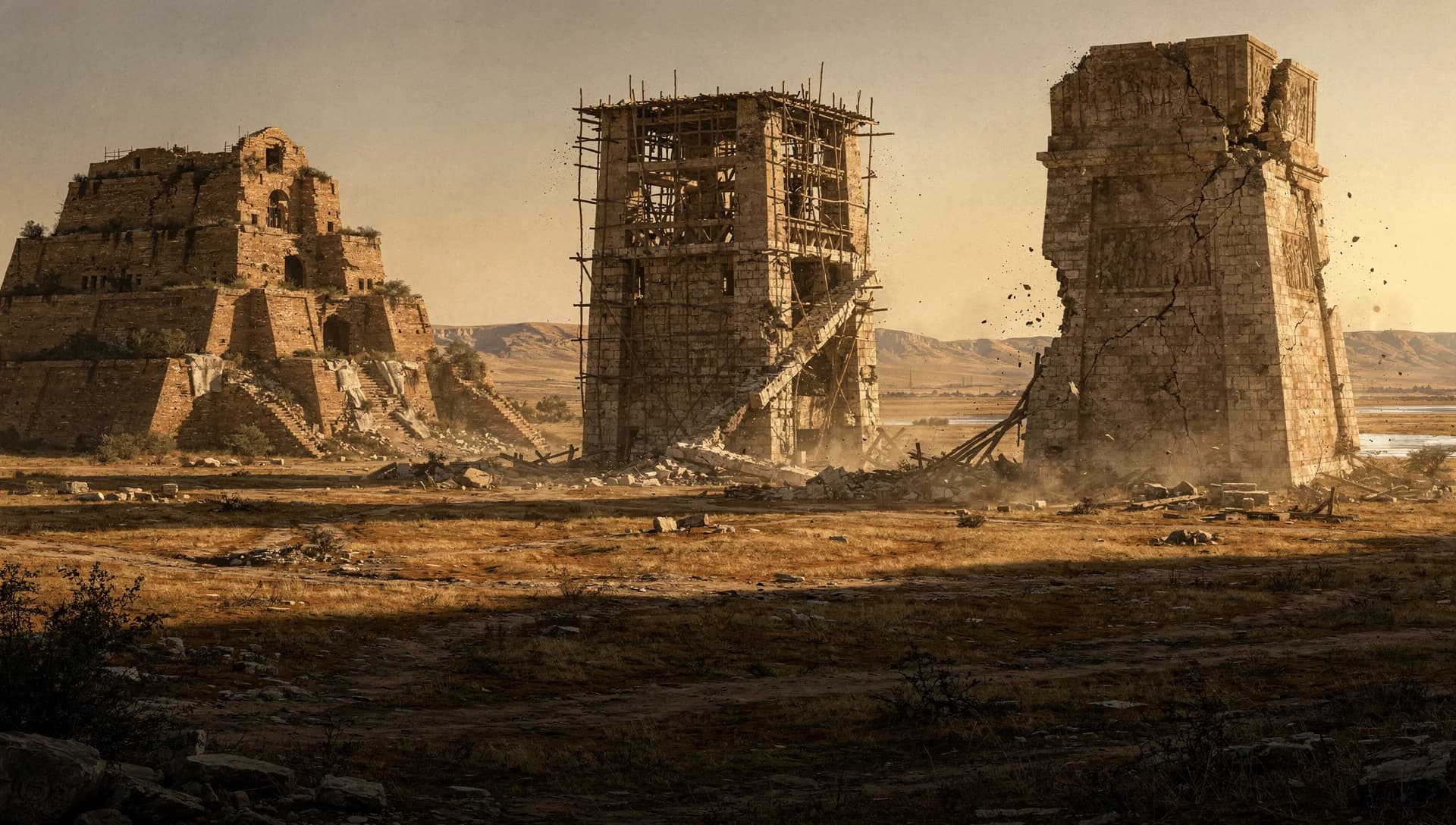
Three Towers, One Name: Bablot, Bablod, Babel, and the Migration of the Tower Story
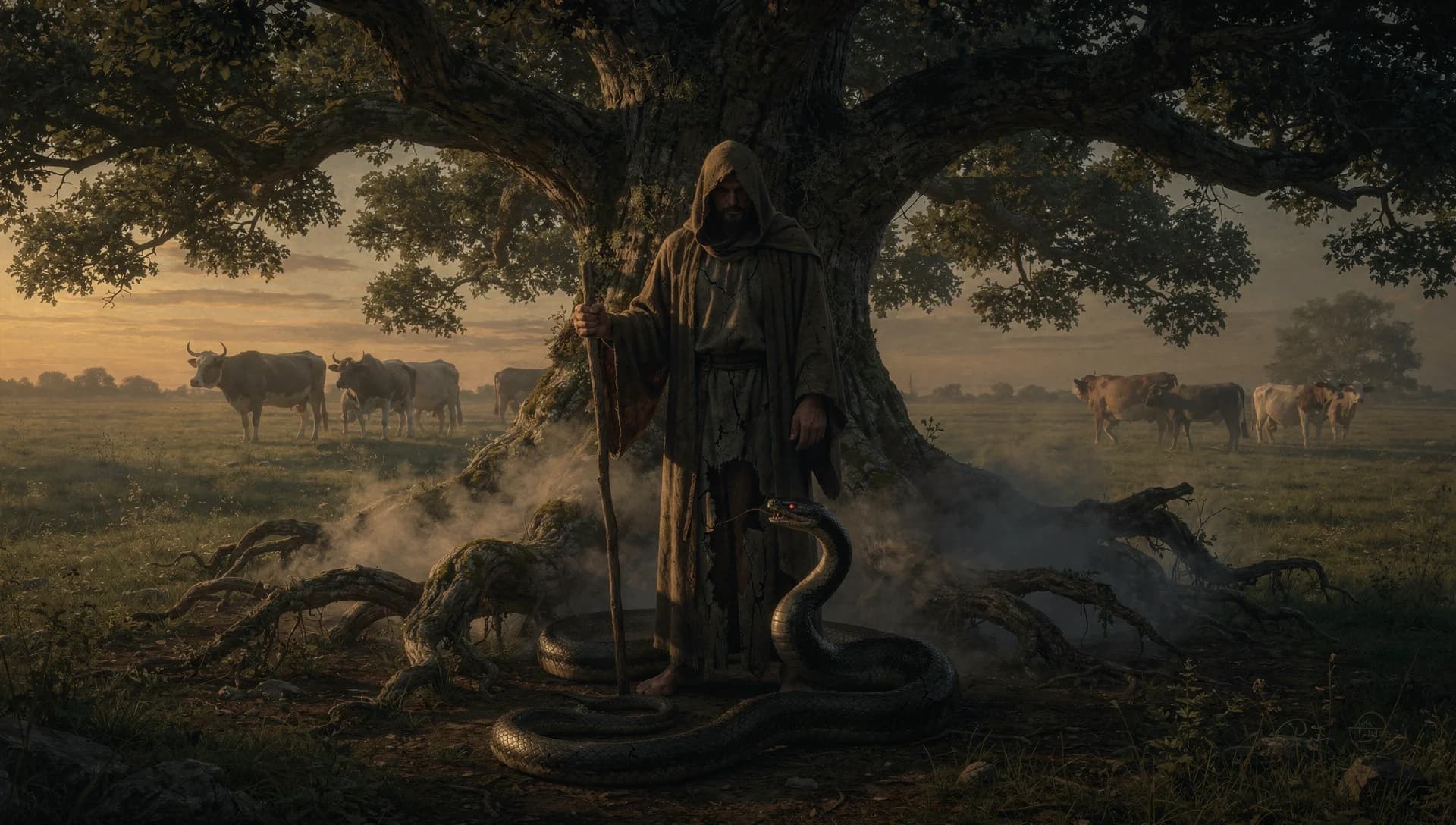
The Shadow Beneath the Oak: Veles and the Nodite Chthonic Memory
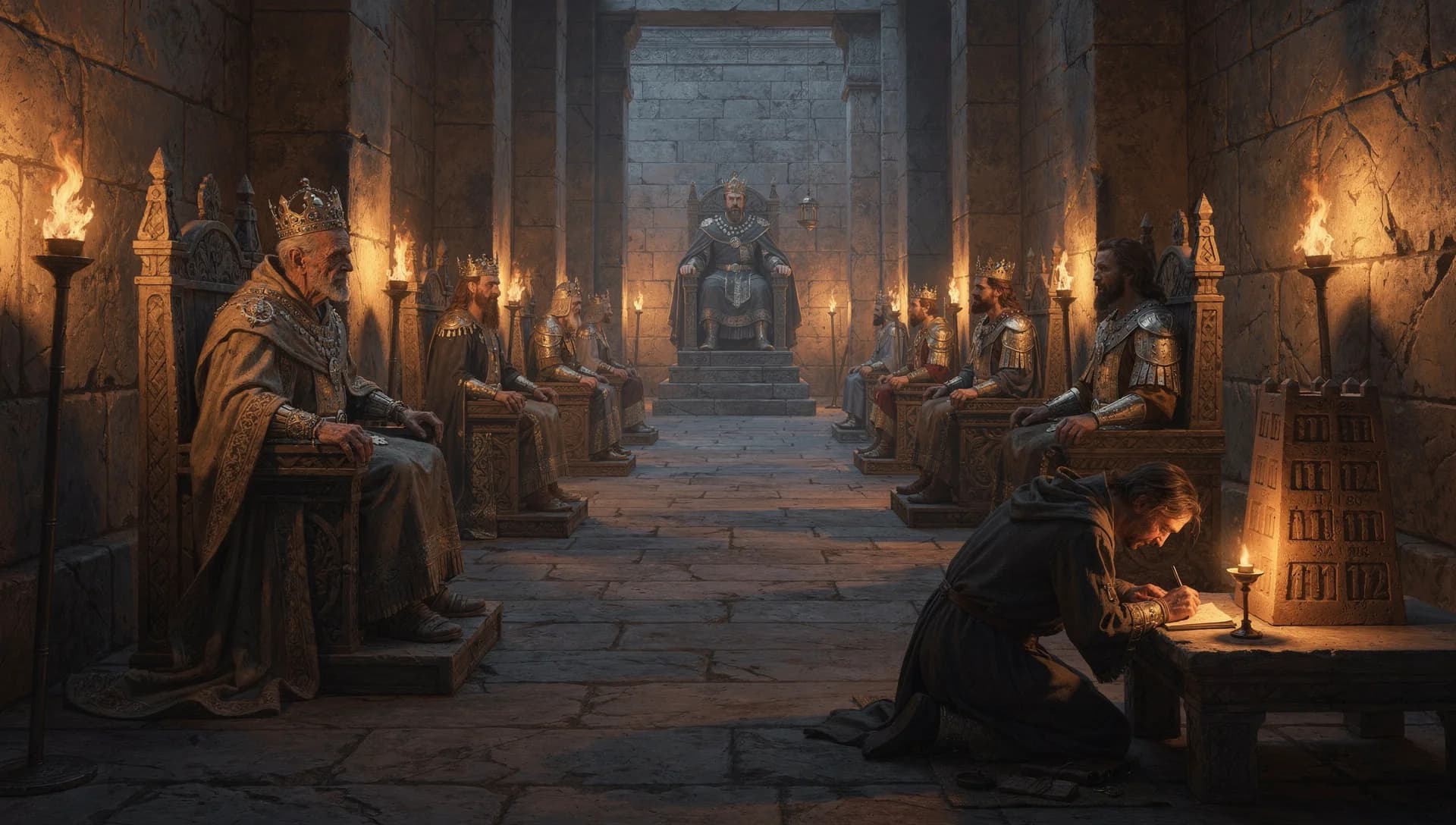
Kings Who Lived Too Long: The Nodite Dynasty and the Sumerian King List
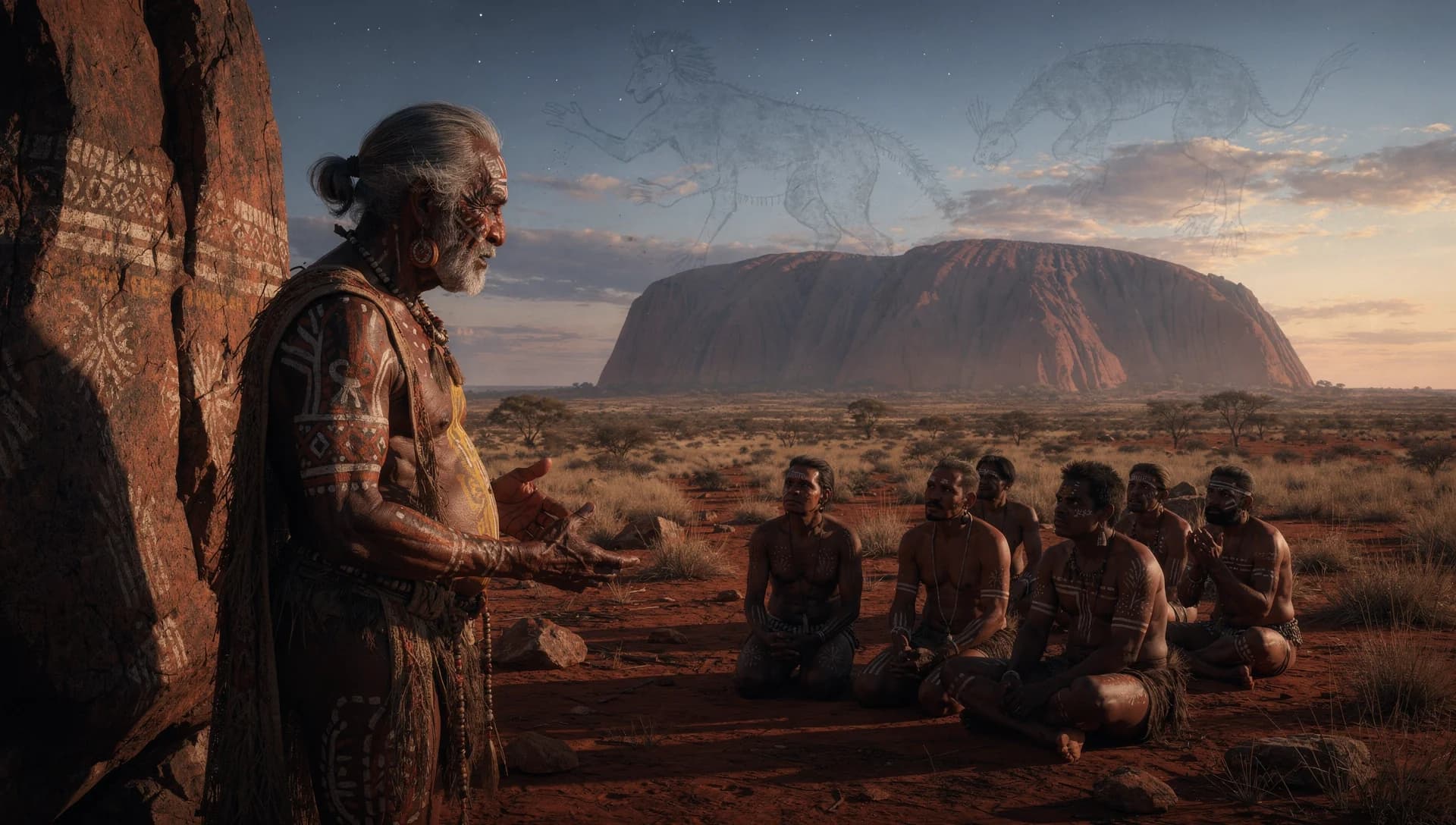
The Longest Memory: Australian Aboriginal Dreamtime and the Primordial Teaching-Ancestors
The Newsletter
Get the research behind each piece
Free. New Urantia Book explorations, the sources behind the videos, and early looks. No spam, unsubscribe anytime.
Prefer video? Follow on YouTube and Facebook.
Delivered through Substack. You can also read past issues.