
Kings Who Lived Too Long: The Nodite Dynasty and the Sumerian King List
The Weld-Blundell Prism at the Ashmolean Museum records eight Sumerian kings reigning before the flood for a total of 241,200 years. The standard academic response is that the numbers are mythological. The Urantia Book provides a specific mechanical explanation for them, and the explanation is internally consistent.

Nodite rulers, long-lived post-rebellion kings = Sumerian King List, antediluvian kings with impossible reign lengths
This article expands on the decoder mapping. For the side-by-side card and quick reference, see the mapping page.
The Prism That Ought Not to Be There
At the Ashmolean Museum in Oxford, a small clay prism sits in a case. Its museum number is WB 444, acquired in the collection of Herbert Weld-Blundell. The object is tetrahedral, about twenty centimeters tall, dense with cuneiform wedges. It is the most complete surviving copy of the Sumerian King List, dated to roughly 1800 BCE on internal grounds.
The prism records a succession of kings and their reign lengths. The first eight, who are said to have reigned before the flood, total 241,200 years between them. Alulim of Eridu reigns 28,800 years. Alalngar, 36,000. En-men-lu-ana, 43,200. Dumuzi the shepherd, 36,000. And so on. The reigns collapse abruptly after the flood to recognizable human lengths, 1,200 years descending to 50 and 25 and the normal durations of Middle Bronze Age kings.
Thorkild Jacobsen's 1939 critical edition, The Sumerian King List (University of Chicago, Assyriological Studies 11), remains the standard reference. Jacobsen treated the antediluvian numbers as mythological inflation without offering a mechanism. Piotr Steinkeller's more recent work (An Ur III Manuscript of the Sumerian King List, Mesopotamian Civilizations 7, 1998) has confirmed that the basic structure of the list predates its earliest surviving copy.
The Urantia Book supplies a mechanism that is specific, falsifiable, and grounded in claims about time-reckoning that can be independently checked.
What the Urantia Book Says
After the rebellion, the sixty corporeal staff members who had followed Caligastia into rebellion, along with forty-four modified Andonite associates, lost their access to the tree of life and were reduced to superhuman but mortal existence (UB 67:4.2). Their descendants became the Nodites. The first generations were genuinely long-lived:
"The pure-line Nodites were a magnificent race, but they gradually mingled with the evolutionary peoples of earth, and before long great deterioration had occurred. Ten thousand years after the rebellion they had lost ground to the point where their average length of life was little more than that of the evolutionary races." (UB 77:2.9)
The connection to the Sumerian King List is made explicitly:
"When archaeologists dig up the clay-tablet records of the later-day Sumerian descendants of the Nodites, they discover lists of Sumerian kings running back for several thousand years; and as these records go further back, the reigns of the individual kings lengthen from around twenty-five or thirty years up to one hundred and fifty years and more. This lengthening of the reigns of these older kings signifies that some of the early Nodite rulers (immediate descendants of the Prince's staff) did live longer than their later-day successors and also indicates an effort to stretch the dynasties back to Dalamatia." (UB 77:2.10)
The mechanism of the inflated numbers is given:
"The records of such long-lived individuals are also due to the confusion of months and years as time periods. This may also be observed in the Biblical genealogy of Abraham and in the early records of the Chinese. The confusion of the twenty-eight-day month, or season, with the later introduced year of more than three hundred and fifty days is responsible for the traditions of such long human lives. There are records of a man who lived over nine hundred 'years.' This period represents not quite seventy years, and such lives were regarded for ages as very long, 'threescore years and ten' as such a life span was later designated." (UB 77:2.11)
The Urantia account is internally consistent. It supplies a calendrical correction (28-day month recorded as year, then misread by later scribes using the 365-day year, inflating by a factor of ~12.5). A king listed at 36,000 "years" corresponds to roughly 2,880 years at that correction factor. Even corrected, the number is high, and the second component of the explanation is that the list preserves dynastic totals as individual reigns, compressing a succession of long-lived rulers into a single name.
What the Ancient Source Says
The Weld-Blundell Prism (Ashmolean Museum, WB 444, c. 1800 BCE) is the principal witness. The Langdon edition (Oxford Editions of Cuneiform Texts II, 1923) established the text. Jacobsen's 1939 critical edition collated the available witnesses. Piotr Steinkeller's An Ur III Manuscript of the Sumerian King List (Mesopotamian Civilizations 7, 1998) demonstrates that the compositional core of the list predates the Old Babylonian copies by several centuries.
The list's antediluvian section names the eight pre-flood kings: Alulim (Eridu, 28,800 years), Alalngar (Eridu, 36,000), En-men-lu-ana (Bad-tibira, 43,200), En-men-gal-ana (Bad-tibira, 28,800), Dumuzi the Shepherd (Bad-tibira, 36,000), En-sipad-zid-ana (Larak, 28,800), En-men-dur-ana (Sippar, 21,000), and Ubara-Tutu (Shuruppak, 18,600). The total, 241,200 years, is uniformly regarded in modern scholarship as mythological rather than historical.
The post-diluvian section records the first kings of the First Dynasty of Kish with reigns that are high but no longer astronomical: 1,200 years, then 960, then 670, descending through several copies to recognizably human lengths. The collapse happens at a specific point in the text, suggesting that the list's compilers themselves were aware that they were transitioning from a legendary to a historical register.
The twenty-eight-day month is well attested in Mesopotamian calendrical history. Babylonian astronomers operated with a lunar month of approximately twenty-nine and a half days, regularized into alternating twenty-nine and thirty-day months; earlier, pre-literate peoples throughout the region used a simpler twenty-eight-day lunar observation cycle. The transition to a fully synchronized 365-day solar year is securely dated to the second millennium BCE in Egypt and somewhat later in Mesopotamia. The Urantia Book's claim that early lifespans were recorded in months and misread later as years by scribes using the solar year has a chronological substrate in documented calendrical history.
Why This Mapping Matters
The Sumerian King List is one of the sharper anomalies in the ancient Near Eastern archaeological record. The numbers are specific, they are preserved across multiple witnesses with internal consistency, and they collapse to plausible human reign lengths at a definite textual transition. The standard scholarly response is to treat the antediluvian reigns as mythological. That response explains nothing about why the numbers have the specific values they have or why the collapse happens where it happens.
The Urantia Book supplies three claims that, taken together, match the pattern of the data. First, the earliest Nodite rulers genuinely lived longer than their successors because of the residual effects of the tree of life transmitted to them through their corporeal-staff ancestry. Second, the reigns were in some cases dynastic totals collapsed into individual names. Third, the absolute numbers were further inflated by the confusion of the 28-day month with the later 365-day year. The three claims compound, producing figures that are high at the top and collapse over time, which is the shape of the actual Sumerian King List.
The mapping is not that the King List is literally true. It is that the King List is a remembered schema of a real post-rebellion dynastic situation, preserved with characteristic ancient Near Eastern number inflation and with the specific calendar-transition artifact the Urantia record names. That is a constrained claim, checkable against the internal structure of the List itself.
Sources
- The Urantia Book, Paper 77 (The Midway Creatures). Urantia Foundation, first printing 1955. Cited passages: 77:2.9, 77:2.10, 77:2.11, 77:2.12.
- Jacobsen, Thorkild. The Sumerian King List. Assyriological Studies 11, University of Chicago Press, 1939.
- Steinkeller, Piotr. "An Ur III Manuscript of the Sumerian King List," in Literatur, Politik und Recht in Mesopotamien, Mesopotamian Civilizations 7, Eisenbrauns, 2003, pp. 267-292.
- Langdon, Stephen. The Weld-Blundell Collection, Volume 2: Historical Inscriptions. Oxford Editions of Cuneiform Texts, Clarendon Press, 1923.
- Ashmolean Museum. Weld-Blundell Prism, WB 444.
- Finkelstein, J. J. "The Antediluvian Kings: A University of California Tablet," Journal of Cuneiform Studies 17 (1963), pp. 39-51.
Confidence and Evidence
- Confidence: INFORMED SPECULATION
- Evidence rating: STRONG
- Basis: The Urantia Book names a specific mechanism (calendar confusion plus dynastic compression plus residual tree-of-life longevity) that produces the observed shape of the data. The mechanism is internally consistent, chronologically plausible, and testable against the textual transition point in the list itself.
Related Decoder Articles
- Nodites / Corporeal Staff = Nephilim, Sons of God
- The Corporeal Staff of One Hundred = Anunnaki
- Nod, Rebel Faction Leader = Enlil, Lord of the Wind
By Derek Samaras
Connecting Articles
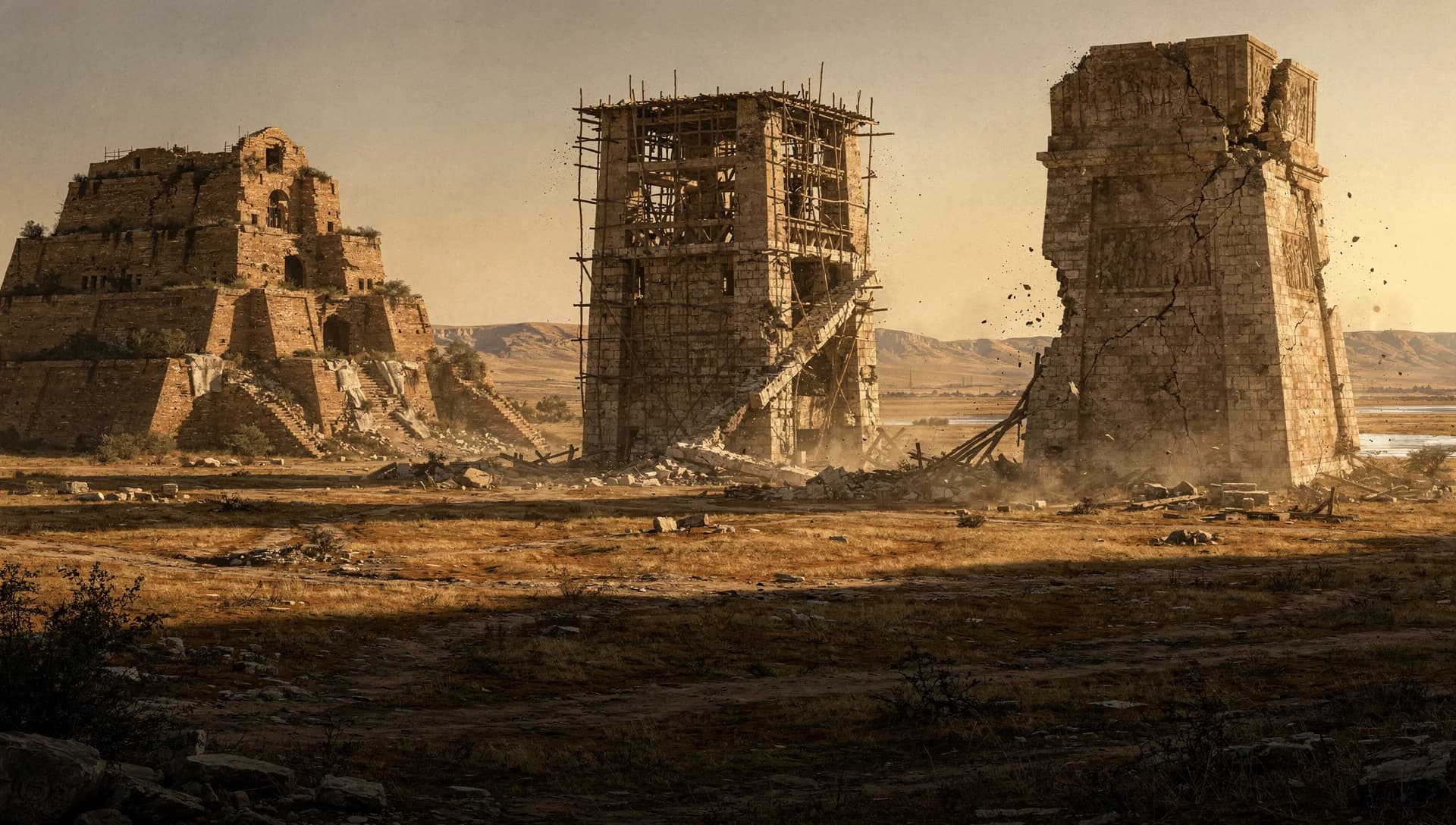
Three Towers, One Name: Bablot, Bablod, Babel, and the Migration of the Tower Story
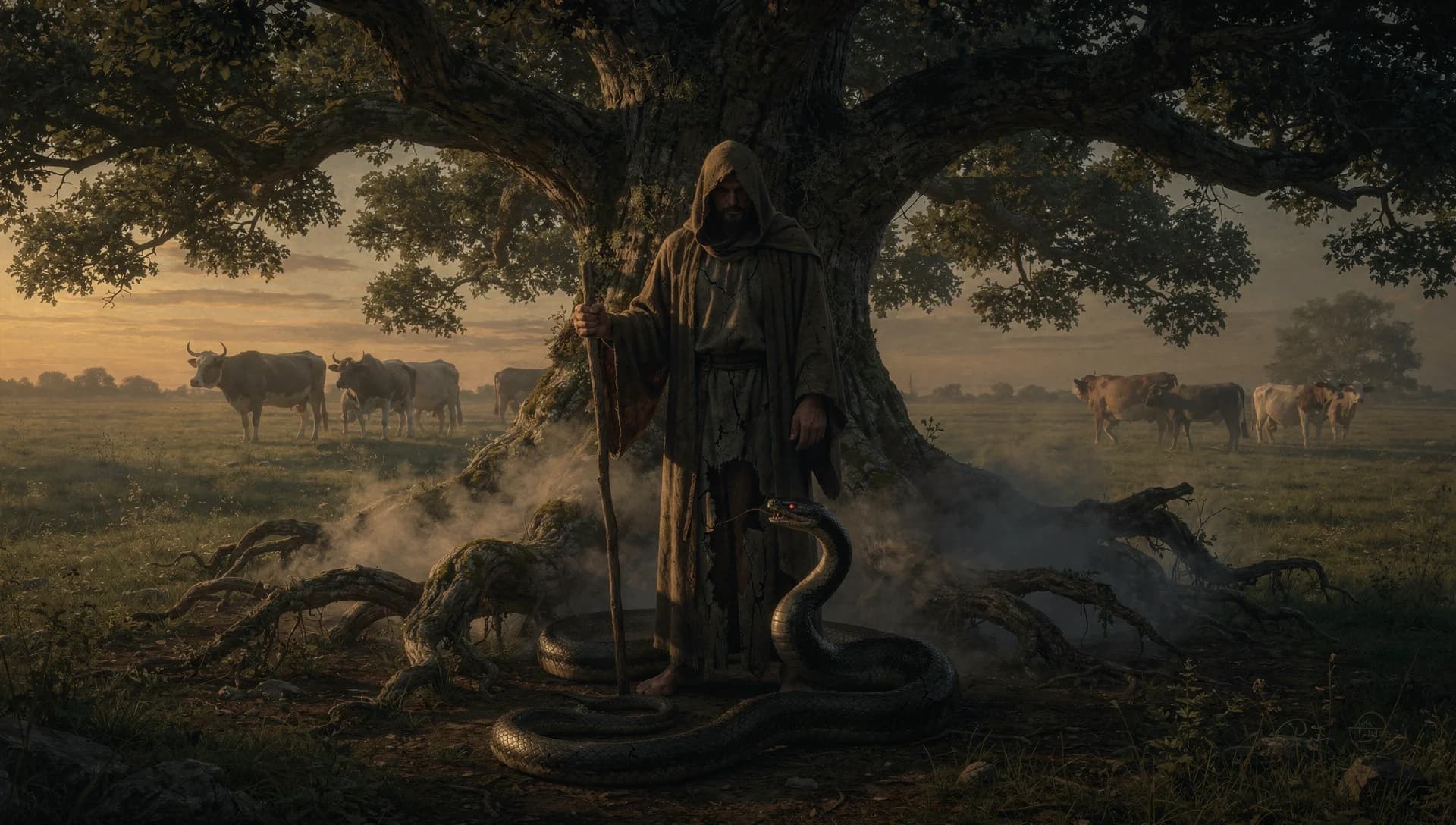
The Shadow Beneath the Oak: Veles and the Nodite Chthonic Memory

The Bird That Carried the Bull: Fandors and the Mesopotamian Anzu
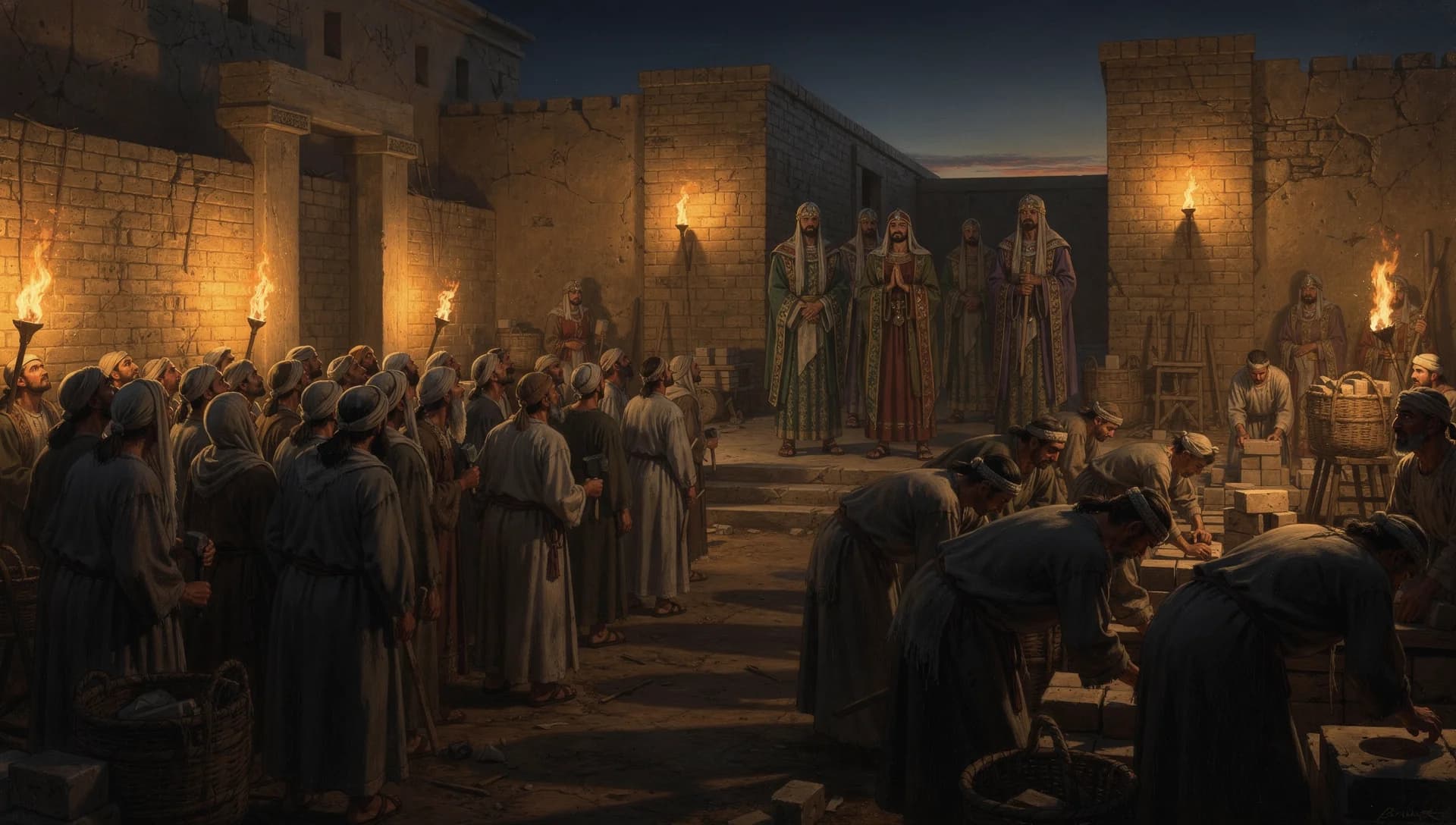
The Hundred and Forty-Four: Modified Andonites and the Sumerian Igigi
The Newsletter
Get the research behind each piece
Free. New Urantia Book explorations, the sources behind the videos, and early looks. No spam, unsubscribe anytime.
Prefer video? Follow on YouTube and Facebook.
Delivered through Substack. You can also read past issues.