
The Giant Bird That Carried Men: Pouakai, Te Hokioi, and the Fandor Memory in New Zealand
Maori oral tradition preserves the Pouakai and Te Hokioi, giant birds capable of carrying off a man. Paleontology confirms that Haast's eagle, with its three-meter wingspan, persisted in New Zealand until roughly 1400 CE. The Urantia Book documents the great fandors that Bon's council trained as passenger birds in the pre-rebellion Dalamatian era. The Maori bird tradition holds both layers at once: a recent encounter with Haast's eagle, and an older fandor memory carried into the Pacific by Andite sailors.
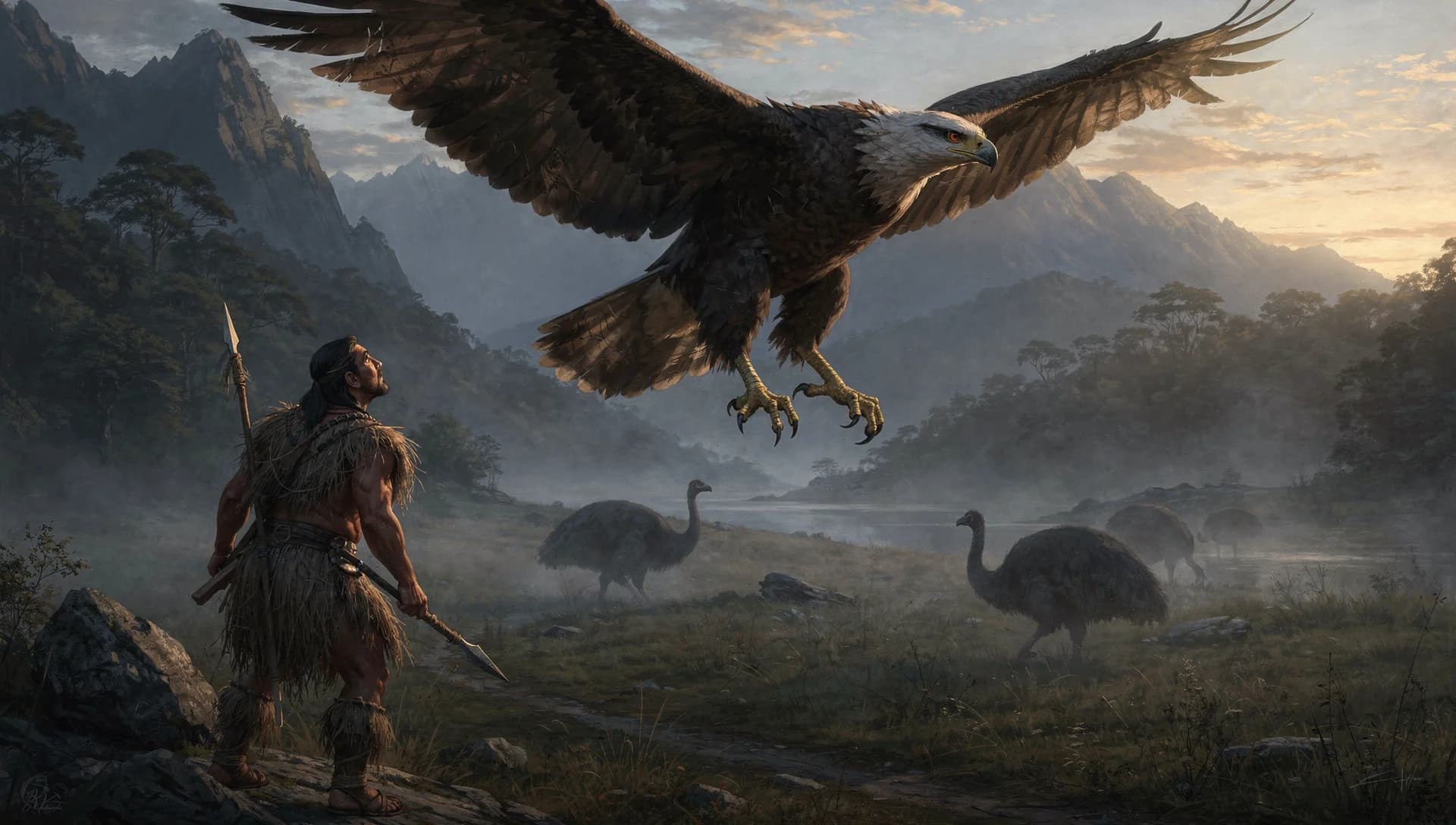
Fandor memory reinforced by Haast's eagle encounter = Maori Pouakai / Te Hokioi, giant divine birds
This article expands on the decoder mapping. For the side-by-side card and quick reference, see the mapping page.
The Giant Bird of Maori Tradition
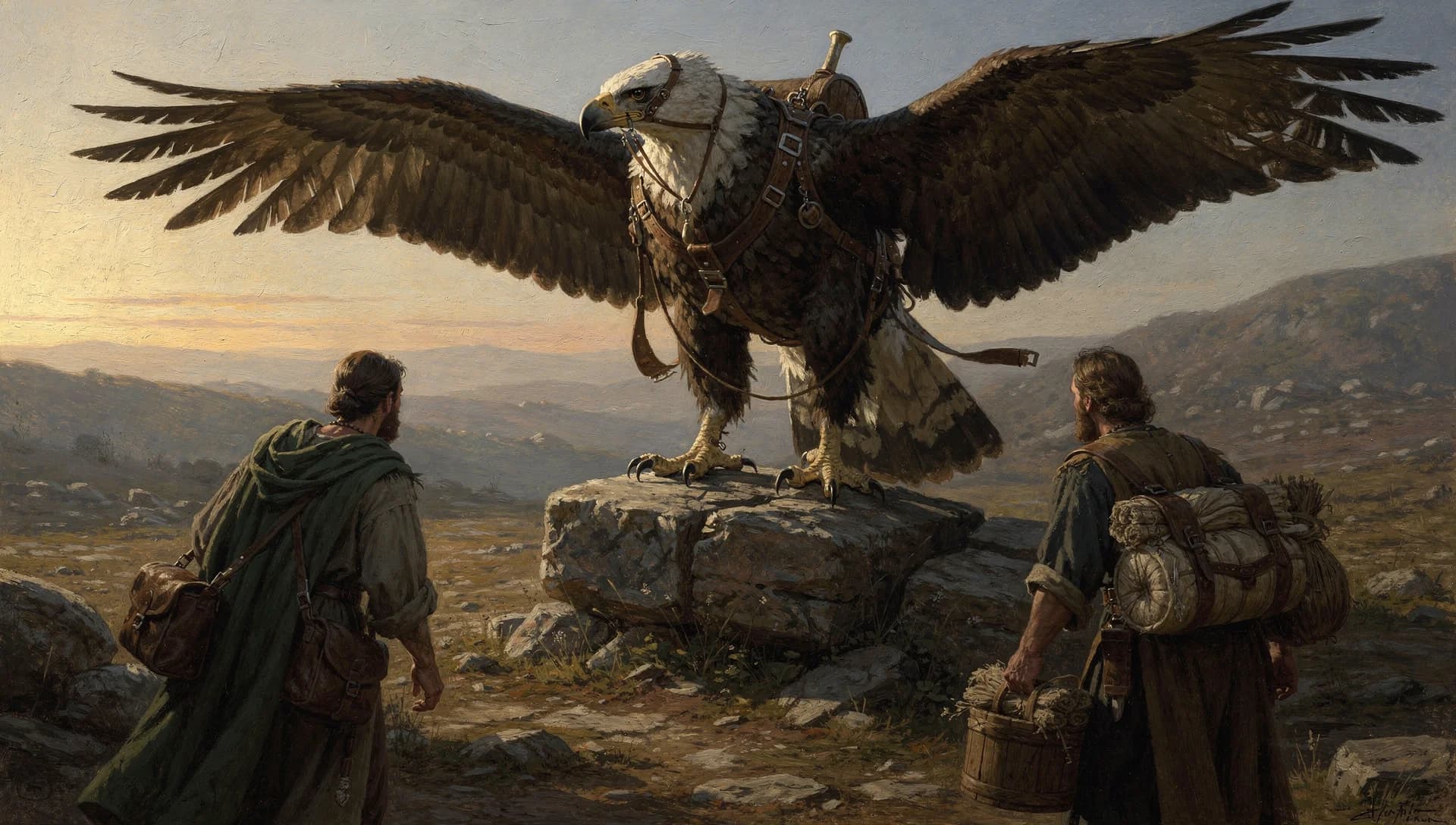
Maori oral tradition remembers the Pouakai (or Pouākai), with Te Hokioi as a regional variant, a giant bird capable of carrying off a full-grown man. The narratives describe Pouakai as a mountain raptor that preyed on humans and livestock, and that early Maori hunters encountered with real danger. Te Hokioi appears in the traditions of other iwi as the same bird under another name, with the variation you would expect across the tribal landscape of Aotearoa New Zealand.
The tradition reaches us through nineteenth-century European ethnography, including the documentation work of Julius von Haast at Canterbury, and through twentieth-century synthesis. What makes the Pouakai material rare is its content: cultural memory of a real extinct megafaunal species that lived alongside human beings until just before European contact.
What the Urantia Book Says
The Urantia Book documents the great fandors as trained passenger birds in the pre-rebellion Dalamatian administration:
"It was in these days that carrier pigeons were first used, being taken on long journeys for the purpose of sending messages or calls for help. Bon's group were successful in training the great fandors as passenger birds, but they became extinct more than thirty thousand years ago." (66:5.6)
Bon was the head of the council on animal domestication (66:5.3). His council trained the great fandors as passenger birds in that early era. The thirty-thousand-year extinction date places the fandors as gone by roughly 28,000 BCE, long before the Maori arrival in Aotearoa around 1300 CE.
Memory of the fandors carried forward through the post-rebellion and post-Adamic cultural substrate, then into the Pacific through the Andite sailor crossing the Urantia Book records at 78:5.7 (treated in the companion Polynesian Andite Sailors article). The Andite voyagers carried elevated cultural content with them, including the memory of those great birds.
What the Ancient Sources Say
The paleontological record confirms Haast's eagle (Hieraaetus moorei, formerly Harpagornis moorei) as a real New Zealand megafaunal species, with a wingspan of about three meters and documented predation on moa, the great flightless birds of pre-European New Zealand. Trevor Worthy and Richard Holdaway's The Lost World of the Moa: Prehistoric Life of New Zealand (Indiana University Press, 2002) documents the eagle comprehensively.
Alan Tennyson and Paul Martinson's Extinct Birds of New Zealand (Te Papa Press, 2007) places it in the broader context of the country's lost avifauna. Haast's eagle persisted until roughly 1400 CE. Its extinction tracked the Maori-driven hunting of moa, its principal prey, which collapsed the food chain it depended on.
The Pouakai profile in oral tradition matches the eagle on every key point. The bird is described as mountain dwelling, which fits Haast's eagle in its montane forest habitat. It is described as a hunter of humans, which matches what skeletal analysis shows about the talon structure of the bird and its capacity for attacking human-sized prey. It is described as large enough to carry off a man, which fits the wingspan and body size for short-distance carrying of human-weight prey, even if any sustained flight under that load would have been biomechanically limited.
The recent Maori encounter with Haast's eagle therefore gives the Pouakai tradition direct experiential ground. This is not mythological embellishment. It is accurate memory of a real encounter.
The wider Pacific carries similar material. Hawaiian tradition remembers the giant bird Halulu. Tahitian and Tongan traditions preserve mythic large birds. Some Australian Aboriginal traditions of the Bunyip include bird variants. This Pacific giant-bird substrate predates the Maori encounter with Haast's eagle by considerable depth, which suggests an older cultural memory that the Maori tradition then reinforced through direct experience.
The global distribution of giant-bird traditions, from fandor and anzu to garuda, thunderbird, roc, and simurgh, is treated in many comparative-mythology sources, including Stith Thompson's Motif-Index of Folk-Literature (Indiana University Press, 1955-1958), which catalogues the giant-bird motif across widely separated cultures. The pattern points to shared substrate in pre-migration human cultural memory.
Why This Mapping Matters
The Pouakai tradition is a valuable case in Urantia-framework comparative mythology, because it clearly blends two substrate layers. There is an older fandor memory inherited through the pre-migration cultural substrate, and a newer Haast's eagle encounter that gave that memory a fresh, direct anchor.
The older layer traces back to the great fandors of the pre-rebellion Dalamatian era at 66:5.6. That memory carried forward through the post-rebellion cultural substrate, through pre-Adamic Nodite continuity, and on into the Pacific through the Andite sailor crossing. The Andite voyagers would have brought the preserved memory of those pre-extinction birds with them as part of their elevated cultural content.
The newer layer traces to the Maori encounter with Haast's eagle from roughly 1300 to 1400 CE. Maori hunters met the last surviving eagles in the Canterbury region and the mountain country until the species disappeared around 1400 CE. That direct experience reinforced an existing fandor tradition and produced the Pouakai and Te Hokioi narratives we have on record.
This blended character is what makes the tradition so useful as a case study. Pure invention would not match the paleontological profile of Haast's eagle as closely as Pouakai does. Pure local experience would not connect to the broader Pacific and global giant-bird substrate as cleanly as Pouakai does. The fact that both fits hold at once points to genuine preservation on both layers.
The takeaway for the mapping is this: read Pouakai as dual substrate. The older layer is fandor memory from the Urantia Book's pre-rebellion Dalamatian animal-husbandry tradition. The newer layer is the Haast's eagle encounter from recent New Zealand biological history. The continuity across both layers is exactly the kind of durable cultural memory that the Urantia Book framework would lead you to expect.
Sources
- The Urantia Book, Paper 66 (The Planetary Prince's Staff), Paper 74 (Adam and Eve), Paper 77 (The Midway Creatures), Paper 78 (The Violet Race After the Days of Adam). Urantia Foundation, first printing 1955. Cited passages: 66:5.6, 74:3.4, 77:5, 78:5.7.
- Worthy, Trevor H. and Richard N. Holdaway. The Lost World of the Moa: Prehistoric Life of New Zealand. Indiana University Press, 2002.
- Tennyson, Alan J. D. and Paul Martinson. Extinct Birds of New Zealand. Te Papa Press, 2007.
- Bunce, Michael, et al. "Ancient DNA Provides New Insights into the Evolutionary History of New Zealand's Extinct Giant Eagle." PLoS Biology 3, no. 1, 2005.
- Thompson, Stith. Motif-Index of Folk-Literature. Indiana University Press, 1955-1958 (six volumes).
- Reed, A. W. Reed Book of Maori Mythology. Reed Publishing, 2004.
Confidence and Evidence
- Confidence: INFORMED SPECULATION
- Evidence rating: MODERATE
- Basis: The Urantia Book documents the great fandors at 66:5.6 with extinction dated more than thirty thousand years ago. The Maori Pouakai and Te Hokioi tradition is ethnographically well documented, and its biological profile matches the paleontologically verified Haast's eagle. Reading the tradition as two layers, an older fandor memory plus a newer Haast's eagle encounter, accounts for both the ancient substrate features and the recent experiential features at once.
Related Decoder Articles
- Anzu = Fandor Memory in Sumerian Mythology
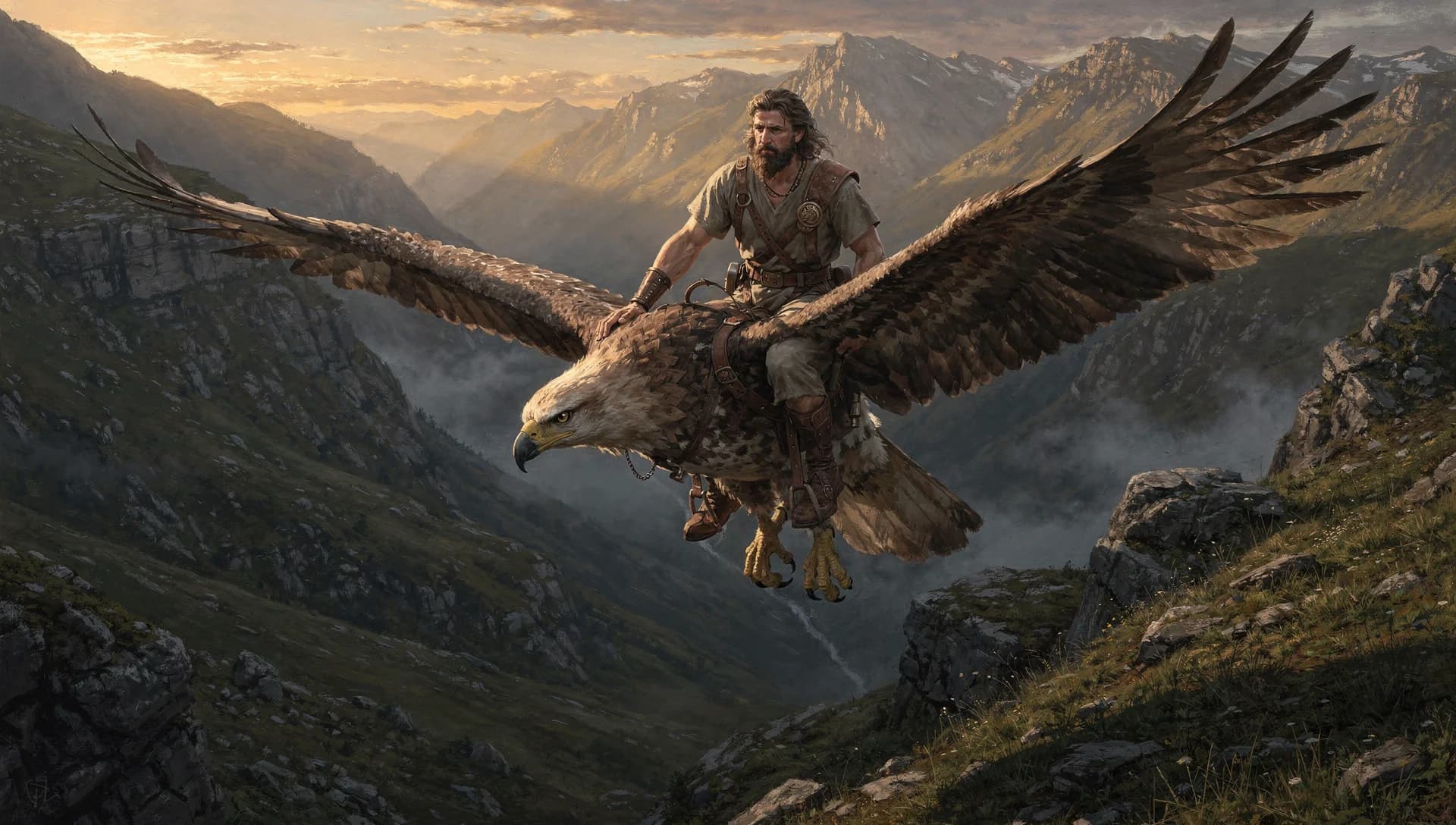
- Garuda = Fandor Memory in Hindu Tradition
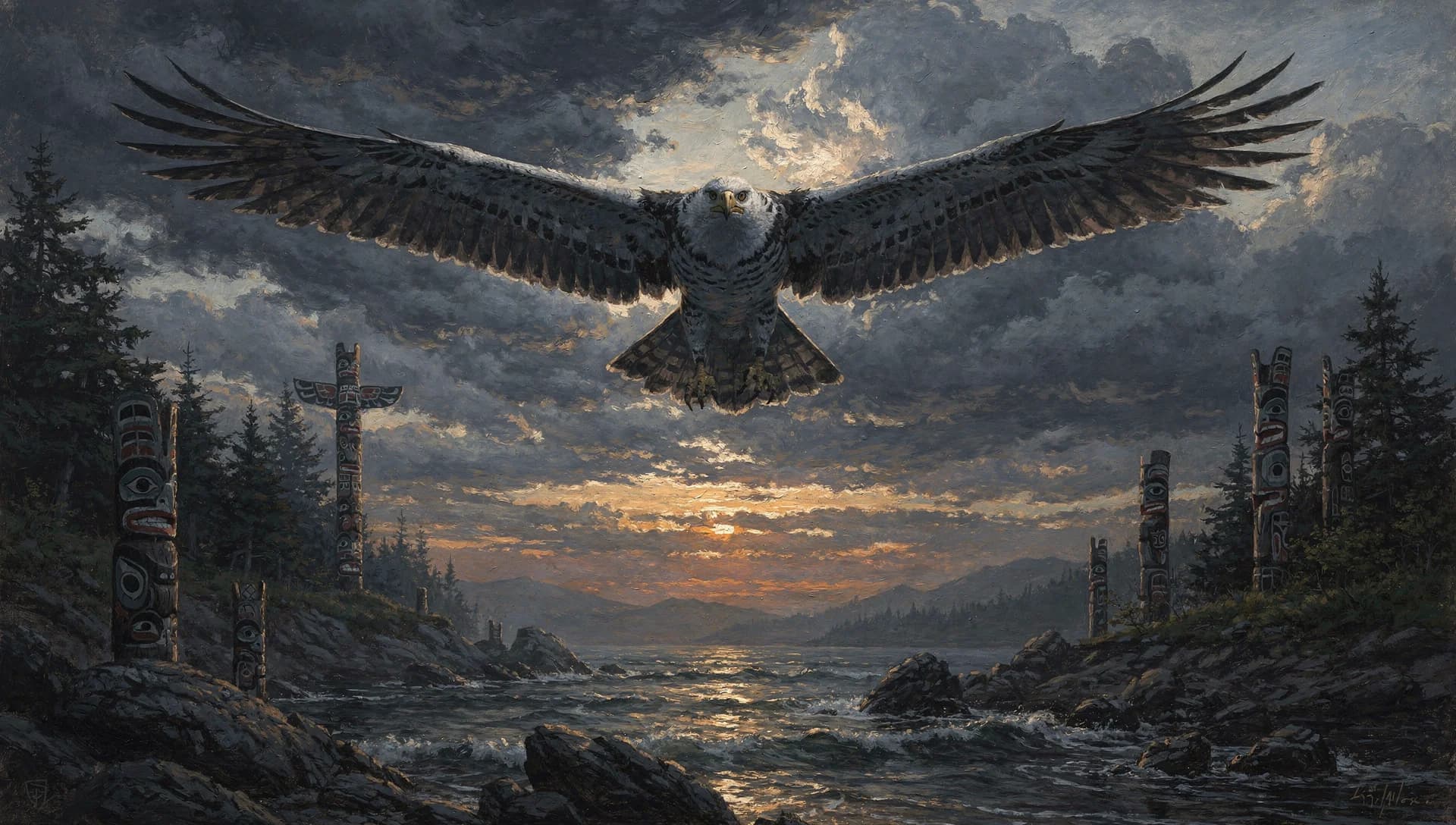
- Thunderbird = Fandor Memory in Indigenous American Tradition
Byline: Derek Samaras | Urantia Book Network | April 2026
Connecting Articles
The Thunderbird Was Real: Fandors and the Indigenous American Giant Bird Tradition
The Bird That Carried the Hero: Adamson, Fandor, and the Hindu Garuda
The Bird That Carried the Bull: Fandors and the Mesopotamian Anzu
Three Elements, One Composition: Van, Fandor, and the Assyrian Palace Reliefs
The Newsletter
Get the research behind each piece
Free. New Urantia Book explorations, the sources behind the videos, and early looks. No spam, unsubscribe anytime.
Prefer video? Follow on YouTube and Facebook.
Delivered through Substack. You can also read past issues.