
The Adjudication of Urantia: What Happens When the Lucifer Era Ends
The Lucifer rebellion has been on trial for nearly two hundred thousand years, and the verdict has not yet been rendered. The Urantia Book tells us who is hearing the case, why the long delay was wisdom rather than weakness, what the verdict will resolve, and what the ages of light and life that follow will look like.

The Adjudication of Urantia: What Happens When the Lucifer Era Ends
A Urantia Book Reading of the Closing of the Lucifer Rebellion, the Cosmic Court That Will Adjudicate It, the Verdict That Will Be Rendered, and the Ages of Light and Life That Will Follow
Derek Samaras
Urantia Book Network, urantiabooknetwork.com
May 2026
Keywords: Lucifer rebellion, adjudication, Ancients of Days, Most Highs of Edentia, Uversa, Gabriel vs. Lucifer, Norlatiadek, Satania, Caligastia, light and life, Magisterial Mission, Paper 53, Paper 54, Paper 55, Paper 67
A Moment That Has Not Yet Happened
Somewhere in the unwritten future of Urantia a single broadcast will arrive on every loyal sphere of Satania at once. The Ancients of Days, the three coordinate rulers of the seventh superuniverse on the world called Uversa, will have rendered their decision in a case that has stood on the docket of the supreme court of Orvonton for almost two hundred thousand of our years (53:9.3). The mandate will travel through the constellation circuits to Edentia, down through the system circuits to Jerusem, and out to the seven prison worlds of the Father where Lucifer, Satan, and the other interned rebels are held. The verdict will be the final and merciful word on the most widespread insurrection ever recorded in the local universe of Nebadon, and after it is rendered the names will not be spoken anymore. Paper 53 frames the moment with unusual directness:
"The rebellion has ended on Jerusem. It ends on the fallen worlds as fast as divine Sons arrive. We believe that all rebels who will ever accept mercy have done so. We await the flashing broadcast that will deprive these traitors of personality existence. We anticipate the verdict of Uversa will be announced by the executionary broadcast which will effect the annihilation of these interned rebels. Then will you look for their places, but they shall not be found. 'And they who know you among the worlds will be astonished at you; you have been a terror, but never shall you be any more.' And thus shall all of these unworthy traitors 'become as though they had not been.' All await the Uversa decree." (53:9.7)
That moment has not yet come. When it does, the long planetary era we have been living through, the era inherited from a rebellion that broke out in our local system about the time the cave bear and the mammoth still walked the rivers of southern France, will close, and a different kind of history will begin. This paper traces the structure of that closing: the cosmic court that will deliver it, the wisdom embedded in its long delay, the resolutions the verdict will bring, and the ages of light and life that follow once the verdict is in.
The Two Hundred Thousand Year Arc
The Urantia Book dates the outbreak of the Lucifer rebellion to about two hundred thousand years before the revelation, on the last day of a Satania year, at the annual conclave of the system on the sea of glass at Jerusem. The manifesto was issued there in the presence of the assembled hosts, and its core proposition was a redefinition of allegiance: Satan proclaimed that worship could be accorded the universal forces, physical, intellectual, and spiritual, but that allegiance could be acknowledged only to the actual and present ruler, Lucifer, styled the "friend of men and angels" and the "God of liberty" (53:4.1). The seduction was not crude. It was a doctrine of liberty, and that framing matters for everything that follows.
The being who launched it was no marginal figure. Lucifer was a brilliant primary Lanonandek Son, number 37 of his order, "distinguished for wisdom, sagacity, and efficiency" and counted among "the one hundred most able and brilliant personalities in more than seven hundred thousand of his kind" (53:0.1). He had served in many systems and governed a great system of 607 inhabited worlds, the count while he held the office (53:1.1); Satania numbers 619 today (15:14.5). The tragedy of the rebellion is the tragedy of a magnificent intelligence turning its gifts against the order that produced them, surrendering, in the language of Paper 53, "to the sophistry of spurious personal liberty."
The insurrection he launched was system wide. Thirty-seven seceding Planetary Princes swung their world administrations largely to the archrebel's side. Only on one world out of the thirty-seven contested spheres did loyalty hold entire (53:7.1), and the Urantia Book preserves the name of the mortal who held it:
"Only on Panoptia did the Planetary Prince fail to carry his people with him. On this world, under the guidance of the Melchizedeks, the people rallied to the support of Michael. Ellanora, a young woman of that mortal realm, grasped the leadership of the human races, and not a single soul on that strife-torn world enlisted under the Lucifer banner." (53:7.1)
Panoptia is the counterexample that frames the whole account. A single world, led by a single young woman under Melchizedek guidance, kept every soul loyal while thirty-seven princes fell. The rebellion was never irresistible. It was chosen, world by world and person by person, and on one world it was refused outright.
What followed the outbreak was not an arrest. More than two years of system time passed before Lanaforge was installed as the new System Sovereign, and after his arrival Lucifer and his lieutenants were stripped of administrative authority but left at liberty to roam the system (53:7.12). For the rest of the era they continued the work of seduction, but with sharply diminishing returns: "in almost two hundred thousand Urantia years they have been unable to deceive another world. No Satania worlds have been lost since the fall of the thirty-seven, not even those younger worlds peopled since that day of rebellion" (53:7.15). The rebellion peaked early and then failed steadily, a movement that won its converts in the first hours and never gained another.
Two later turning points narrowed the matter toward its end. The first was Michael's bestowal. Lucifer and Satan had come to Urantia for what they took to be the decisive struggle, and the bestowal of Michael "terminated the Lucifer rebellion in all Satania aside from the planets of the apostate Planetary Princes" (53:8.3). Jesus marked the moment himself when he told his disciples, "And I beheld Satan fall as lightning from heaven" (53:8.3). The second turning point came at Michael's enthronement as full Sovereign of Nebadon, when he both took the rebels into custody and formally moved the case forward:
"Michael, upon assuming the supreme sovereignty of Nebadon, petitioned the Ancients of Days for authority to intern all personalities concerned in the Lucifer rebellion pending the rulings of the superuniverse tribunals in the case of Gabriel vs. Lucifer, placed on the records of the Uversa supreme court almost two hundred thousand years ago, as you reckon time." (53:9.3)
From that point Lucifer "was taken into custody by the agents of the Uversa Ancients of Days" and confined to satellite number one of the Father's group of transition spheres (53:9.2). Satan kept limited visiting privileges to the apostate worlds for a while longer, but by the time of the Urantia Papers themselves that final liberty had been revoked. During "the time of effecting this revelation, the first hearing in the pending case of Gabriel vs. Lucifer was held on Uversa," and the Ancients of Days then directed that Satan be confined to the prison world with Lucifer, ending his ability to visit any fallen world (54:4.8). The paper closes the point with a sentence that doubles as the thesis of the whole subject: "Justice in a mercy-dominated universe may be slow, but it is certain" (54:4.8).
So the present status, as the revelators reported it, is precise. Lucifer is confined. Satan is confined. The first hearing has been held. The annihilation verdict has not yet been issued. We are living inside the closing window of the longest mercy adjudication in Nebadon history.
The Wisdom of the Delay
A reader who learns that a cosmic insurrection has been on the docket for almost two hundred thousand years has every right to ask why an administration of the scope the Urantia Book describes did not simply arrest the perpetrators on day one and dispose of the matter in an afternoon. Paper 54, "Problems of the Lucifer Rebellion," is devoted to exactly that question, and its answer is not that the rulers were unable to act. They elected not to. The principle is stated as a structural feature of how mercy operates in time:
"Supreme justice can act instantly when not restrained by divine mercy. But the ministry of mercy to the children of time and space always provides for this time lag, this saving interval between seedtime and harvest. If the seed sowing is good, this interval provides for the testing and upbuilding of character; if the seed sowing is evil, this merciful delay provides time for repentance and rectification. This time delay in the adjudication and execution of evildoers is inherent in the mercy ministry of the seven superuniverses. This restraint of justice by mercy proves that God is love, and that such a God of love dominates the universes and in mercy controls the fate and judgment of all his creatures." (54:4.6)
The delay, in other words, is not a bureaucratic failure. It is the visible signature of mercy in a universe of time, the "saving interval between seedtime and harvest" that gives evil the room to exhaust itself and the wrongdoer the room to turn back. A Mighty Messenger, himself a glorified mortal who survived the first system rebellion ever to occur in Nebadon, sets out twelve reasons for the delay, and their cumulative force reframes the question entirely. Mercy is named first: every wrongdoer is owed sufficient time to formulate a fully chosen attitude toward his own evil, on the principle that justice will never destroy what mercy can still save, and that no affectionate father is precipitate in punishment. Several reasons turn on jurisdiction and counsel. The Creator Son could not exercise summary jurisdiction over Lucifer while Michael's bestowal career remained incomplete and his sovereignty unqualified. The Ancients of Days could have annihilated the rebels at once but chose to defer to Michael's decisions. Immanuel counseled Michael to remain aloof and let the rebellion run its natural course of self-obliteration.
The remaining reasons are pedagogical, and they are the most striking. The Faithful of Days advised the Constellation Fathers that allowing the rebels a free course would more rapidly uproot all sympathy for them in the hearts of every present and future citizen of the constellation. The Paradise emergency adviser of Gabriel argued that without the full development of rebellion, doubtful creatures elsewhere could not mature their own choice, and the quarantine on Norlatiadek would have to be extended indefinitely. The Divine Minister directed that nothing be done to half cure or cowardly suppress the rebellion. An emergency council of glorified mortals warned Gabriel that arbitrary suppression would have led astray three times the number of beings actually lost. Each reason converges on a single conclusion: a fully expressed and self-defeating rebellion teaches the loyal more durably than any decree could, and a prematurely crushed one would have left doubt alive across the constellation. The Messenger closes the list with the matter of time itself, and the comparison he draws is the most quoted line in the entire discussion:
"Time, even in a universe of time, is relative: If a Urantia mortal of average length of life should commit a crime which precipitated world-wide pandemonium, and if he were apprehended, tried, and executed within two or three days of the commission of the crime, would it seem a long time to you? And yet that would be nearer a comparison with the length of Lucifer's life even if his adjudication, now begun, should not be completed for a hundred thousand Urantia years. The relative lapse of time from the viewpoint of Uversa, where the litigation is pending, could be indicated by saying that the crime of Lucifer was being brought to trial within two and a half seconds of its commission. From the Paradise viewpoint the adjudication is simultaneous with the enactment." (54:5.13)
Forty-eight reasons are taught on Uversa for permitting evil to run the full course of its own moral bankruptcy. The Messenger is permitted to share twelve, and there are presumably others he is not permitted to share and others not known even to him. The point was never exhaustive enumeration. The point is that what looks from Urantia like an interminable delay measures, from the viewpoint where the case is actually pending, as two and a half seconds. The mortal who counts his days is simply standing too close to the timescale to read it.
There is also a ledger on the goodness side of the account, and it is the single most consequential fact in the whole subject. The Melchizedeks, after watching the rebellion play out for twenty-five thousand years of system time, began to teach that the good resulting from Lucifer's folly had come to equal the evil incurred, and the accounting has only improved since:
"The sum of evil had by that time become almost stationary, continuing to increase only on certain isolated worlds, while the beneficial repercussions continued to multiply and extend out through the universe and superuniverse, even to Havona. The Melchizedeks now teach that the good resulting from the Satania rebellion is more than a thousand times the sum of all the evil." (54:6.6)
A thousand times the sum of all the evil, with the evil nearly fixed and the good still multiplying outward to Havona itself. That is the cosmic balance sheet on the rebellion as the universe watches it run its course, and it transforms the meaning of the delay. The delay is not weakness. It is the technique by which a wise and merciful administration converts a catastrophe into a teaching record that no future creature will ever forget.
Who Will Adjudicate
The court that will issue the verdict is not a local court. It is the supreme tribunal of the seventh superuniverse, Orvonton, which sits at Uversa under the presidency of the three Ancients of Days, and the Urantia Book insists that judgment in matters of this magnitude has always belonged to them (18:3.7). The principle predates the rebellion's resolution and is older than Michael's enthronement. Even the archangel of Michael, contending at the resurrection of Moses, "did not bring against him an accusing judgment but simply said, 'the Judge rebuke you,'" because "judgment in such matters belongs to the Ancients of Days, the rulers of the superuniverse" (53:1.2). Disposition of an iniquitous personality is not a power that constellation or local-universe authorities possess.
Between Lucifer's prison cell and the bench at Uversa stands a structure of administrative tiers, and each tier acted within its competence. The Most Highs of Edentia, the Constellation Fathers of Norlatiadek, were the first authorities to respond when the rebellion broke out. They confined the disloyal personalities to the system of Satania. They could quarantine, but they could not destroy, because destruction belongs to a higher level. Above them, in the local universe, Michael of Nebadon now holds completed sovereign authority and could deal summarily with such an outbreak today. The remarkable thing is that the Urantia Book reports he doubts he would: having allowed the rebel forces a free course for almost two hundred thousand years, "Christ Michael now has ample power and authority to deal promptly, even summarily, with such outbreaks of disloyalty, but we doubt that this sovereign authority would lead him to act differently if another such upheaval should occur" (53:5.3). The restraint of the delay is not a constraint Michael is under. It is a wisdom he endorses.
Final disposition, then, belongs to the Ancients of Days alone, and Paper 54 specifies the exacting standard they hold themselves to. Annihilation, the automatic result of a willful embrace of evil, may follow personal identification with sin, but only after an interval long enough to allow an adjudication of the individual's status "as will prove entirely satisfactory to all related universe personalities, and which will be so fair and just as to win the approval of the sinner himself" (54:3.2). The standard is not merely that the verdict be correct. It is that it be acknowledged. And where the guilty one knows the justice of his condemnation yet refuses to confess it, "the Ancients of Days refuse to annihilate any being until all moral values and all spiritual realities are extinct, both in the evildoer and in all related supporters and possible sympathizers" (54:3.3). Nothing salvageable, in the rebel or in anyone who might still sympathize, is allowed to be lost in the execution of the sentence.
The case is captioned Gabriel vs. Lucifer. Gabriel, the Bright and Morning Star of Nebadon, prosecutes for the universe administration; Lucifer is defendant; the docket is the Uversa supreme court. The first hearing has been held. The mandate confining Satan has followed. The mandate confining Lucifer was issued earlier, at the enthronement of Michael. The next mandate, and the final one, is the verdict still awaited.
What the Verdict Will Resolve
The verdict, when it comes, is widely expected to be annihilation. The interned rebels who have refused the long centuries of offered mercy will simply cease to exist, not suffering in any conventional sense but no longer being. Yet the verdict resolves a great deal more than the fate of a handful of fallen princes, and four distinct consequences are worth tracing.
The first is the lifting of the quarantine. Two hundred thousand years ago Satania was cut off from the constellation and universe broadcast circuits as a containment measure (53:4.1, 53:7.3), and that cutoff persists to this day. Paper 53 ties its removal directly to the verdict: "We do not look for a removal of the present Satania restrictions until the Ancients of Days make final disposition of the archrebels. The system circuits will not be reinstated so long as Lucifer lives" (53:9.6). Mortals on Urantia, like mortals on the other isolated worlds, do not see what mortals on Panoptia or on a normal world of Satania see. We live in a circuit-quarantined sector, and the verdict ends that isolation.
The second concerns those who repented. Early in the rebellion Michael offered salvation to all rebels who would show sincere repentance. None of the leaders accepted, but thousands of angels and lower celestial beings, including hundreds of Material Sons and Daughters, accepted the mercy proclaimed by the Panoptians and were rehabilitated at the time of Jesus' resurrection. Their status is one of the more poignant details in the account:
"These beings have since been transferred to the Father's world of Jerusem, where they must be held, technically, until the Uversa courts hand down a decision in the matter of Gabriel vs. Lucifer. But no one doubts that, when the annihilation verdict is issued, these repentant and salvaged personalities will be exempted from the decree of extinction. These probationary souls now labor with the Panoptians in the work of caring for the Father's world." (53:9.1)
These are beings already saved, already laboring in useful service, who nonetheless remain in a kind of suspended legal status until the case that condemns the unrepentant is formally closed. The same verdict that annihilates those who refused mercy will confirm the standing of those who accepted it.
The third and fourth resolutions concern the worlds themselves. The seven prison worlds of spiritual darkness in Satania have for ages "constituted a solemn warning to all Nebadon, eloquently and effectively proclaiming the great truth 'that the way of the transgressor is hard'; 'that within every sin is concealed the seed of its own destruction'; that 'the wages of sin is death'" (53:9.8). Once the verdict empties them, that function ends. And the loyal Panoptians, who have served as custodians of the Father's sphere and its surrounding detention worlds, are described as preparing those spheres "for some future and unknown use," a labor they perform under Michael's personal orders as they tarry en route to Edentia (53:7.1). That phrase, "for some future and unknown use," is among the more haunting in the Urantia Book. Seven worlds have been embellished for two hundred thousand years toward a purpose not yet disclosed, and the verdict is the event that will reveal it.
What Comes After: The Ages of Light and Life
The end of the rebellion era is not the end of planetary history. It is the doorway into the planetary ages the Urantia Book calls light and life, "the final evolutionary attainment of a world of time and space" (55:0.1). Paper 55 lays out the sequence a world climbs before it arrives: from primitive man through the pre-Planetary Prince and post-Planetary Prince ages, the post-Adamic age, the post-Magisterial Son age, and the postbestowal Son age, and only then, under the ministry of successive Trinity Teacher Son missions, is the world made ready for the settled status itself.
The first settled stage opens with the appearance of a morontia temple at the planetary headquarters, and the planet's Paradise bestowal Son is personally present to witness the elevation of the long-time Planetary Prince to the status of Planetary Sovereign. For Urantia the Urantia Book names the figures involved: when that era is attained, "no doubt Machiventa Melchizedek, now the vicegerent Planetary Prince of Urantia, will occupy the seat of the Planetary Sovereign," accompanied, it has long been conjectured on Jerusem, by a son and daughter of the Urantia Adam and Eve "who are now held on Edentia as wards of the Most Highs of Norlatiadek" (55:7.3). The administration that closes the rebellion era is staffed, in part, by the children of the Adam whose own mission defaulted, a quiet rhyme between the planet's failures and its eventual repair.
The world that enters that first stage is barely recognizable to its present inhabitants, though the Urantia Book is careful not to describe a utopia. Disease is in retreat but not vanquished; senility persists but is no longer universal; hospitals and government still exist. What has changed is the trajectory and the proportion. War "has become a matter of history, and there are no more armies or police forces," government is gradually disappearing as self-control renders human enactments obsolete, and the extent of statutory regulation stands "in inverse proportion to the morality and spirituality of the citizenship" (55:5.4). The point is not that institutions are abolished by decree but that they wither as they become unnecessary. Culture is transfigured along the same lines: schools are devoted to "the training of mind and the expansion of soul," art centers and musical organizations flourish, and "the temples of worship with their associated schools of philosophy and experiential religion are creations of beauty and grandeur" (55:5.5).
The deepest change is in how such a world relates to death. By the fourth stage of light and life, "more than half the mortals leave the planet by translation from among the living" (55:2.8), transmuted directly from the flesh to the morontia in the central stage of the temple, surrounded by their families. The Urantia Book renders the contrast with our own age in terms that carry the whole weight of the chapter:
"And what a beautiful occasion when mortals thus forgather to witness the ascension of their loved ones in spiritual flames, and what a contrast to those earlier ages when mortals must commit their dead to the embrace of the terrestrial elements! The scenes of weeping and wailing characteristic of earlier epochs of human evolution are now replaced by ecstatic joy and the sublimest enthusiasm as these God-knowing mortals bid their loved ones a transient farewell as they are removed from their material associations by the spiritual fires of consuming grandeur and ascending glory. On worlds settled in light and life, 'funerals' are occasions of supreme joy, profound satisfaction, and inexpressible hope." (55:2.5)
Grief at death is not a permanent feature of mortal existence in this account. It is a feature of the unsettled ages, and on a world that has worked its way through, the funeral has become a ceremony of joy.
Where Urantia Stands Now
Urantia is not at the threshold of light and life, and the Urantia Book is direct about the distance still to be crossed. The "great handicap" confronting the planet is "embraced in the problems of disease, degeneracy, war, multicolored races, and multilingualism" (55:3.21), and the entry requirements are demanding: "No evolutionary world can hope to progress beyond the first stage of settledness in light until it has achieved one language, one religion, and one philosophy" (55:3.22). We have not had a Magisterial Son or a post-Magisterial age. We carry a defaulted Adamic mission whose biological program for racial uplift was undermined by an impatience the Urantia Book treats with compassion but never pretends was anything but catastrophic, and we inherit a Planetary Prince who rebelled before his administration was fully established. We are an isolated, circuit-quarantined world inside an isolated, circuit-quarantined system.
But the planet is not without resources, and the residual power of the fallen leaders has been broken. Paper 53 is emphatic that no fallen spirit "ever did have the power to invade the minds or to harass the souls of the children of God," because "faith is an effective armor against sin and iniquity" (53:8.8), and it deflates the popular mythology of demonic influence with characteristic plainness: weak and dissolute mortals supposed to be under the influence of devils are usually "merely being dominated by their own inherent and debased tendencies," for "the devil has been given a great deal of credit for evil which does not belong to him," and "Caligastia has been comparatively impotent since the cross of Christ" (53:8.9). The enemy of the rebellion era is, for practical purposes, already disarmed.
Most consequentially, the Urantia Book insists that planetary delay does not bind the individual. Administrative mechanisms "cannot in any manner limit or retard the evolutionary development or spiritual progress of an individual inhabited planet or of any individual mortal on such a sphere" (55:11.6), and the proof offered is the most quietly radical claim in the entire subject:
"Neither can environmental limitations, even on an isolated world, thwart the personal attainment of the individual mortal; Jesus of Nazareth, as a man among men, personally achieved the status of light and life over nineteen hundred years ago on Urantia." (55:11.7)
A man living inside a circuit-quarantined system, on a defaulted planet, under the residual interference of an apostate Planetary Prince, in a culture saturated with imperial violence and religious confusion, attained the status of light and life. He attained it, the revelation insists, as a man, without short-circuiting his mortal experience. The implication reorders the whole question. Light and life is first a personal reality and only afterward an institutional one. Whatever the planet must do collectively to enter the first settled stage, the individual is not waiting on the planet, but is already invited, in the fullness of personal devotion, into the experiential reality that defines those ages.
The Believer's Role in Shortening the Era
The natural question is whether anything we do shortens the wait. The Urantia Book gives two answers, and both turn on the relationship between personal fidelity and the cosmic ledger.
The first answer is a reassurance about what the era can and cannot cost us. Paper 67 draws the line precisely: "Every mortal born on Urantia since Caligastia's rebellion has been in some manner time-penalized, but the future welfare of such souls has never been in the least eternity-jeopardized," because "sin is wholly personal as to moral guilt or spiritual consequences, notwithstanding its far-flung repercussions in administrative, intellectual, and social domains" (67:7.7). We are time-penalized but not eternity-jeopardized. Whatever we lose by being born on a quarantined planet at the end of the rebellion era, we lose at the level of administrative inconvenience, cultural confusion, and social retardation, not at the level of our individual destiny in the eternal scheme.
The second answer is that the believer is a contributor to the balance sheet, not a spectator of it. The good emerging from the rebellion is now a thousand times its evil and still growing, and that harvest is made of choices. Every mortal who refused the sophistries of liberty without obligation, who chose loyalty to a Father not yet seen, who declined the local arguments for self-assertion, has added to the goodness side of the account the Melchizedeks tally. This is the point at which the rebellion's original sophistry returns with force, because it was never a crude appeal to vice. It was a doctrine of liberty, and Paper 54 draws the distinction the rebellion deliberately blurred:
"True liberty is the quest of the ages and the reward of evolutionary progress. False liberty is the subtle deception of the error of time and the evil of space. Enduring liberty is predicated on the reality of justice—intelligence, maturity, fraternity, and equity." (54:1.2)
The counterfeit is precisely the appealing one. Paper 54 warns that "liberty without the associated and ever-increasing conquest of self is a figment of egoistic mortal imagination," that "self-motivated liberty is a conceptual illusion, a cruel deception," and that "license masquerading in the garments of liberty is the forerunner of abject bondage" (54:1.5). The rebellion's central claim, that personal liberty is a thing one possesses by asserting it against the obligations one owes to others, remains the unexamined assumption of much of public life. Believers who recognize it for what it is, and who choose the slower and harder discipline of true liberty rooted in obligation, are doing the cosmic work of foreshortening the era, not by political program but by personal fidelity.
There is a precedent for taking that work seriously. When Lanaforge was installed as the new System Sovereign, his first message to the Constellation Father of Norlatiadek reported that "not a single Jerusem citizen was lost," that "every ascendant mortal survived the fiery trial and emerged from the crucial test triumphant and altogether victorious," and that the message carried on to Salvington, Uversa, and Paradise as an assurance "that the survival experience of mortal ascension is the greatest security against rebellion and the surest safeguard against sin" (53:7.12). The loyal Jerusem mortals who stood the test went on to become Mighty Messengers, and mortal ascension itself, with all its slowness and grief and doubt, is the universe's strategy against future rebellions. In being faithful through the present era, we are becoming the kind of beings who do not rebel in the next one. That is the longest investment the universe makes in any creature, and it is being made in us now.
Closing
The closing of the Lucifer era will not arrive on the evening news. It will arrive as a broadcast circuit reopening, a flashing executionary mandate from Uversa, the end of the long quarantine of Satania, the repurposing of the seven prison worlds for the use the Panoptians have been preparing across two hundred thousand years, and the arrival of a Magisterial Son to inaugurate the post-Magisterial age Urantia has not yet had (53:9.8). After the Magisterial age, after a long stretch of post-bestowal dispensational unfolding, after Trinity Teacher Sons have prepared the planet, the morontia temple will descend at the planetary headquarters, and our vicegerent Planetary Prince Machiventa will be elevated to Planetary Sovereign in the visible presence of Christ Michael himself.
Until then we live inside the closing chapter of the longest mercy adjudication in Nebadon history. The Ancients of Days have not yet rendered their verdict. The good emerging from the rebellion is now a thousand times its evil and still growing, and every faithful mortal who refuses the sophistries of false liberty and chooses the slow obligations of true liberty adds to that growing balance. The verdict will come, the era will close, and what lies on the far side is not fantasy but the standard outcome of a normal evolutionary planet that has worked its way through. The Urantia Book asks us to hold that picture in view, and to consider what it would do to our questions if we could see it directly:
"If the mortals of distraught Urantia could only view one of these more advanced worlds long settled in light and life, they would nevermore question the wisdom of the evolutionary scheme of creation. Were there no future of eternal creature progression, still the superb evolutionary attainments of the mortal races on such settled worlds of perfected achievement would amply justify man's creation on the worlds of time and space." (55:6.9)
That is the inheritance waiting on the other side of the verdict. The era has a closing. The court has a docket. The verdict is coming. And our planet, delayed but not eternity-jeopardized, is on its long way home.
Connecting Articles

Rebellion Tested: What the Lucifer Rebellion Knows About Narcissistic Abuse

The Prince Who Fell: Caligastia and the Truth About the Devil
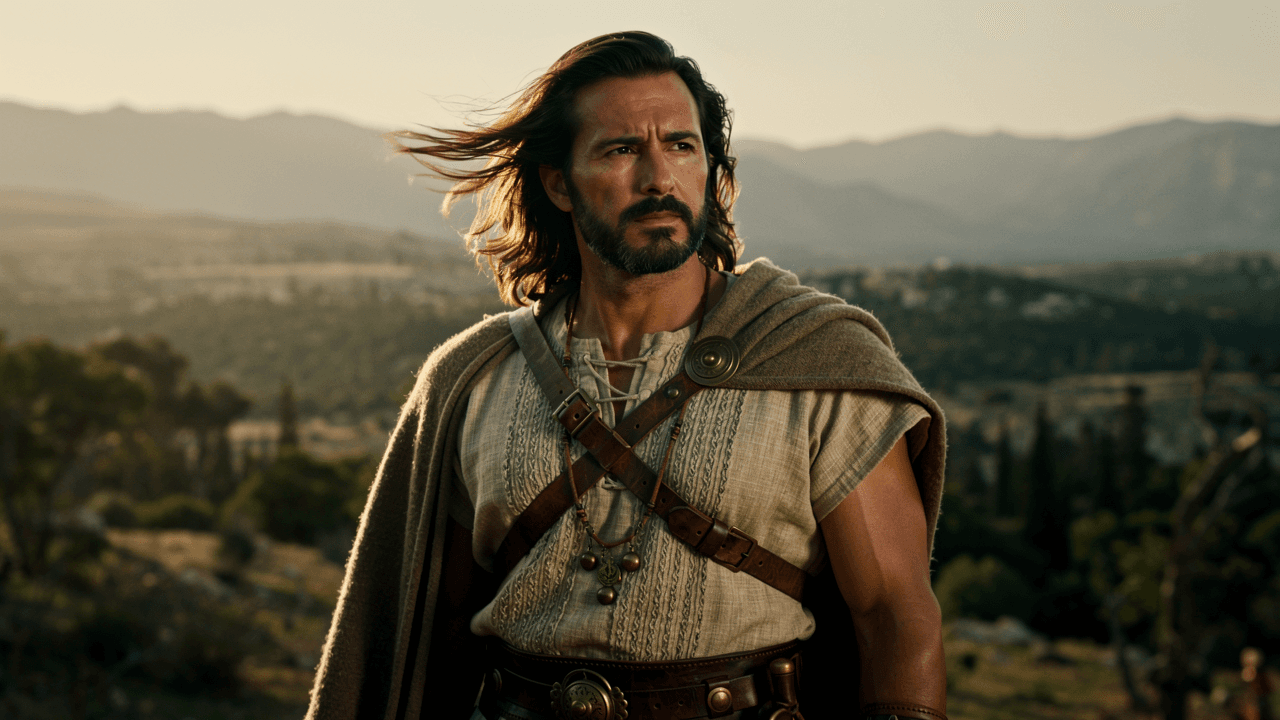
Van the Steadfast: The Jurist Who Defied a Fallen Prince, and the Enki the World Remembered

Gabriel of Sedona, the Cosmic Family, and the Urantia Book
The Newsletter
Get the research behind each piece
Free. New Urantia Book explorations, the sources behind the videos, and early looks. No spam, unsubscribe anytime.
Prefer video? Follow on YouTube and Facebook.
Delivered through Substack. You can also read past issues.