
The Urmia Lectures: What Jesus Actually Taught at Lake Urmia
In the spring of A.D. 25, Jesus stopped on the western shore of Lake Urmia and delivered the most systematic sequence of lectures of his entire life on Urantia. Twenty-three sessions on the brotherhood of men, the fatherhood of God, and the sovereignty of spirit. Most readers walk past Paper 134 and miss it. This is the invitation to sit down and read what he actually said.

The Urmia Lectures: What Jesus Actually Taught at Lake Urmia
A close reading of Paper 134, sections 3 and 4, the most concentrated stretch of Jesus' formal teaching anywhere in the revelation.
Derek Samaras | Urantia Book Network
I. Picture the Scene
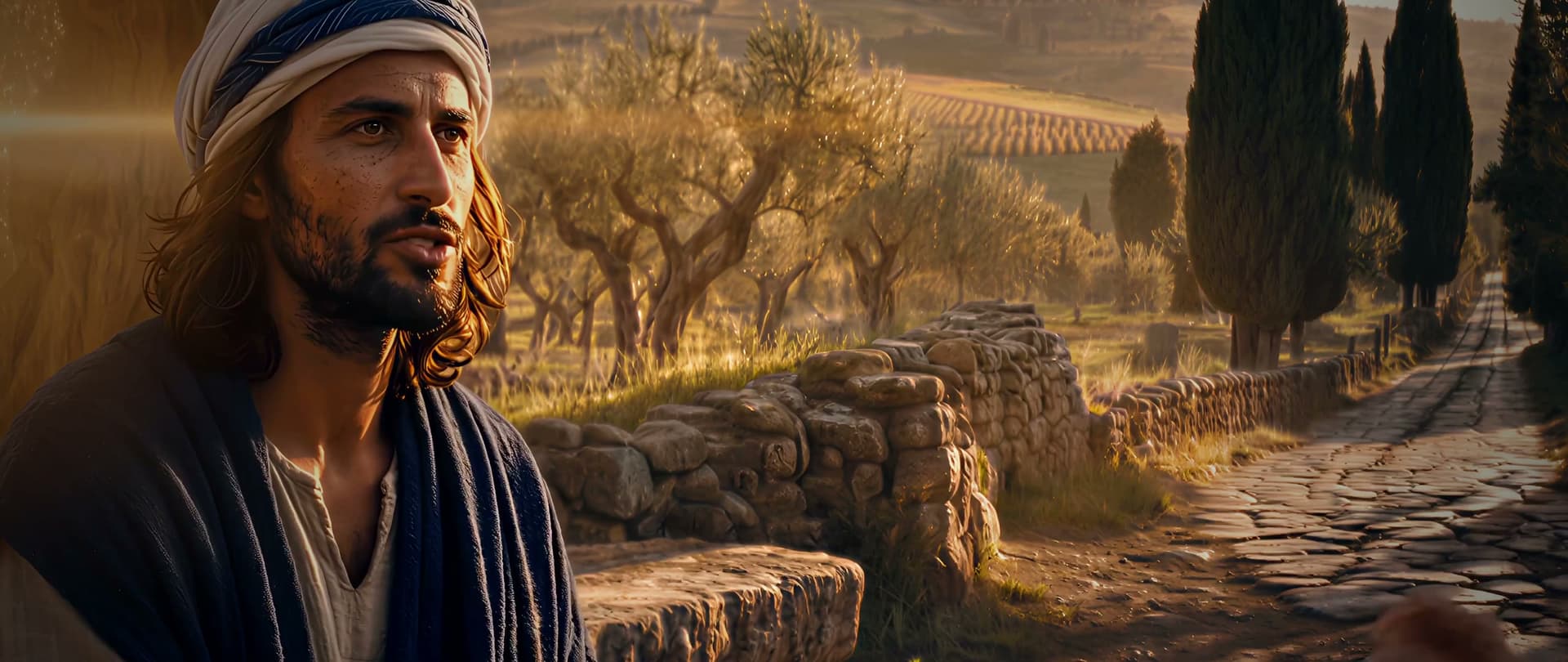
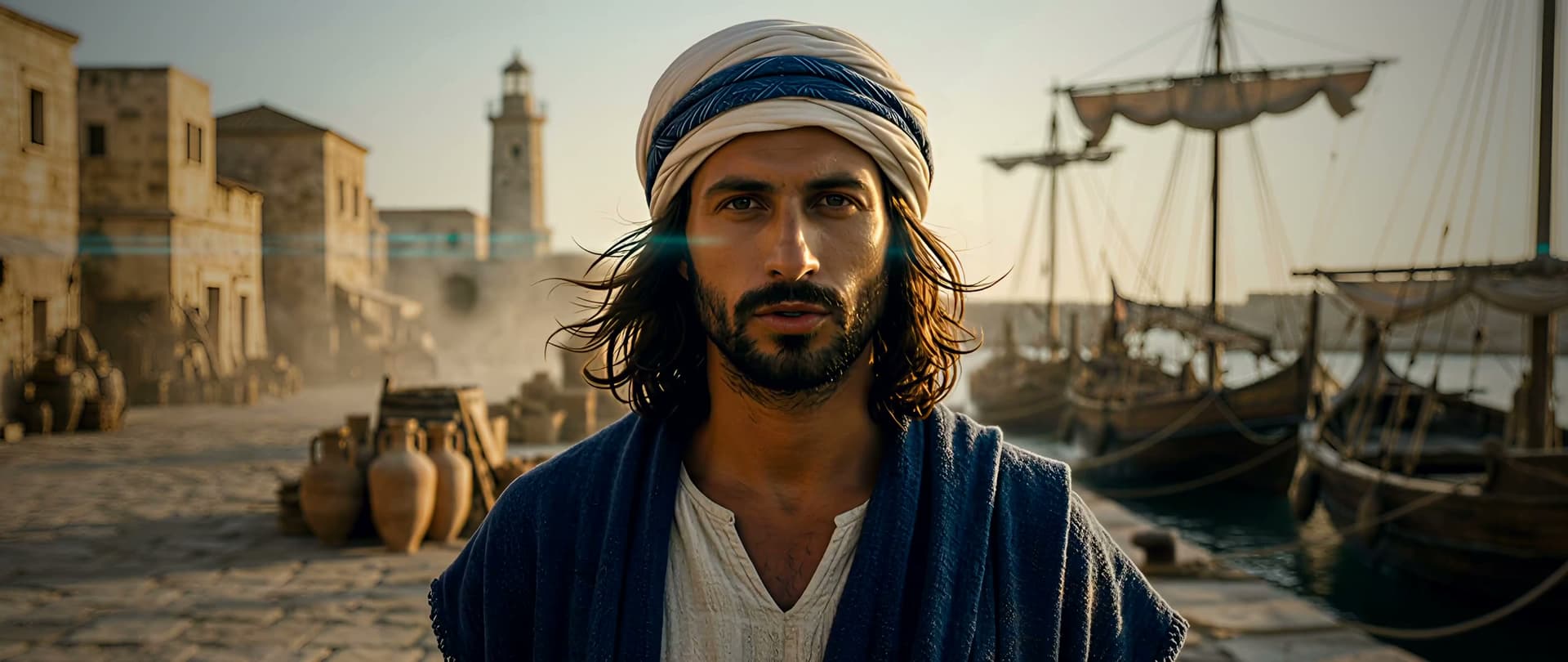
It is the spring of A.D. 25. Jesus is thirty-one years old. He has not yet been baptized. He has not yet called a single apostle. The world does not know who he is, and most of his fellow caravan travelers know him only as the unusually thoughtful Damascus scribe who took over as conductor when the original leader fell ill outside Jerusalem.
He is on the western shore of Lake Urmia, in the highlands of what is now northwestern Iran. A wealthy merchant named Cymboyton had built, on one of the small islands offshore, a working seminar of comparative religion. The arrangement was deliberate to the point of strangeness, and it is worth letting the text describe it in full, because the design of the room turns out to explain the content of the lectures.
"More than thirty religions and religious cults were represented on the faculty of this temple of religious philosophy. These teachers were chosen, supported, and fully accredited by their respective religious groups. At this time there were about seventy-five teachers on the faculty, and they lived in cottages each accommodating about a dozen persons. Every new moon these groups were changed by the casting of lots. Intolerance, a contentious spirit, or any other disposition to interfere with the smooth running of the community would bring about the prompt and summary dismissal of the offending teacher. He would be unceremoniously dismissed, and his alternate in waiting would be immediately installed in his place." (134:3.6)
Read that paragraph twice. On the trade road between the Roman Empire in the West and the Han Empire in the East, in a world we still tend to picture as small and provincial, there was a fully staffed comparative religion school running three sessions a day, every day, with mornings at ten, afternoons at three, and evening debates at eight. The seventy-five faculty represented more than thirty traditions, reshuffled monthly by lot so that no single school could entrench itself. And the founder, Cymboyton, never disclosed his own beliefs, because he wanted no thumb on the scale. The single enforced rule was procedural rather than doctrinal: anyone who tried to lord his religion over the others was gone by the end of the day. That rule is not a footnote. It is the working hypothesis Jesus would spend two weeks confirming from first principles.
Jesus stopped there on the way out, joined the discussions a few times, and made an impression. Before he left, Cymboyton arranged for him to return and deliver a full course, twenty-four lectures on "The Brotherhood of Men" together with twelve evening sessions of questions, discussions, and debates (134:3.4). Two weeks. No Roman authorities watching. No Sanhedrin politics. No apostles to manage. No crowds clamoring for healing. Just a quiet hall on an island in a lake, and a teacher who already knew exactly who he was and was about to enter the final phase of his life.
Then comes the line that should stop every serious reader cold. The midwayers, who recorded the life, do not hand out superlatives lightly, and here they spend one without reservation:
"In accordance with this arrangement, Jesus stopped off on the return trip and delivered these lectures. This was the most systematic and formal of all the Master's teaching on Urantia. Never before or after did he say so much on one subject as was contained in these lectures and discussions on the brotherhood of men. In reality these lectures were on the 'Kingdom of God' and the 'Kingdoms of Men.'" (134:3.5)
The most systematic and formal of all the Master's teaching on Urantia. Never before or after did he say so much on one subject. That single sentence should have made Paper 134 the most studied passage in the revelation. Instead, most readers skim past it on their way to the baptism in Paper 136. This article is an invitation to slow down and look at what survives.
II. Why Urmia, of All Places
The Urmia setting is not incidental. It is exactly the kind of place where the brotherhood teaching would land hardest. In the first century, Urmia sat at a hinge between civilizations. Persian Zoroastrianism, with its high ethical monotheism, had roots there. The old Mithraic mysteries were native to the region. Buddhist monks came west on the same caravan routes Jesus rode east. Greek philosophy traveled through with the Hellenistic afterglow of Alexander's conquests. Jewish merchant communities ran whole districts of Babylonian and Persian cities, and the Indian subcontinent sent teachers up through Parthia. If you wanted a single room in which to test whether the brotherhood of men was an abstraction or a fact, you could not have built a better one.
The Caspian trip also put Jesus closer to the Orient than any other journey of his life, and the timing matters. By the moment he stepped onto the lecture platform, he had made personal contact with every surviving race of Urantia except the red, and had found each of them receptive to the same living truth (134:2.3). This is the experiential weight behind the lectures. He had taught Greeks in Alexandria and Romans in Rome, sat with Gonod and Ganid for two years on a Mediterranean tour, walked through Mesopotamia, Media, and Parthia, and ministered to Persians on the trail east. The brotherhood of men was not, for him, a hopeful thesis. It was the conclusion of a decade of careful looking, drawn one human being at a time. Now a faculty of more than thirty religions sat in front of him and asked him to summarize what he had concluded. He took two weeks to answer.
III. What Survives Verbatim
Paper 134 is unusual in one further way, and the distinction governs everything that follows. The midwayers tell us in unprecedented bracketed asides that the political content they present in sections 5 and 6 is their own twentieth-century adaptation, not Jesus' words. We treat that question at length in a companion piece on this site (see Discerning the Urmia Lectures). Section 134:4 is different. It carries no such disclaimer. It is presented as the brotherhood teaching itself, the part the midwayers were able to render directly, and it is the closest thing we have to a transcript.
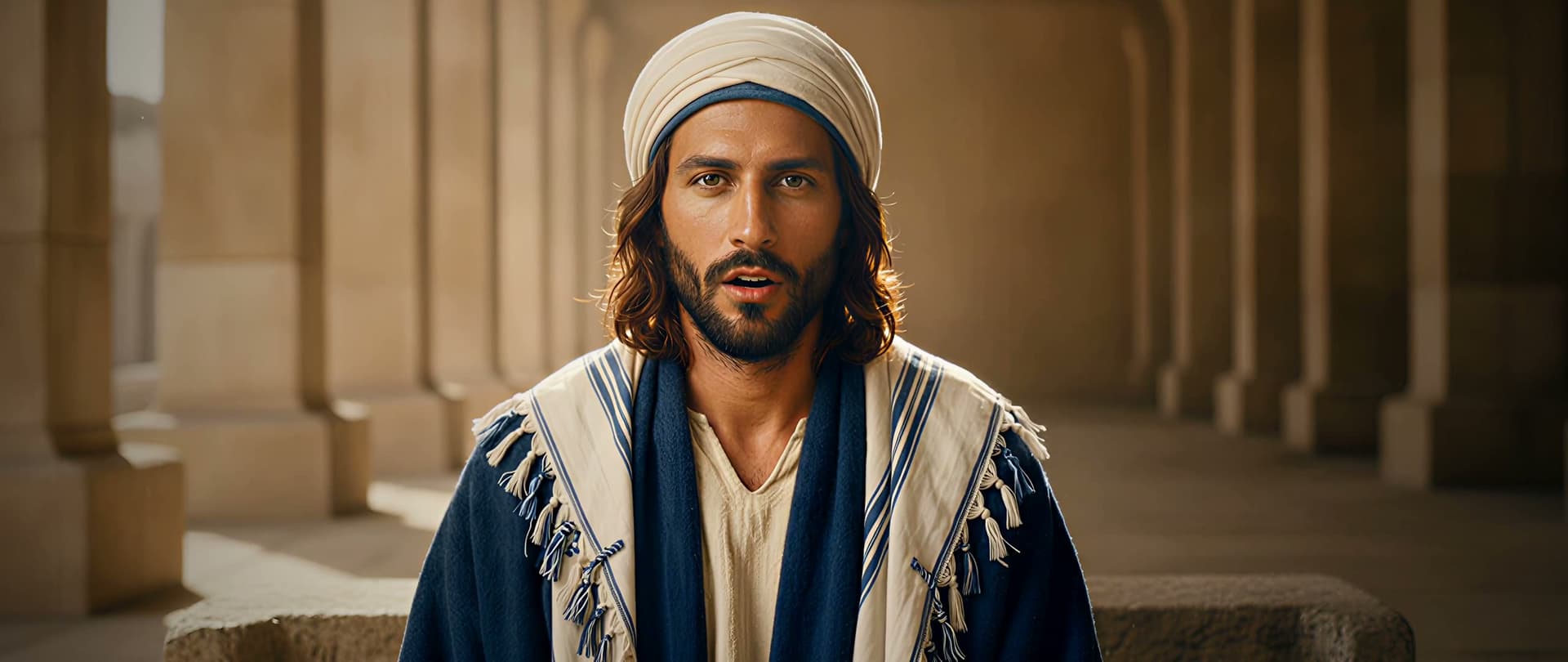
What it contains is a single sustained argument, built in stages. Read it as if you are seated on a stone bench on Cymboyton's island. The lake is glittering through the windows. A Zoroastrian priest is on your left, a Buddhist monk on your right, a Greek Stoic in front of you, a Jewish rabbi behind. The Damascus scribe stands and begins.
Theme 1: Brotherhood is derived, not constructed
The opening sentence of the actual teaching is also its foundation, and it is worth marking precisely what kind of sentence it is.
"The brotherhood of men is founded on the fatherhood of God. The family of God is derived from the love of God—God is love. God the Father divinely loves his children, all of them." (134:4.1)
Notice what this is not. It is not a moral exhortation to be nice to one another, not a political program, not a treaty among traditions. It is a statement of architecture. The brotherhood is real because the fatherhood is real, and the relation between them is one of derivation rather than construction. Take away the fatherhood and the brotherhood collapses into sentiment, a feeling that lasts exactly as long as the feeling does. Restore the fatherhood and the brotherhood is given for free, as a fact about who human beings already are. This is the structural move Jesus had been making his whole life and would make at every level of his public ministry afterward. The fatherhood is the load-bearing claim, and every social and political consequence hangs from it.
Theme 2: The kingdom is spiritual, full stop
Having grounded brotherhood in fatherhood, Jesus immediately fixes the nature of the kingdom that follows from it, and he does so by chaining one definition to the next.
"The kingdom of heaven, the divine government, is founded on the fact of divine sovereignty—God is spirit. Since God is spirit, this kingdom is spiritual. The kingdom of heaven is neither material nor merely intellectual; it is a spiritual relationship between God and man." (134:4.2)
The logic is almost geometric. Divine sovereignty is the foundation; God is spirit; therefore the kingdom grounded in that sovereignty is itself spiritual, and can be neither a material arrangement nor a merely intellectual one. Every century has misread this in its own characteristic way. The first century wanted a political messiah and was disappointed when Jesus declined the role. The fourth century wanted an ecclesiastical empire and built one in his name. The twentieth century wanted a global political order and read it back into Paper 134, which is exactly the substitution the companion article traces. The twenty-first century is still tempted, from every direction, to mistake some material arrangement for the kingdom. On the island at Urmia, in the most systematic teaching of his life, Jesus closes that exit in advance. The kingdom is a spiritual relationship between God and man. That is its entire topology.
Theme 3: Religious peace requires surrender, not conquest
From the spiritual nature of the kingdom Jesus draws a consequence about how religions can coexist, and he frames it as a clean conditional. If the various religions recognize the spirit sovereignty of God the Father, they will remain at peace; intolerance and persecution begin only when one religion assumes it is superior to the others and claims exclusive authority over them (134:4.3). He was not theorizing. He was describing the faculty in front of him, where devotees of thirty traditions sat in one room under a rule that dismissed within the day anyone who tried to dominate the rest. He was naming the principle that made the room itself possible. Then he states the principle in its strongest form.
"Religious peace—brotherhood—can never exist unless all religions are willing to completely divest themselves of all ecclesiastical authority and fully surrender all concept of spiritual sovereignty. God alone is spirit sovereign." (134:4.4)
God alone is spirit sovereign. It is one of the most consequential sentences in the revelation, and its force is theological rather than diplomatic. It rules out every claim to ecclesiastical authority, every claim to chosen-people status, every claim that one tradition holds the franchise on the Father, not because such claims are politically inconvenient but because they are simply false. The surrender Jesus asks for is not a concession to other religions. It is a recognition of a fact that was always true.
Theme 4: Equality without supersovereignty is a trap
This is the theme almost nobody notices, and it is among the most psychologically acute passages in the entire book. Most readers expect a teacher of brotherhood to praise equality without qualification. Jesus does the opposite.
"Freewill beings who regard themselves as equals, unless they mutually acknowledge themselves as subject to some supersovereignty, some authority over and above themselves, sooner or later are tempted to try out their ability to gain power and authority over other persons and groups. The concept of equality never brings peace except in the mutual recognition of some overcontrolling influence of supersovereignty." (134:4.9)
Sit with that, because it cuts against a reflex of the modern age. Equality by itself does not produce peace. Free will beings who consider themselves equals, sharing no recognition of any authority above them, will sooner or later test their ability to dominate one another. The cure Jesus prescribes is not the elimination of inequality, which would only relocate the problem; it is the mutual subjection of equals to a common higher sovereignty. In the Urmia teaching that sovereignty is the Father, who stands over every religion, every nation, and every individual alike. When the whole room agrees on that, the room can hold thirty religions without bloodshed. When the room loses sight of it, the room divides. This is, in effect, Jesus' diagnosis of every conflict in human history. We claim equality, and because there is no shared higher sovereignty to which we are jointly subject, we test each other. Every empire begins this way, and so does every schism and every sectarian war.
Theme 5: The indwelling abolishes castes
The fourth theme explains why a shared higher sovereignty is necessary. The fifth explains why it is also available, and the ground of that availability is the spirit fragment that dwells in every human being. Because God gives a fragment of his spirit to live in the heart of each person, all are spiritually equal, and the kingdom that follows is free from castes, classes, social levels, and economic groups: you are all brethren (134:4.7). Imagine the sentence landing across that particular room. The Zoroastrian priest feels his caste system tremble. The Hindu listener feels the varnas tremble. The Roman in the back feels the patrician and plebeian wall tremble. The Jewish rabbi feels the distinction between Gentile and Jew tremble. The indwelling is the leveler, and its logic is total: once you have seen it, no civilization can keep its caste structures except by a deliberate refusal to look. Crucially, Jesus does not ask the room to dismantle its social orders by force. He tells them the spiritual fact of indwelling has already made those orders obsolete, and that the only remaining question is how long humanity will take to catch up.
Theme 6: The chosen-people delusion has to go
The teaching then closes by returning to the room itself and generalizing from it, which is why the final paragraph reads as both observation and prophecy.
"The Urmia religionists lived together in comparative peace and tranquillity because they had fully surrendered all their notions of religious sovereignty. Spiritually, they all believed in a sovereign God; socially, full and unchallengeable authority rested in their presiding head—Cymboyton. They well knew what would happen to any teacher who assumed to lord it over his fellow teachers. There can be no lasting religious peace on Urantia until all religious groups freely surrender all their notions of divine favor, chosen people, and religious sovereignty. Only when God the Father becomes supreme will men become religious brothers and live together in religious peace on earth." (134:4.10)
This is the closing paragraph of the authentic Urmia teaching as we have it, and Jesus uses the school as a working model. The reason it functions is that the room has surrendered every claim to special divine favor; the reason the world does not function is that it has not. Note the direction of the surrender in the final sentence. The condition for peace is the supremacy of the Father in the consciousness of the worshipper, a surrender upward rather than a transfer of authority sideways into any larger human institution. That distinction is precisely where the companion article shows the later political adaptation parting ways with the authentic teaching. Once the Father becomes supreme in the heart, brotherhood follows. Without that, no peace treaty in human history has ever held for long.
Theme 7: The slip between equality and intolerance is fast
The seventh theme is the mechanism that ties the others together, and Jesus states it as a near-law rather than a warning. The moment a community loses sight of the spirit sovereignty of God the Father, some one religion begins to assert its superiority over the others, and then, in place of peace on earth and good will among men, there start dissensions, recriminations, and even religious wars, or at least wars among religionists (134:4.8). The verb is not "may." It is "will." Jesus is not flagging a hypothetical risk to the Urmia faculty; he is describing a sociological law with the same confidence he brought to the architecture of brotherhood. Lose the vertical reference point, and the horizontal contest follows predictably and fast. The seven themes are, read together, a single closed argument: brotherhood is derived from fatherhood, the resulting kingdom is spiritual, peace among traditions requires surrendering sovereignty upward to God, equality alone cannot supply that peace, the indwelling supplies the shared ground that can, the chosen-people delusion is the standing obstacle, and the slide from forgetting the Father to making war is rapid and lawful.
IV. How These Lectures Echo Through the Public Ministry
If these were truly Jesus' most systematic lectures, we should expect to find them rippling forward into everything he said as a public teacher. They do, and the continuity is unusually clean because the framework was already complete before the ministry began.
A few months after Urmia, on Mount Hermon, Jesus settled the Lucifer rebellion in Satania and the Caligastia secession on Urantia by the same principle he had taught at Urmia. The great trial there had nothing to do with food or temple pinnacles or the kingdoms of this world; it had to do with the sovereignty of a mighty and glorious universe (134:8.6), and when he came down from the mountain those rebellions were virtually settled, the sovereignty of Nebadon won in fact months before it was announced at his baptism (134:8.9). The Urmia thesis that the Father's sovereignty is the only real sovereignty, and that all rival claims are derivative or false, is the same axiom that resolves the rebellion. What he taught a faculty of thirty religions he then demonstrated against the archrebels of the system.
The framework also predates Urmia in his own conversations. In the Roman discussions with Nabon the Mithraic high priest, Jesus had already arranged knowledge, wisdom, and truth into a hierarchy that culminates in spiritual living: truth cannot be defined with words but only by living, knowledge originates in science and wisdom in philosophy, while truth originates in the religious experience of spiritual living and deals with reality values (132:3.2). The same instinct that refuses to let truth collapse into mere knowledge is the instinct that, at Urmia, refuses to let the kingdom collapse into a material or merely intellectual arrangement.
The reach of the pre-baptismal teaching is easy to underestimate. The midwayers note that Jesus remained in Antioch longer than anywhere else on the trip, and that ten years later, when Paul preached there and heard his followers speak of the doctrines of the "Damascus scribe," he never realized his pupils had heard the Master himself (134:7.3). Some of the earliest Christian converts at Antioch, in other words, received their understanding of Jesus' teaching not from the apostles but from his own pre-baptism teaching along the caravan routes and at Urmia. The brotherhood theme that runs through Pauline Christianity, that there is neither Jew nor Greek, neither slave nor free, has one of its first systematic articulations on Cymboyton's island.
After that, the same architecture surfaces in the public ministry again and again. The kingdom is within. The Father is no respecter of persons. The Samaritans, the Gentiles, the women, the tax collectors, the Roman centurions are all already inside the brotherhood by virtue of the indwelling. He never had to argue this from scratch in public, because he had already worked it out, in the most systematic and formal terms of his entire life, during two weeks on an island in Lake Urmia.
V. Why This Reads Like It Was Written This Morning
Here is the part that should keep an honest reader up at night. Strip away the first-century costuming and the lectures are about the conditions under which a pluralistic civilization can hold together, which is to say they are about the exact problem now on every front page.
Begin with the demand of 134:4.4, that religious peace requires every religion to divest itself of all ecclesiastical authority and fully surrender all concept of spiritual sovereignty, because God alone is spirit sovereign. That is the answer to a question every news cycle is now asking. The conflicts we are watching, in Israel and Palestine, in India and Pakistan, in the deep cultural wars inside the United States and Europe, are at root sovereignty conflicts: different communities each claiming a level of authority that, in the Urmia teaching, belongs to God alone. Jesus' answer is not a treaty, not a political settlement, and not a single global religion. It is a theological surrender. Each tradition releases its claim to ecclesiastical sovereignty, recognizes that God alone is spirit sovereign, and discovers on the far side of that surrender more peace and more freedom than the claim ever delivered. It is worth marking that this is the surrender of claims upward, to God, and not a transfer of authority sideways into a larger human institution, which is precisely the line the companion article shows the political adaptation crossing.
The fourth theme is the sharpest for our era. We have spent the last century trying to build a peaceful world on horizontal equality alone, with no shared vertical reference point, and the Urmia teaching predicted in plain language what would happen. Free will beings who regard themselves as equals, recognizing no authority above themselves, sooner or later test their ability to dominate one another. You can read 134:4.9 and then watch the news, and the news reads like a footnote to it.
VI. The Aftermath, and Why the Lectures Were Almost Lost
The Urmia school did not survive, and the way it ended is among the most quietly heartbreaking sequences in Part IV. After Cymboyton's death his sons struggled to hold the faculty together, and the midwayers observe that the repercussions of Jesus' teaching would have been far greater if the later Christian teachers who joined the faculty had shown more wisdom and tolerance (134:6.15). The detail that follows is the cruel one.
"Cymboyton's eldest son had appealed to Abner at Philadelphia for help, but Abner's choice of teachers was most unfortunate in that they turned out to be unyielding and uncompromising. These teachers sought to make their religion dominant over the other beliefs. They never suspected that the oft-referred-to lectures of the caravan conductor had been delivered by Jesus himself." (134:6.16)
The Christian teachers Abner sent did not know they were stepping into the room where their own Master had taught. They violated the one rule Cymboyton had ever enforced, the rule against making a religion dominant over the others, the very behavior Jesus had identified in theme three as the origin of all religious persecution. The consequence was procedural and final: as the confusion grew, the three brothers withdrew their support, and after five years the school closed, later reopening as a Mithraic temple that eventually burned down during one of its orgiastic celebrations (134:6.17).
The loss is hard to overstate. Had the Urmia lectures survived in writing the way the Sermon on the Mount survived in Matthew, the entire course of Christian history would read differently. We would not have spent two thousand years arguing about whose tradition holds the franchise on Christ, because the Master had already taught, across twenty-four lectures and with maximum clarity, that no tradition holds any such franchise. God alone is spirit sovereign. We did not have those words for two millennia because the room that received them refused, in the end, to live by the rule that had made it possible. The midwayers preserved what they could. Section 134:4 is what we have, and it is enough.
VII. The Invitation
The Urmia lectures are not lost. They sit in plain sight in Paper 134, waiting for the reader patient enough to slow down and treat them as the most systematic teaching of Jesus' life on this planet, because that is what they are. Read 134:3 and 134:4 the next time you have a quiet hour. Read each paragraph twice. Picture the room: the thirty traditions seated in front of him, the lake outside, Cymboyton's silent and scrupulous neutrality at the head of the hall, and Jesus, thirty-one years old, carrying the weight of every race and every religion he had visited in the previous decade, opening his mouth.
He builds the whole structure in seven moves. The brotherhood of men is founded on the fatherhood of God. The kingdom that follows is spiritual. Religious peace requires surrendering sovereignty upward to God rather than seizing it from one another. Equality without a shared higher sovereignty is a trap. The fragment of God in every heart abolishes castes. The chosen-people delusion has to go. And the slip between losing sight of the Father and starting religious wars is fast and predictable. That is the most systematic teaching Jesus ever gave on Urantia, and it addresses with uncanny precision the exact crisis we are in.
The conclusion he reached at Urmia was that there can be no lasting religious peace on this world until all religious groups freely surrender their notions of divine favor, chosen people, and religious sovereignty, and that only when God the Father becomes supreme will men become religious brothers and live together in peace (134:4.10). The Urmia school burned down. The teaching survived. Two thousand years later, it is still the only answer that works. It is in the book. Read it.
Citation Index
All citations verified against the canonical paragraph JSON for Paper 134.
Setting and arrangement
134:2.3, Caspian trip, all surviving races except the red
134:3.4, Cymboyton's invitation, twenty-four lectures and twelve evening sessions
134:3.5, Most systematic and formal of all the Master's teaching
134:3.6, Thirty plus religions, seventy-five faculty, monthly reshuffle
The seven themes
134:4.1, Brotherhood founded on fatherhood
134:4.2, Kingdom is spiritual, neither material nor merely intellectual
134:4.3, Religious peace through recognition of spirit sovereignty
134:4.4, God alone is spirit sovereign
134:4.7, Indwelling fragment, kingdom free from castes
134:4.8, Slip from losing sight of Father to religious wars
134:4.9, Equality without supersovereignty is a trap
134:4.10, Closing summary, Urmia as working model
Echoes through the ministry
132:3.2, Truth lived, not defined
134:7.3, The Damascus scribe and Paul's converts at Antioch
134:8.6, The Mount Hermon trial and the sovereignty of a universe
134:8.9, Sovereignty of Nebadon won, Lucifer rebellion and Caligastia secession settled
The aftermath
134:6.15, Disagreements after Cymboyton's death
134:6.16, Abner's unfortunate choice of teachers
134:6.17, Closing of the school, Mithraic reopening, fire
Connecting Articles

The Newsletter
Get the research behind each piece
Free. New Urantia Book explorations, the sources behind the videos, and early looks. No spam, unsubscribe anytime.
Prefer video? Follow on YouTube and Facebook.
Delivered through Substack. You can also read past issues.