
The Shadow Never Leads, Part 7: The Comforter
The Spirit of Truth does not wait to be found. It searches. It works. It operates on the sincere soul that has not yet articulated a theology or found a community or made a formal commitment. Its first mission is to foster and personalize truth. Its second is to destroy the believer's feeling of orphanhood.

Series Note: This is the final part of seven. The previous six parts described the problem at every level: the compromised hardware, the sabotaged mission, the institutional rewrite, and the modern exploitation. This part describes the provision. The actual answer. The one that was already in place before you started reading.
In the Hills Above the Road
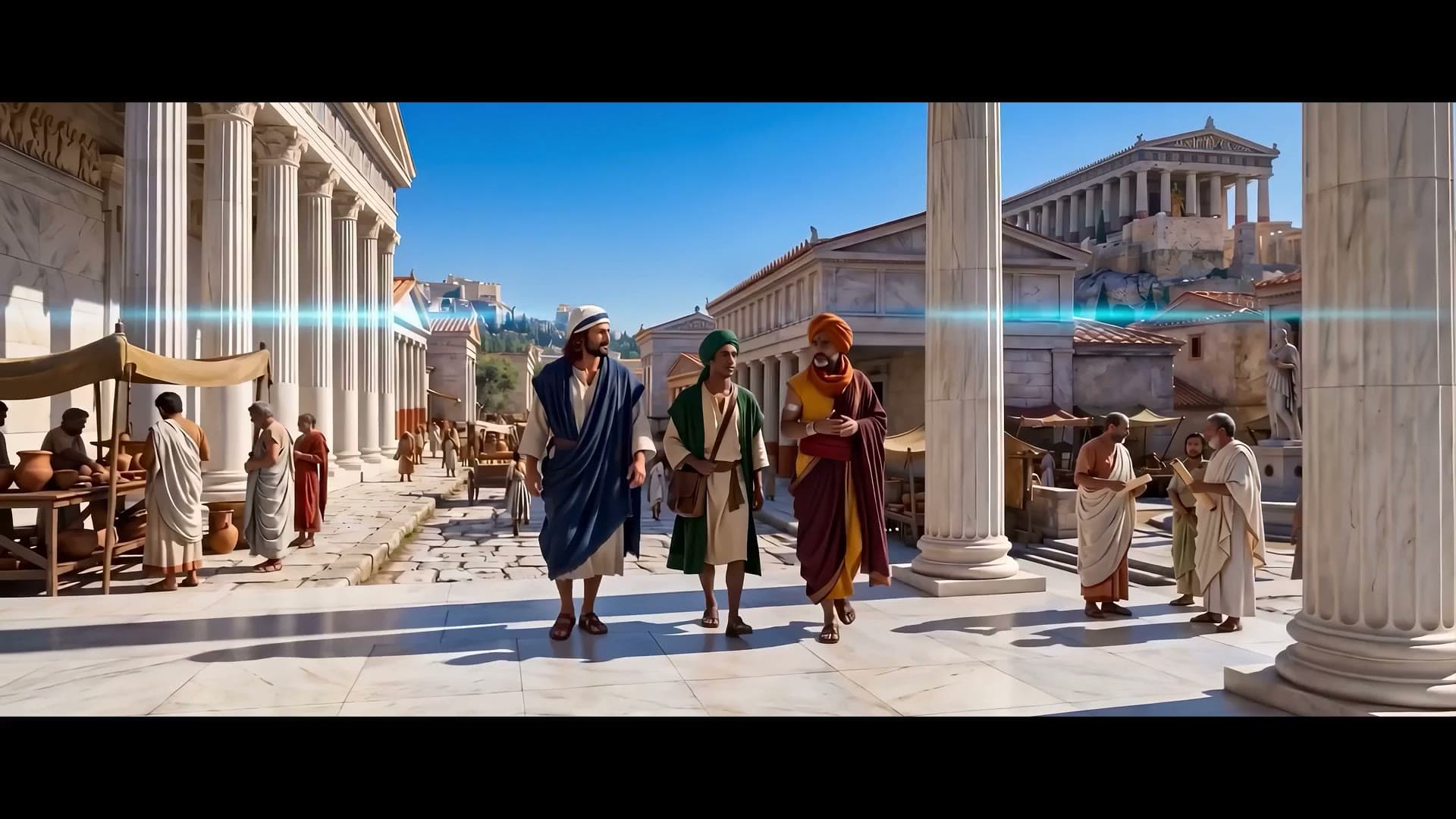
The Urantia Book records a story from the Teacher's Mediterranean tour with Gonod and Ganid, his pre-ministry journey of AD 22-23, that almost never gets preached on. It appears in Paper 130 and it is, in some ways, the most complete demonstration of the Teacher's actual method in the entire record of his life.
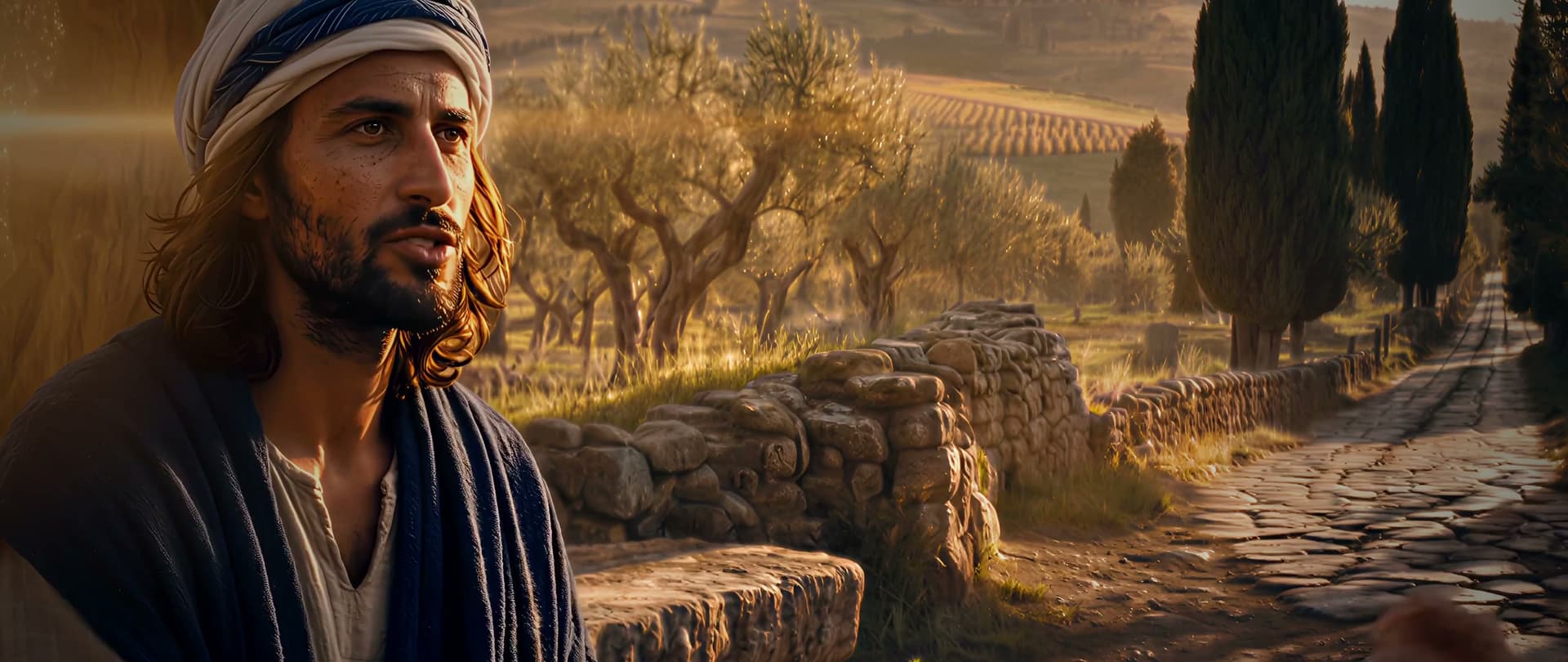
He was walking in the hills near the coast. A young man had gone up into the mountains to get away from people, and the Teacher found him there, lying face down, obviously not wanting to talk. So the Teacher did not push. He asked him for directions.
The young man knew those trails well, and something about being asked for what he actually knew pulled him out of himself. He sat up and drew the routes in the dirt, explained every detail, genuinely helpful. And then the Teacher, after thanking him and turning to leave, stopped and turned back.
"I well know you wish to be left alone with your disconsolation; but it would be neither kind nor fair for me to receive such generous help from you as to how best to find my way to Phenix and then unthinkingly to go away from you without making the least effort to answer your appealing request for help and guidance. No, son, not with words but with longing looks did you appeal to my heart."
The Urantia Book, 130:6.2
That is the method. Find where they are strong. Draw them out through their own competence. Let them feel useful before they feel seen. And then turn back.
The young man, whose name was Fortune, had lost his father at age twelve. He was carrying grief and purposelessness and the particular kind of loneliness that comes from being young and genuinely alone in your understanding of things. He told the Teacher he had been praying for guidance and that heaven had seemed silent.
The Teacher's response was not a theological explanation. It was a personal encounter. He spoke to Fortune's actual situation with the kind of knowledge that comes from God knowing a person completely, not from a stranger making educated guesses. And Fortune was reborn that day, as the text says. Not through ritual. Not through priestly ceremony. Through a conversation on a hillside between a young man who was genuinely seeking and someone who genuinely knew where the Father was.
Fortune went on to become one of the outstanding leaders of the early Christian community on the island of Crete. The man who met a stranger on a road in the hills above the Phoenician coast became the anchor of a spiritual community on an island that had given the Hebrews their alphabet, in the same geographic corridor where the entire story of this series had played out.
That is not coincidence. That is what it looks like when the correction arrives at the personal level.
Transformation First
One of the most persistent errors in religious teaching, across virtually every tradition that inherited the Babylonian theological framework, is the sequence. The usual sequence is: first you get yourself together, then you qualify for divine assistance. Clean up your act. Demonstrate your worthiness. Prove your sincerity through effort. Then, if the account balances, grace is extended.
The Teacher reversed this explicitly. The conversation in Paper 143 between Andrew and the Teacher is the clearest statement of the actual sequence in the entire record.
Andrew asked: are we to practice self-denial as John taught, or strive for the self-control you teach? What is the difference?
"John indeed taught you the way of righteousness in accordance with the light and laws of his fathers, and that was the religion of self-examination and self-denial. But I come with a new message of self-forgetfulness and self-control. I show to you the way of life as revealed to me by my Father in heaven."
The Urantia Book, 143:2.2
And then the sequence.
"By the old way you seek to suppress, obey, and conform to the rules of living; by the new way you are first transformed by the Spirit of Truth and thereby strengthened in your inner soul by the constant spiritual renewing of your mind, and so are you endowed with the power of the certain and joyous performance of the gracious, acceptable, and perfect will of God. The new law of the spirit endows you with the liberty of self-mastery in place of the old law of the fear of self-bondage and the slavery of self-denial."
The Urantia Book, 143:2.4
First transformed. Then strengthened. Then endowed with the power of performance. Self-mastery is the fruit of transformation, not the prerequisite for it. You do not earn transformation through the achievement of self-mastery. You receive transformation, and self-mastery grows out of it the way fruit grows from a healthy tree. The sequence is not optional. It is structural. And inverting it produces exactly the kind of exhausted, shame-driven religious performance that the Teacher was explicitly contrasting with his new way.
Paper 143:2.8 names what transformation produces at its fullest expression: the fruits of the spirit are the essence of the highest type of enjoyable and ennobling self-control, even the heights of terrestrial mortal attainment, true self-mastery. Enjoyable. That word is doing significant theological work. The old religion was not enjoyable. It was anxious and effortful and always running the question of whether the account balanced. The new way produces self-mastery that is genuinely enjoyable because it is not powered by fear. It is powered by love. And love, as the UB says elsewhere, does not burn itself out. It is renewable at the source.
What Pentecost Actually Was
The standard Christian account of Pentecost is that the Holy Spirit came upon the disciples in the upper room, tongues of fire appeared, and the early church was born. The UB does not dispute the historical event. It adds the cosmological context that the standard account lacks.
Before Pentecost, the Spirit of Truth did not exist as a poured-out presence on this world. It was poured out specifically because the Teacher had completed his seventh and final bestowal, his embodiment as a mortal creature on this particular planet, and had thereby earned the authority to bestow his own spirit on the creation he had experienced from the inside.
Paper 194:3.13 names what changed at that moment: up to Pentecost, religion had been primarily about man seeking for God. Since Pentecost, it has also been about God seeking for man. The direction reversed. The Spirit of Truth does not wait to be found. It searches. It works. It operates on the sincere soul that has not yet articulated a theology or found a community or made a formal commitment.
"The first mission of this spirit is, of course, to foster and personalize truth, for it is the comprehension of truth that constitutes the highest form of human liberty. Next, it is the purpose of this spirit to destroy the believer's feeling of orphanhood."
The Urantia Book, 194:2.2
The feeling of orphanhood. That is the precise psychological and spiritual state that the planetary default produced at scale: a species whose intended provision did not arrive, running on emergency firmware, experiencing the Father's silence as abandonment because the channels of communication that were supposed to be easier to access were harder instead. The Spirit of Truth was the specific answer to that specific condition. Not a general spiritual endowment. A targeted provision for a planet of orphaned creatures who needed to know their Father had not left them.
And the distribution method was the most radically inclusive thing that had ever been done in the religious history of this world.
"Before the teachings of Jesus which culminated in Pentecost, women had little or no spiritual standing in the tenets of the older religions. After Pentecost, in the brotherhood of the kingdom woman stood before God on an equality with man."
The Urantia Book, 194:3.14
"Pentecost, with its spiritual endowment, was designed forever to loose the religion of the Master from all dependence upon physical force; the teachers of this new religion are now equipped with spiritual weapons. They are to go out to conquer the world with unfailing forgiveness, matchless good will, and abounding love. They are equipped to overcome evil with good, to vanquish hate by love, to destroy fear with a courageous and living faith in truth."
The Urantia Book, 194:3.11
Women equal before God. End of special priesthoods. No required institutional mediation. The Spirit poured out on all flesh, freely and without condition. These are not theological abstractions. They are the direct reversal of every specific damage the Babylonian editorial project had done. The Babylonian rewrite had made women subordinate through the theological argument of the fall. Pentecost restored their equality. The Babylonian project had created an institutional priesthood as the necessary mediator of divine access. Pentecost ended that model.
Paper 194:3.19 describes the practical effect of the Spirit on the person who receives it.
"The coming of the Spirit of Truth purifies the human heart and leads the recipient to formulate a life purpose single to the will of God and the welfare of men. The material spirit of selfishness has been swallowed up in this new spiritual bestowal of selflessness. Pentecost, then and now, signifies that the Jesus of history has become the divine Son of living experience. The joy of this outpoured spirit, when it is consciously experienced in human life, is a tonic for health, a stimulus for mind, and an unfailing energy for the soul."
The Urantia Book, 194:3.19
Tonic for health. Stimulus for mind. Unfailing energy for the soul. These are the words the UB uses to describe what the Spirit of Truth actually does in a human being who receives it. Not a theological credential. Not an institutional membership. A living functional influence that works on the actual nervous system, the actual mind, the actual soul, of an actual person.
The Father of the Teacher
The single most important theological distinction in the entire Urantia Book, and the one that most clearly separates the Teacher's actual position from every religious tradition that subsequently claimed to represent him, is the identity of God.
The God of the Babylonian rewrite is wrathful, demanding, tribal, and fundamentally threatening. He requires blood sacrifice for the restoration of his favor. He hardens hearts and commands genocide. He operates through a chosen people whose election is defined partly by the damnation of everyone else. The theological tradition that derived from Paul's atonement theology, the idea that the cross was a blood payment that satisfied the demands of a God who required punishment for sin, was the Babylonian framework extended into the Christian era.
Paper 196:0.3 describes the Teacher's actual relationship with the Father.
"Jesus did not cling to faith in God as would a struggling soul at war with the universe and at death grips with a hostile and sinful world; he did not resort to faith merely as a consolation in the midst of difficulties or as a comfort in threatened despair; faith was not just an illusory compensation for the unpleasant realities and the sorrows of living."
The Urantia Book, 196:0.3
Wholehearted trust. Magnificent reliability. Not a struggling soul at war with the universe. Not a person managing their relationship with a dangerous deity through careful observance of ritual requirements. A son who knew his Father and trusted him the way a genuinely loved child trusts the parent who has never let them down.
Paper 196:2.9 names what the Teacher's relationship with the Father produced in his relationships with people.
"He saw most men as weak rather than wicked, more distraught than depraved. But no matter what their status, they were all God's children and his brethren."
The Urantia Book, 196:2.9
Weak not wicked. Unfortunate not depraved. This is the diagnostic of a person who understands the actual situation. Humanity is running on compromised hardware, without the biological upgrade that was supposed to arrive, in the aftermath of a double default, actively exploited by systems that profit from its dysfunction. That is weakness and misfortune on a planetary scale. It is not inherent depravity. And the difference between those two diagnoses changes everything about what the appropriate response looks like.
The response to depravity is punishment, exclusion, and the careful management of divine wrath. The response to weakness and misfortune is what Paper 130:6 demonstrated on the road in the hills: find where they are strong, sit with them, make genuine contact, and introduce them to the Father whose love is not contingent on their performance.
Believe With Him, Not In Him
The distinction that the Teacher made repeatedly and that the institutional church largely missed is the difference between believing in him as a theological object and believing with him as a living orientation toward the Father.
"Jesus does not require his disciples to believe in him but rather to believe with him, to believe in the reality of the love of God and in full confidence accept the security of the assurance of sonship with the heavenly Father."
The Urantia Book, 196:0.13
Believe with him. The faith of Jesus, not merely faith in Jesus. This is the difference between religion as a set of doctrinal propositions about a historical figure and religion as a living experience of the Father that the Teacher modeled and invited others into. You can believe every theological claim ever made about the Teacher and still be operating from the Babylonian framework in your actual experience of God. And you can have almost no theological vocabulary and be living the faith of Jesus if your actual orientation toward the Father is one of wholehearted trust.
Paper 196:3.19 names the complementary dimensions of genuine religion and why the Hebrew tradition, for all its genuine achievements, fell short of the full picture.
"The Hebrews had a religion of moral sublimity; the Greeks evolved a religion of beauty; Paul and his conferees founded a religion of faith, hope, and charity. Jesus revealed and exemplified a religion of love: security in the Father's love, with joy and satisfaction consequent upon sharing this love in the service of the human brotherhood."
The Urantia Book, 196:3.19
The Hebrew failure that Paper 2:7.9 identifies was the isolation of goodness from truth and beauty. A religion of moral sublimity without beauty eventually drives people away through its grimness. Without truth, its goodness becomes dogmatic and inflexible. The Teacher's life brought all three into a single unified expression: truth that was coherent, beauty that was attractive, goodness that was stabilizing, all held together by love as the organizing principle.
Paper 2:7.12 names what happens when the three come together in a personal religious experience: when these values are coordinated in personality experience, the result is a high order of love conditioned by wisdom and qualified by loyalty. That is not a theological achievement. It is what a person who genuinely knows the Father looks like from the outside.
The Life Was the Sign
Two passages from the Teacher's ministry deserve particular attention in the context of the modern religious landscape, because they address the two most common substitute activities for genuine religious experience.
The first is sign-seeking. In Paper 157:2.1, when certain religious authorities asked for a sign to authenticate his authority, the Teacher responded.
"When it is evening, you say it will be fair weather, for the heaven is red; in the morning it will be foul weather, for the heaven is red and lowering. How is it that you so well know how to discern the face of the heavens but are so utterly unable to discern the signs of the times? To those who would know the truth, already has a sign been given; but to an evil-minded and hypocritical generation no sign shall be given."
The Urantia Book, 157:2.1
Sign-seeking is the attempt to make spiritual reality empirically verifiable on demand. It is the request for a demonstration that bypasses the requirement of faith, that makes trust unnecessary by providing proof instead. Paper 102:8.7 is direct: the quest for miracles is a harking back to the primitive religions of magic. True religion has nothing to do with alleged miracles.
The wonder of the Teacher's life was the life itself. Not the miracles. The miracles were incidental demonstrations of an authority that was already present in every word he spoke and every person he touched. The life was the sign. And the life is still available to anyone who reads it honestly.
The second is prophet-quoting. Paper 155:6.7 records the Teacher telling his disciples something that challenges virtually every form of institutional religious practice.
"I admonish you to give up the practice of always quoting the prophets of old and praising the heroes of Israel, and instead aspire to become living prophets of the Most High and spiritual heroes of the coming kingdom. To honor the God-knowing leaders of the past may indeed be worth while, but why, in so doing, should you sacrifice the supreme experience of human existence: finding God for yourselves and knowing him in your own souls?"
The Urantia Book, 155:6.7
Stop quoting the prophets. Become one. The entire religious tradition that derived from the Babylonian rewrite and its institutional successors is built on quotation, commentary, and the careful management of an authoritative textual tradition. The Teacher is asking for something different: personal living proof of the reality of the Father's love in the actual experience of a real human being in the actual world.
That is the invitation. Not a new commentary on an authoritative text. Personal living proof of the reality of the Father's love in the actual experience of a real human being in the actual world.
The Adjuster's Plea
Paper 110:7.10 records something that the indwelling Adjuster said to a mortal during the brief periods of spiritual communion that are possible in a destined soul. It was preserved in the human record and included in the UB. It is addressed to you.
"That he more faithfully give me his sincere co-operation, more cheerfully endure the tasks of my emplacement, more faithfully carry out the program of my arrangement, more patiently go through the trials of my selection, more persistently and cheerfully tread the path of my choosing, more humbly receive credit that may accrue as a result of my ceaseless endeavors... Upon him I bestow the supreme devotion and affection of a divine spirit. I will function with wisdom and power until the very end, until the last earth struggle is over; I will be true to my personality trust. And I exhort him to survival, not to disappoint me, not to deprive me of the reward of my patient and intense struggle. On the human will our achievement of personality depends."
The Urantia Book, 110:7.10
Not a voice of judgment. Not a ledger of debts. A partner who has made themselves entirely vulnerable to the outcome, who has taken on the risk of the mortal journey alongside the mortal who is taking it, who is asking not for perfection but for the decision to continue. I exhort you to survival. Not to the achievement of a spiritual standard. To the basic act of not giving up.
And Paper 113:5.2 records what the guardian seraphim do when they watch a person they have been assigned to drift away from their highest potential.
"Angels are so near you and care so feelingly for you that they figuratively weep because of your willful intolerance and stubbornness."
The Urantia Book, 113:5.2
Not anger. Not disgust. Grief. The grief of someone who sees what you are capable of and watches you settle for less. The grief of a guardian who has been with you every moment of your life, who knows every wound and every failure and every genuine effort you have ever made, and who is not disappointed by your weakness. Who is grieved by your surrender to it.
These are not the voices of a theological system. They are the voices of beings who are personally invested in your specific and individual outcome.
The Kingdom Is Within You
The Teacher said something that the Urantia Book calls probably the greatest pronouncement of his entire earthly life. Paper 195:10.4 names it directly.
"'The kingdom of God is within you' was probably the greatest pronouncement Jesus ever made, next to the declaration that his Father is a living and loving spirit."
The Urantia Book, 195:10.4
That is the whole of it. One sentence. And it frames the tragedy by implication: the institutional church built a visible structure on top of what the Teacher said was an invisible, interior kingdom. They took the most personal pronouncement he ever made and turned it into an organization.
The visible church built on top of the invisible and spiritual kingdom. The institutional structure placed over the living reality. The Babylonian pattern applied to the Teacher's own movement by the people who loved him and intended to honor him. They did exactly what he warned against, for exactly the reasons he described, with exactly the consequences he foresaw.
And yet. Paper 195:10.10 holds the vision that is still available.
"If the Christian church would only dare to espouse the Master's program, thousands of apparently indifferent youths would rush forward to enlist in such a spiritual undertaking, and they would not hesitate to go all the way through with this great adventure."
The Urantia Book, 195:10.10
Apparently indifferent youths. The ones who have left the church, who have left organized religion, who have found the institutional versions of every spiritual tradition inadequate to their actual experience and their actual hunger. They are not indifferent to God. They are indifferent to the visible structure built over the invisible kingdom. And the UB says they would rush forward if they encountered the actual program of the actual Teacher.
This series is for them. For the person at 3am whose anxiety will not stop. For the person in recovery who is trying to rebuild a nervous system that got torn apart. For the person who has walked away from the church but has not walked away from God. For the person who has read the UB and is trying to figure out what to actually do with it. For the person who is strong enough to be honest about how compromised the hardware is, and still wants to know if the Adjuster is actually in there.
The Adjuster is in there. The guardian has not been recalled. The Spirit of Truth is present. The whole provision of the Father for this particular planet, the most visited, most prayed over, most personally attended world in this local universe, is still fully operational.
The shadow never leads. It always follows. Turn toward the light. The shadow falls behind. And the Father, whose love for this planet is the reason this story is still going, will go before you and be with you to the very end.
You are never alone.
About This Series
"The Shadow Never Leads" is a seven-part exploration of how a sabotaged biological mission left humanity running on compromised neurological hardware, and why the Father's countermeasure is already in place.
Part 1: You Are Never Alone. The pastoral address. Shadow people, anxiety, the 3am experience. Who is with you and what to do tonight.
Part 2: The Messy Knot. Real beings vs. hallucinations. The spectrum of experience. The channeling cautionary tale. How to tell the difference.
Part 3: Emergency Firmware. The neuroscience of the compromised nervous system. What drugs, media, and environmental toxins actually do to the brain.
Part 4: The Unpatched Planet. The Adamic mission and what went wrong. The most important recovery story nobody tells: how Cain received his Adjuster.
Part 5: The Rewrite. How the Babylonian captivity turned a biological tragedy into a weapon against women, sex, the body, and the home.
Part 6: The Assault. The modern exploitation of the compromised hardware: algorithms, processed food, fear-based media, and the counterfeit sovereignty pattern.
Part 7: The Comforter. The Spirit of Truth. What Pentecost actually was. Transformation before self-mastery. The elder brother who went before.
About the Author
Derek Samaras is a videographer, content creator, and independent researcher based in Colorado. He runs the Urantia Book Network YouTube channel and the Sermons of Jesus channel.
All Urantia Book citations reference the standard text. | © 2026 Derek Samaras / Urantia Book Network
Connecting Articles

The Newsletter
Get the research behind each piece
Free. New Urantia Book explorations, the sources behind the videos, and early looks. No spam, unsubscribe anytime.
Prefer video? Follow on YouTube and Facebook.
Delivered through Substack. You can also read past issues.